This year marks twenty years since I boarded a plane for China. I had just finished my acupuncture training at Touro, and I was headed to Changsha, Hunan province, for a postgraduate rotation at the First Hunan University of Traditional Chinese Medicine hospital. I kept a clinical note book while I was there and have studied from it over the years. Reading it now, as someone who has run a practice in New York for two decades, is an invaluable resource and a reminder of my wonderful experiences.
I want to share some of it here, both as a personal milestone and because I think it says something about where the ideas behind my practice actually came from.
Table of Contents
Why Changsha
Hunan province is in the south central part of China. Changsha, the provincial capital, has been inhabited for at least 3,000 years, and it was where Zhang Zhong Jing — the physician who wrote the Shang Han Lun (On Cold Damage), one of the foundational texts of Chinese medicine — served as governor almost 2,000 years ago. Hunan still has a reputation as one of the more traditional provinces, where doctors lean more heavily on classical theory and texts. My favorite teacher from Touro was from Hunan and served as the inspiration to study there.
A Different Kind of Clinic
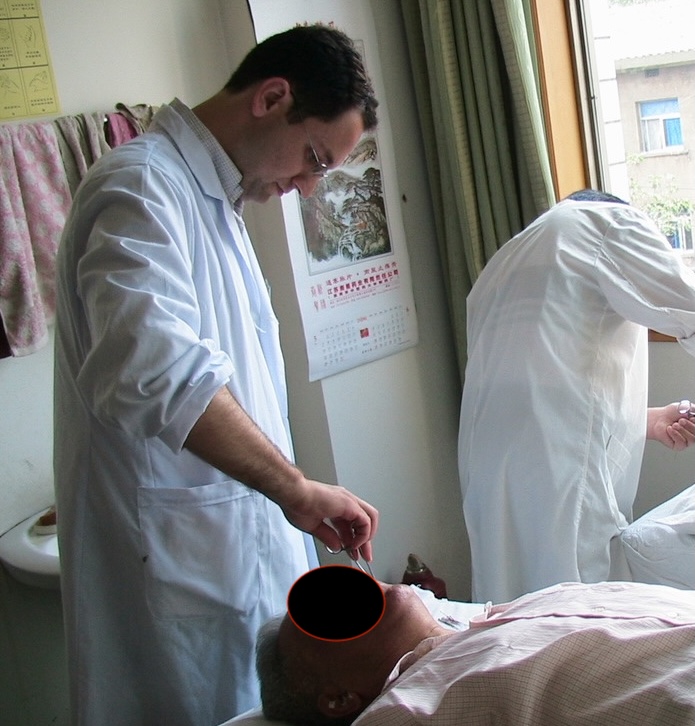
The first thing that struck me about the hospital was the culture surrounding traditional medicine. Patients came in frequently during their treatment course. Sometimes for weeks or months at a stretch. Grandparents brought grandchildren; grandchildren brought grandparents who had trouble walking. There was no real concept of privacy in the way we think of it in the U.S. Patients discussed their conditions openly, chatted with each other about their treatment progress. The acupuncture clinic functioned as a social institution as a medical one.
I stood out, obviously. Patients were sometimes wary of the foreign student before they’d seen me needle anyone. But once they had, I became something of a novelty, and people wanted me on their case. It was a good early lesson in trust: that patients need to see competence before they extend it.
Over the course of that year I rotated through the acupuncture department, Tui Na (Chinese medical massage), Internal Medicine, and dermatology seeing 30 to 40 patients most mornings. This gave me the experience and insights to
The Doctors
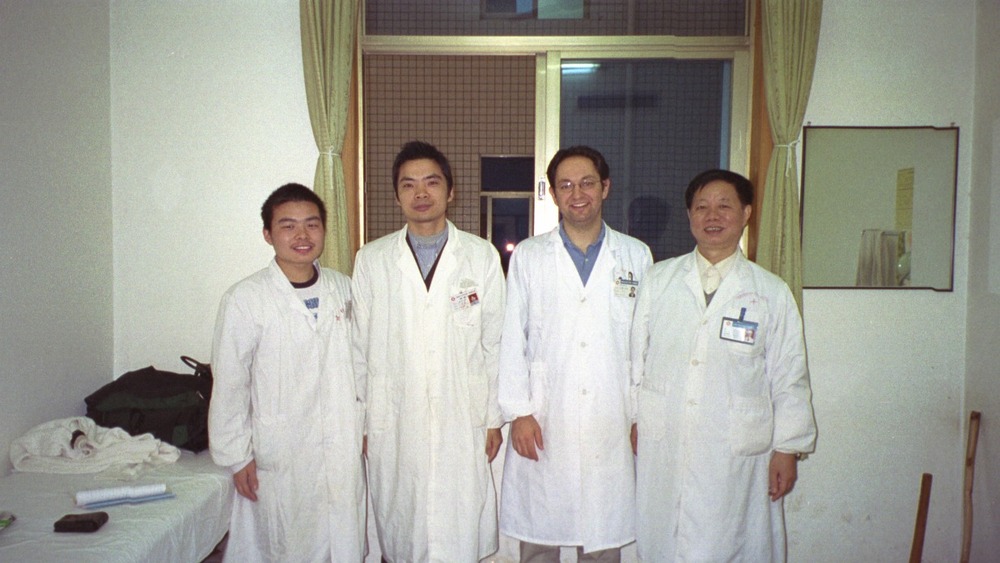
A few teachers from that year still shape how I think about patient care.
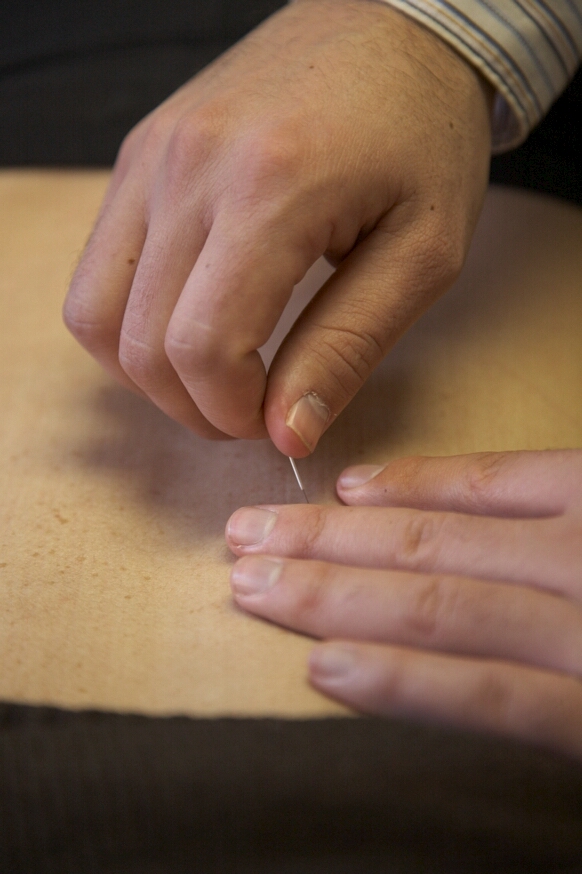
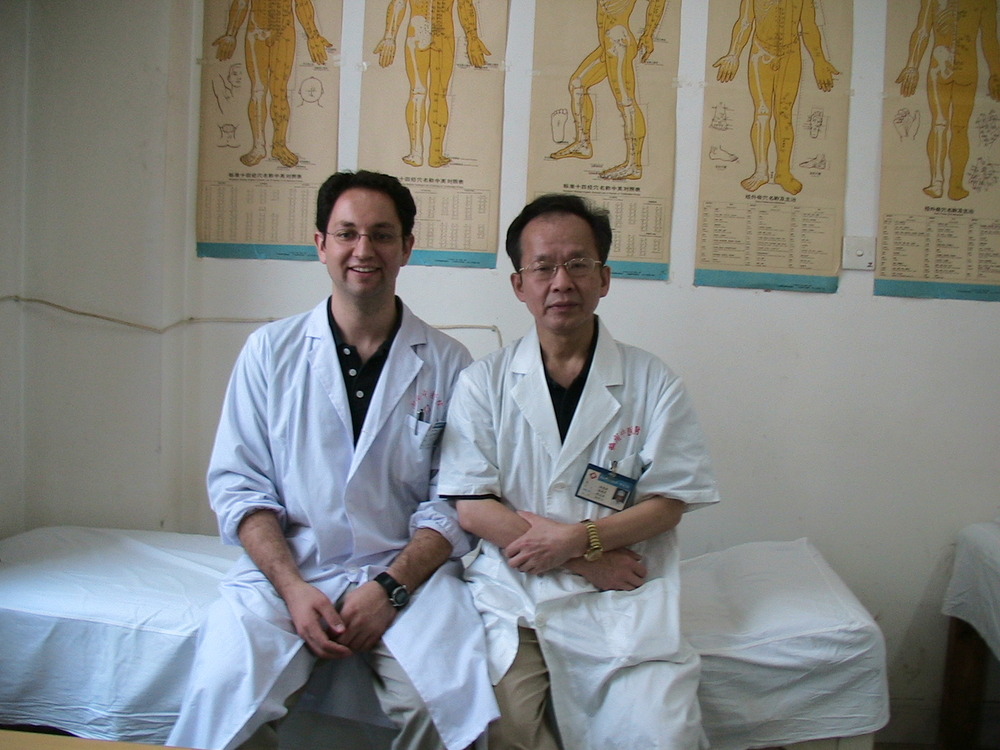
Dr. Chan, the head of the acupuncture department, was quietly famous. Patients traveled from distant provinces to see him, some renting apartments in Changsha for months of treatment. Despite his reputation, he stayed humble. He had a number of specialties that made him so well known: Parkinson’s disease, retinitis pigmentosa, trigeminal neuralgia, and bells palsy. His honesty about the prognosis with a simultaneous hope for recovery were remarkable characteristics for building a bedside manner. He would instruct me about needle technique, “inch on the skin is miles beneath” because the depth, direction, and precision stimulation mattered to him as much as point selection.
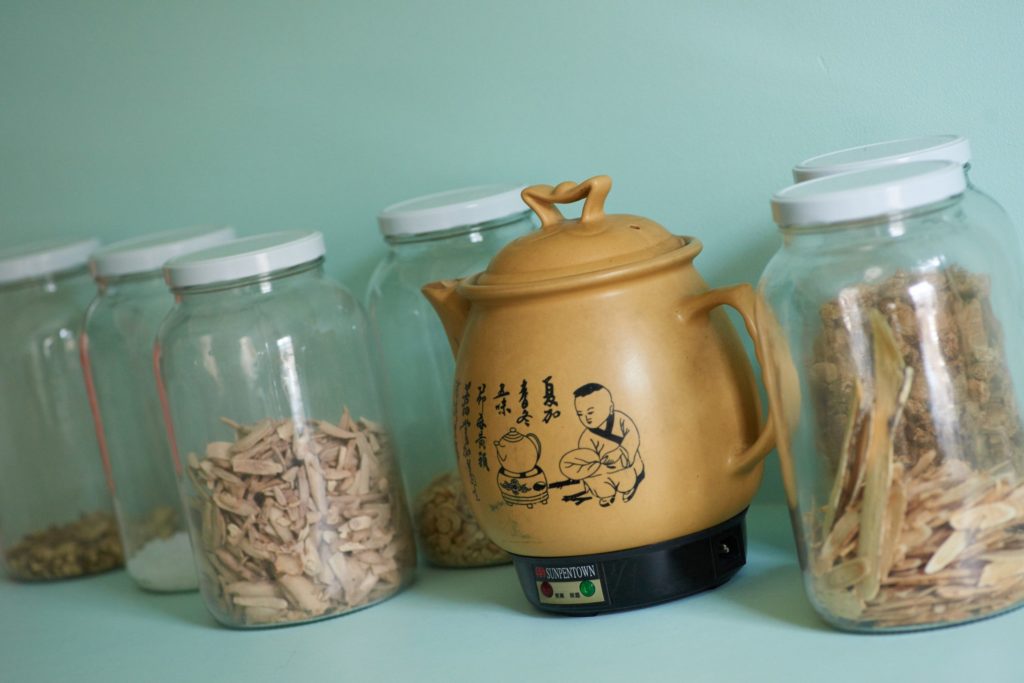
Dr. Wang, who I came to think of as “the warm doctor.” She was both warm with her patients and exacted care with using warming and aromatic herbs in the elderly. Let me explain, in certain patients we need to use warming herbs, for cardiovascular issues, for example. But these patients may also have “heat signs” so the warm herbs can cause further heat. To protect from overheating, Dr. Wang would pair the herbs with cooling herbs to balance the formula.
I watched a patient with congestive heart failure improve week over week as she cautiously titrated in warming herbs like gui zhi. I saw another patient who came in wearing four or five layers of clothing, unable to get warm, gradually shed them down to a single seasonal layer after herbs like fu zi and gan jiang were added to her formula.
She was just as warm with her patients. She had a skills which were honed over many years to create a small moment of privacy within a busy clinic room. She knew how to be gentle with people and precise with formulas, a wonderful example of the importance of connecting with patients.
Dr. Xiao, in the Tui Na department, ran what might have been the most joyful clinic I’ve ever worked in. Patients hung around all morning because it was genuinely fun to be there. He treated all ages of patients, infants, post-stroke patients relearning to stand, and chronic back and shoulder pain. His rolling technique was extremely unique, providing an ability to be gentle and firm simultaneously. It is the foundation of my tui na technique.
Dr. Huang announce the diagnosis and key points out loud for each patient before treating, so the students built pattern recognition case after case. By the end of a month with her, you could often anticipate the prescription before she gave it.
Dr. Luo was in the dermatology department, where I spent the bulk of my last months in Changsha. He had a happy-go-lucky, joking manner with patients that put people at ease, but he was serious about the medicine underneath it. I saw a steady stream of acne, psoriasis, eczema, and herpes zoster cases, and it was here that dermatology really took hold for me as a clinical focus.
The Cases That Still Show Up in My Practice
A lot of what I treat today in New York has a direct line back to that year.
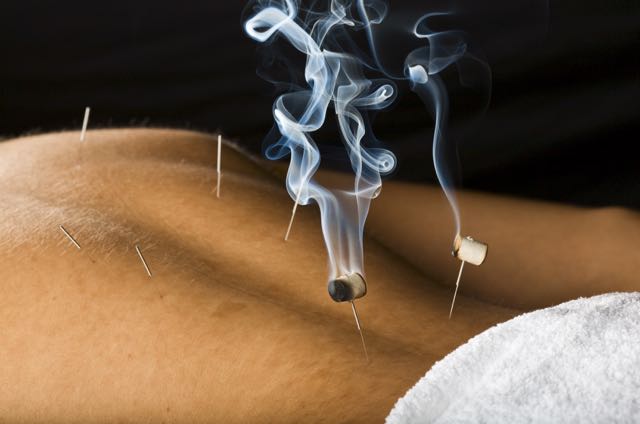
Neck and back pain is one of the most common complaints I see. My notes from that arthritis of the neck with local points around GB 20 and the cervical jia ji points, and often combined with cupping. It’s a protocol I still reach for regularly, adapted over the years but recognizably the same idea.
Facial paralysis cases were everywhere in Hunan, and they left a deep impression on me. I remember an eight-year-old girl with a drooping eyelid who improved significantly over a single week of daily treatments. The principle was to needle in the direction you want the qi, and by extension the muscle, to move. This is a concept which is useful also for acupuncture facial rejuvenation work.
My dermatology skills from Changsha are the foundation of that practice. Acne, eczema, psoriasis, and rosacea I treat now in New York aren’t so different in principle from what Dr. Luo addressed. First diagnose the root of the problem and then address it with customized herbal medicine. The Complete Clinical Experiences of Zhao Bingnan is the book he gave me before I left which became something I returned to again and again as I developed my dermatology skills. This laid the groundwork for my subsequent extensive study under Mazin Al-Khafaji.
A Deep History of Traditional Chinese Medicine
At one point I traveled to the Hunan Provincial Museum in Changsha, which holds one of the most remarkable collections of ancient Chinese medical material anywhere — the relics from the Mawangdui tombs. The tombs are famous for medical texts written on bamboo strips, predating even the Yellow Emperor Inner Classic (Huangdi Neijing, circa 500BCE). These documents describe qigong exercises and herbal prescriptions. There were also texts on the structure of the meridians and instructions for using moxibustion on them for health maintenance. And remarkably, actual herbs had survived in the tomb, thousand-year-old ginger, da zao, and various herbs, still recognizable. When thinking about Changsha, I often remember the museum and the deep connection to the long standing tradition I was learning.
Coming Home
Twenty years later, I still think about that hospital experience. Not just because the approaches were unique or how they laid the foundations for my techniques. But also because of how attentive and genuinely present the doctors were with their patients. That’s the standard I’ve tried to hold myself to since, and it’s the reason I still tell this story to new patients who ask how I ended up practicing the way I do.