Table of Contents
Acupuncture for Nocturnal Polyuria
Waking up two, three, or four times a night to urinate is one of the most common long-term effects of prostate cancer treatment. Last year, a randomized trial from Memorial Sloan Kettering Cancer Center showed that acupuncture reduced these nighttime bathroom trips in prostate cancer survivors.1 I wrote about that JAMA Oncology trial on acupuncture for nocturia when it was published.2
A new analysis of that same trial, published in September 2026, takes the next step. It asks why acupuncture helps, and whether it works for men whose bodies are simply making too much urine at night.
Two reasons you wake up to urinate
Not all nighttime urination has the same cause. Urologists generally look at two separate problems, and many prostate cancer survivors have both.
A storage problem. The bladder can’t comfortably hold as much as it should, so it signals “full” too early. Surgery and radiation can both change how the bladder behaves, making it more irritable or less able to stretch. Studies using bladder testing have found new bladder overactivity in men after prostatectomy or radiation.
A production problem. The body makes too much urine overnight. Normally, hormones slow urine production while you sleep. With age, this rhythm can weaken, and conditions like high blood pressure, heart disease, and diabetes can add to it. When more than about a third of your daily urine is produced at night, it’s called nocturnal polyuria. In this study, 57% of the men had it.
This distinction matters because most conventional treatments focus on only one side of the problem, either bladder storage or urine production. For men with nocturnal polyuria in particular, options have been limited.
What the researchers measured
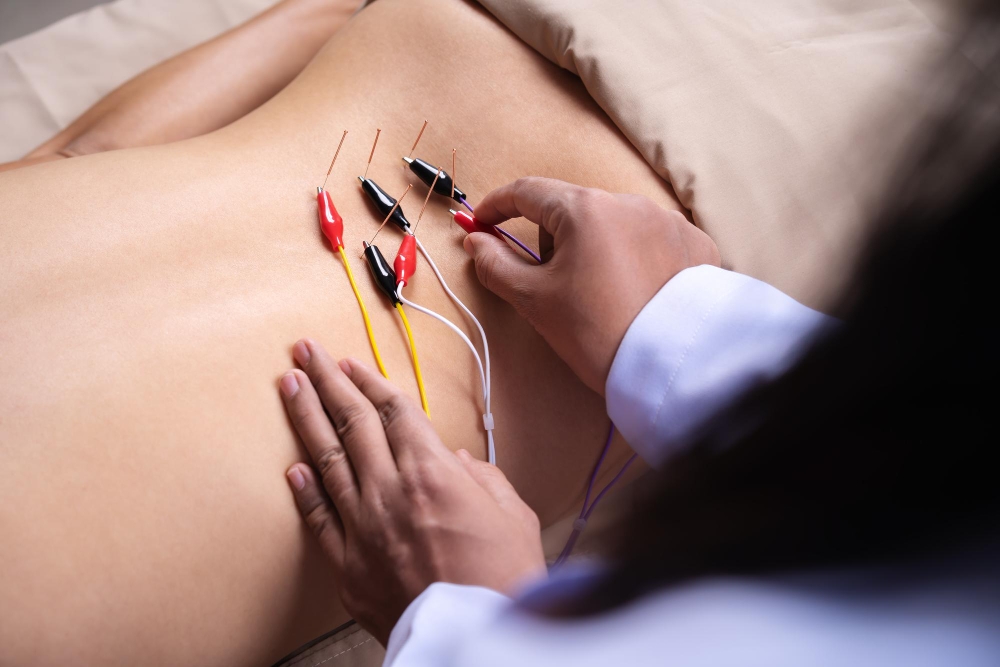
Participants in the original trial were randomly assigned to 10 weekly sessions of electroacupuncture or to usual care on a waitlist. Before and after treatment, they kept a detailed three-day bladder diary, recording what they drank, when they urinated, how much, and when they slept.
These diaries allowed the researchers to separate storage from production. If the bladder holds more per trip, storage is improving. If a smaller share of the day’s urine is produced at night, production is improving.
Thirty-five men had complete diaries and were included in this analysis.
What they found
- Fewer nighttime trips overall. The acupuncture group went from about three nighttime trips to about two, a reduction of 1.1 per night, compared with 0.4 in the usual care group. This confirms the original trial’s results using objective diary data rather than self-report alone.
- Better bladder storage. In the acupuncture group, the amount of urine passed per nighttime trip increased by about 30 mL on average, while it stayed flat in the usual care group. That difference was statistically significant. In men without nocturnal polyuria, whose problem was mostly storage, the increase was larger, about 54 mL per trip. Daytime bathroom trips also decreased in the acupuncture group.
- Less nighttime urine production in men with nocturnal polyuria. This is the new finding. Among men who were overproducing urine at night, acupuncture reduced nighttime trips by 1.1 per night and lowered the share of daily urine produced at night by about 11 percentage points. The researchers note this effect on urine production had not been reported before.
- Acupuncture helped both types. Men with and without nocturnal polyuria saw a similar drop of about one nighttime trip. In other words, acupuncture seemed to help regardless of which underlying problem was driving the nocturia.
How acupuncture regulates the bladder
The researchers point to the autonomic nervous system, which runs the body’s automatic functions. It controls both sides of the nocturia problem:
- Production: it helps regulate the hormones that tell the kidneys to slow urine production at night.
- Storage: its sympathetic and parasympathetic branches tell the bladder muscle when to relax and fill and when to contract and empty.
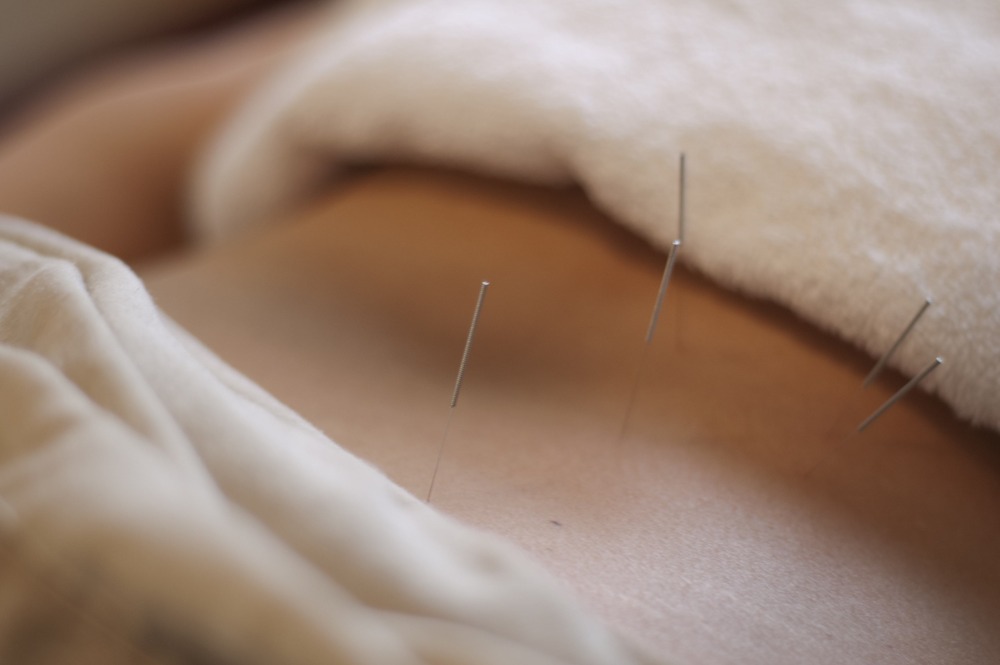
The acupuncture points used in the trial sit over the lumbosacral nerves, the nerves of the lower back and sacrum that supply the bladder, urinary tract, and pelvic floor. Growing research suggests acupuncture can modulate autonomic nerve activity, which would explain how a single treatment could influence both storage and production.
This fits with other research on acupuncture and the bladder. A 2023 meta-analysis found acupuncture performed about as well as common medications for overactive bladder, and worked even better when the two were combined.3 A 2025 trial in JAMA Network Open found that electroacupuncture on lower back and sacral points reduced urinary leakage after prostatectomy.4
How to know whether nocturnal polyuria is part of your picture
If you’re getting up several times a night, a simple bladder diary can be revealing. For three days, write down when you drink, when you urinate, roughly how much you pass each time (a measuring cup works), and when you go to bed and get up.
Patterns to notice:
- Small amounts each time, day and night point toward a storage problem.
- Large volumes overnight, especially if more than a third of your daily total comes at night, may suggest nocturnal polyuria.
Bring this diary to your urologist. It’s useful information for any treatment approach, and it can help clarify whether other conditions, medications, or evening fluid habits are contributing.

What this means for prostate cancer survivors
What I find most encouraging about this study is that it begins to explain something I see in practice. Nocturia after prostate cancer treatment is rarely one problem. It’s usually a mix of bladder changes from treatment and age-related shifts in how the body handles fluid. A treatment that can address both, without adding another medication, is especially valuable for men who may already be managing several prescriptions. About a third of the men in the acupuncture group were already on urinary medications, and acupuncture still appeared to add benefit.
Nocturia is also just one part of recovery. Many men are also dealing with fatigue, hot flashes, sleep disruption, sexual dysfunction, or stress after treatment, and I approach these together as part of acupuncture in cancer care and survivorship. I’ve completed Memorial Sloan Kettering’s IMPACT training on acupuncture in cancer care, and treatment is always coordinated with the care you’re receiving from your medical team.
Feel Better. Get Acupuncture.
If nighttime urination is disrupting your sleep after prostate cancer treatment, you don’t have to simply wait it out. Learn more about how I treat urinary symptoms after prostate cancer treatment, or schedule an appointment to discuss your situation.
References:
- Booher AG, Mao J, Sandhu J, et al. Effect of acupuncture on urine production and storage in prostate cancer survivors with nocturia: exploratory analysis of a randomized clinical trial. JU Open Plus. 2026;4:e00104. doi:10.1097/JU9.0000000000000493
- Liou KT, Carlsson S, Ajay D, et al. Acupuncture for nocturia in survivors of prostate cancer: the NOCTURNAL randomized clinical trial. JAMA Oncol. 2025;11(7):791-794. doi:10.1001/jamaoncol.2025.1199
- Lee JJ, Heo JW, Choi TY, et al. Acupuncture for the treatment of overactive bladder: a systematic review and meta-analysis. Front Neurol. 2023;13:985288. doi:10.3389/fneur.2022.985288
- Niu J, Wang Y, Wang Y, et al. Electroacupuncture in patients with early urinary incontinence after radical prostatectomy: a randomized clinical trial. JAMA Netw Open. 2025;8(9):e2534491. doi:10.1001/jamanetworkopen.2025.34491