New research shows that Chinese herbal medicine is effective for symptoms of PMS. As an acupuncturist, I am always excited when new research supports what Traditional Chinese Medicine (TCM) has known for centuries: the right herbs and acupuncture are effective for PMS symptoms.
A recent study on an herbal formula found that this formula significantly reduces PMS symptoms like mood swings, breast tenderness, fatigue, and brain fog. Best of all, it is safe, well-tolerated, and the benefits last.
Here is what the study found and how herbs and acupuncture can help you feel your best.

Table of Contents
What is PMS?
Premenstrual Syndrome (PMS) is a combination of physical and psychological symptoms that occur one to two weeks before menstruation. It typically goes away within four days of the start of menstruation.
Physical symptoms include joint or muscle pain, breast/nipple tenderness, acne flare-ups, abdominal bloating/fluid retention, headaches, and constipation/diarrhea. Psychological symptoms include depression, anxiety, mood swings, irritability, anger, appetite changes, insomnia, brain fog, and changes in libido.
About three out of every four people who menstruate experience PMS. While many cases are mild, some are debilitating. There is a form of severe PMS called premenstrual dysphoric disorder (PMDD), and it affects about 3% of people who menstruate. Both PMS and PMDD can severely reduce quality of life and make it hard to function.
PMS In Traditional Chinese Medicine (TCM)
TCM addresses PMS holistically and treats the root cause of the condition.
PMS is caused by lack of flow or stagnation of the Qi and blood. Qi is the life energy that flows through the body along meridians which are pathways that pass through different organ systems and parts of the body.
Qi and blood work together to nourish the body and keep it in balance. When Qi is blocked or stagnant this causes mood swings, anxiety, and physical discomforts of PMS.
In order to determine the main imbalances, we will take a medical history as well as examine your tongue and pulse.
The treatment will use a combination of acupuncture and herbal formulas. Acupuncture and herbs focus on smoothing the circulation of qi.
Understanding Liver Qi Stagnation: The TCM Perspective on PMS
In Traditional Chinese Medicine, we view PMS as a signal that the body’s vital energy, called Qi (pronounced “chee”), is not flowing smoothly. TCM addresses PMS holistically by treating the root cause of the condition, not just managing symptoms.
Think of Qi like water in a river. Qi and blood work together to nourish the body and keep it in balance. When the river flows freely, everything thrives. But when something blocks the current, water backs up and creates turbulence. When Qi becomes stagnant or “stuck,” the result can be irritability, mood swings, breast tenderness, bloating, headaches, and fatigue.
In TCM, the Liver organ system is specifically responsible for ensuring the smooth flow of Qi throughout the body, especially during the premenstrual phase. Liver Qi stagnation is the most common imbalance we see in PMS, but it is not the only one. Other patterns such as Spleen Qi deficiency, Kidney Yin deficiency, or blood deficiency can also contribute. That is why personalized diagnosis matters.
In order to determine your main imbalances, I will take a thorough medical history as well as examine your tongue and pulse.
The good news is that whatever pattern we find, Liver Qi stagnation or otherwise, it responds beautifully to treatment. A combination of acupuncture and herbal formulas works to gently restore the free flow of Qi and blood which helps you feel balanced, calm, and comfortable all month long.
The research on Chinese herbs for PMS
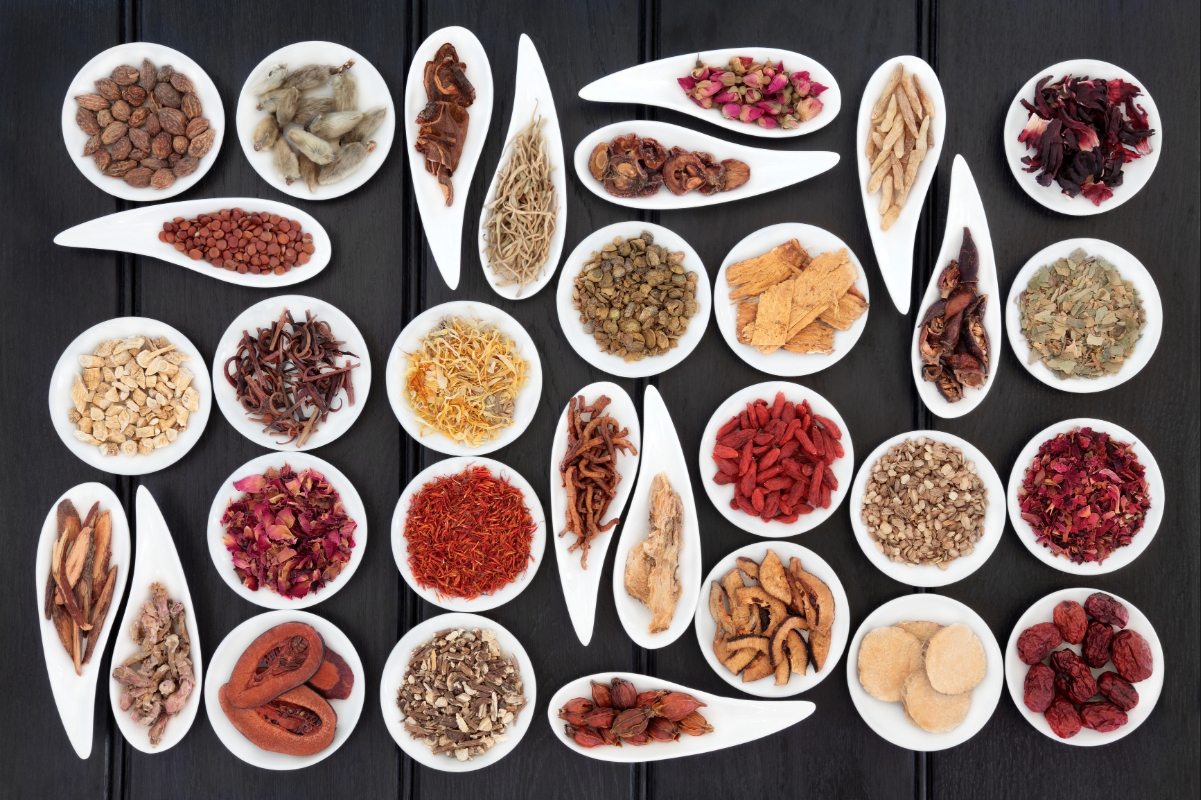
The classic formula for PMS from liver qi stagnation is called Xiao Yao San (Free and Easy Wanderer). The Jingqianshu (JQS) formula is a modification of the classic formula aiming to soothe the liver, relieve depression, regulate qi, and alleviate pain. A recent study showed that Jingqianshu granules were an effective and safe treatment for PMS(1).
A recent multi-center, randomized, double-blind, placebo-controlled trial (the gold standard of clinical research) evaluated JQS for PMS. Here is what they did and found.
Study Design
- Participants: 156 women with diagnosed PMS and TCM pattern of Liver Qi stagnation.
- Groups: They were split into two groups. One group received Jingqianshu (JQS) and the other received a placebo.
- Dosing: Participants started taking the granules 7 days before their period and continued for 7 days after it began (14 days total per cycle), three times a day.
- Duration: Treatment lasted for three menstrual cycles, with a three-cycle follow-up period.
The formula contains 11 TCM herbs:
- Angelica sinensis (Dang Gui)
- Paeonia lactiflora (Bai Shao)
- Bupleurum chinense (Chai Hu)
- Atractylodes macrocephala (Bai Zhu)
- Cortex Moutan (Mu Dan Pi)
- Cyperus rotundus (Xiang Fu)
- Pericarpium Citri Reticulatae (Chen Pi)
- Curcuma aromatica (Yu Jin)
- Amomum villosum (Sha Ren)
- Panax ginseng (Ren Shen)
- Radix Glycyrrhizae (Gan Cao)

What the Study Found
After three menstrual cycles of treatment, the results were clear. The group taking Jingqianshu granules saw their overall PMS symptom scores drop by an average of 14.5 points on the standard DRSP scale, compared to only a 10.1 point drop in the placebo group. Specific symptoms that improved significantly included anxiety, mood swings, difficulty concentrating (brain fog), fatigue, and breast tenderness.
TCM syndrome scores also showed greater improvement in the JQS group, confirming that the formula effectively addressed the Liver Qi stagnation pattern. Perhaps most encouragingly, these benefits persisted after treatment ended, with symptom scores remaining low throughout the three-month follow-up period. As for safety, adverse events were mild (such as nausea or sore throat), occurred at nearly the same low rate as placebo (4.8% vs. 3.9%), and no serious adverse events were reported anywhere in the study.
Feel better, Get Herbs and Acupuncture
This study shows that a TCM formula can safely and effectively reduce PMS symptoms. When combined with acupuncture to support the free flow of Liver Qi, many people find lasting relief without the side effects of pharmaceuticals.
While Liver Qi stagnation is the most common pattern, I also see Spleen Qi deficiency, Kidney Yin deficiency, blood deficiency, and combinations of patterns. That is why a thorough diagnosis matters. I take a full medical history, ask about your cycle, stress levels, digestion, sleep, and energy, and then look at your tongue and feel your pulse. These TCM diagnostic tools help me understand what is truly out of balance.
From there, I build a customized plan. That might include Jingqianshu granules, or it might include a different formula tailored to your unique pattern. I will almost always include acupuncture, which gently moves stagnant Qi, calms the nervous system, and supports your body’s natural healing. Together, herbs and acupuncture address the root cause, not just the symptoms.
References:
- Zhou Z, Li W, Liu Y, et al. Efficacy and safety of Jingqianshu granules in patients with premenstrual syndrome: a multicenter, randomized, double-blind, placebo-controlled trial. Int J Clin Pharm. 2025;47(6):1427-1436.