These last six weeks have been monsoon season here in New York City. Everything was soaked, soggy, and slippery.
And that makes for poor bike riding conditions. A few weeks ago, I was riding home from my Tai Ji class in central park. I was trying to be cautious, but when I hit a muddy spot on a turn my bike slipped out form under me.
Table of Contents
Splat, I fell
I fell right on my elbow.
I was worried. Is this going to require a serious rehab time? I knew, no mater what, it soon swell up badly and needed quick treatment. I would get an x-ray later in the day, and luckily nothing was broken.
Before that, I knew I could start reducing the inflammation immediately.
Start to Quickly Reduce Inflammation with Cupping
I rode home, and got out my cupping materials, acupuncture needles, and the all too valuable herbal anti-inflammatory topical poultice San Huang San.
My arm was swelling up, becoming red and hot. These are all signs of the inflammation in the area. As the swelling increase, my range of motion decreased. From previous similar injuries, I knew if I did not do anything this would take at least 2-3 months to heal.
The best way to reduce the inflammation and swelling is the ancient technique of cupping and bleeding.
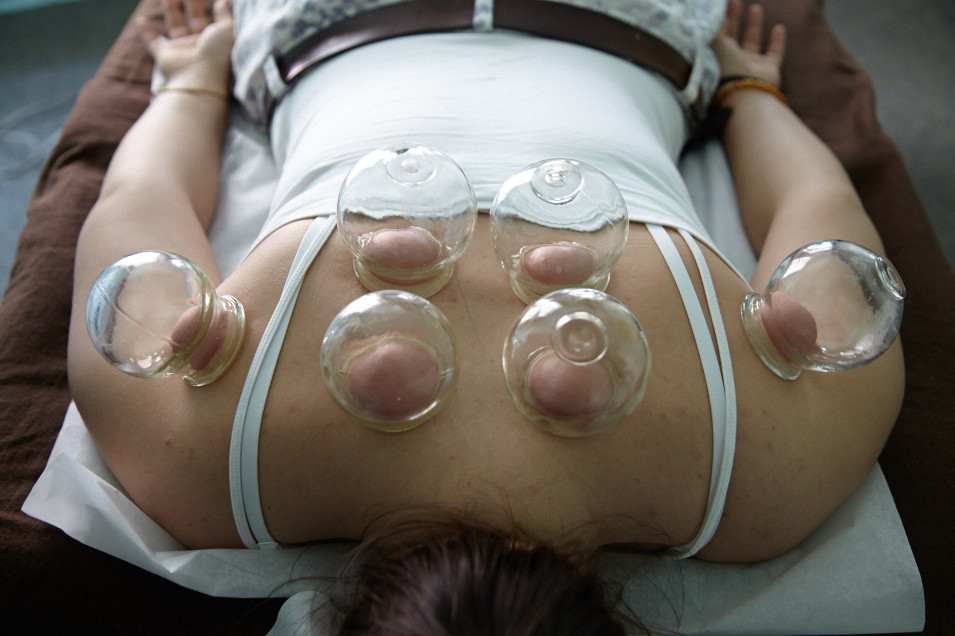
Cupping
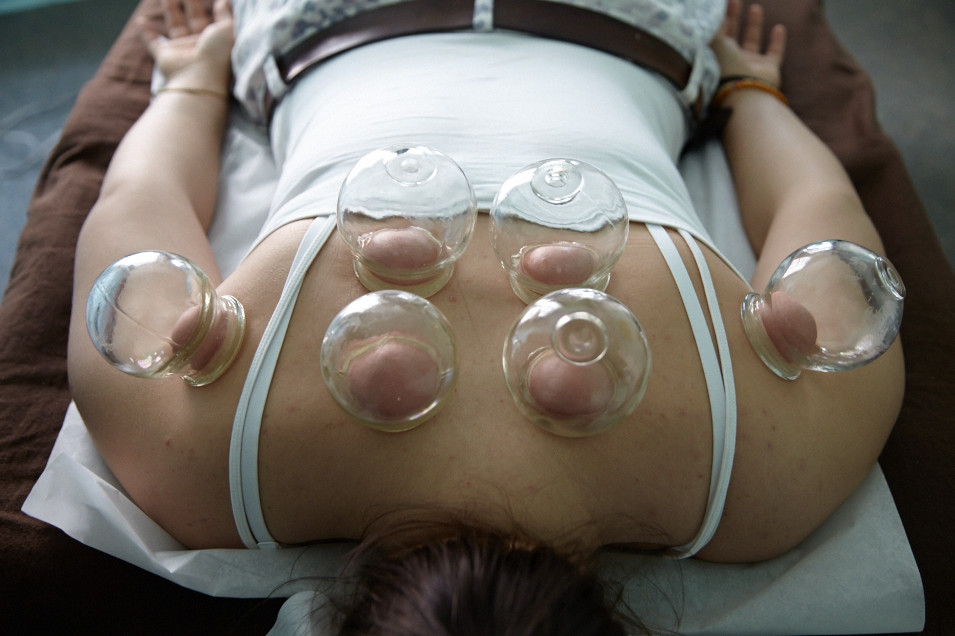
Cupping is done by creating a vacuum in a glass (or wooden) cup with a flame and then pressing that cup to the skin, drawing up the muscle beneath it.
For acute injuries, the bleeding helps to reduce the inflammation and swelling. Tom Bisio, one of my teachers and an expert on treating traumatic injuries, says in his wonderful book A Tooth from the Tiger’s Mouth,this is like breaking holes in a beaver dam. Once you open a little hole, it gets larger and larger, and more and more water will flow through. For injuries, this allows qi to flow through to promoting healing.
By using a small thick lancet, I pricked the swollen area to draw a little blood. Then, I used cupping to draw that blood away from the injury. I also needled some points for qi and blood circulation.
After the cupping treatment I used the herbal poultice called San Huang San, which has anti-inflammatory and cooling properties, and wrapped my arm for the night.
My Recovery
The next day I felt better, and the swelling had gone down considerable. I repeated the cupping and bleeding, and again wrapped my arm. Each hour I felt more circulation and relaxation. I repeated for another day. After that, there was very little swelling and I had almost full range of motion.
That week I treated myself with acupuncture two more times, and by the end of the week, I was 90% better. Within two weeks, the pain and tightness was completely gone.
I still have to rebuild some of the strength, but thanks to the cupping and acupuncture, my rehabilitation will be only a few weeks, rather than a couple of months.
Rehabilitation and Follow-Up
A few weeks after the initial injury, I moved into the second stage of healing: rehabilitation. Almost all of the inflammation was gone, but I still had some weakness and occasional clicking in the joint. To address that, I focused on building muscle and tendon strength with electroacupuncture, tui na, trauma linament, and targeted exercises.
I gave myself acupuncture twice a week, since treatment at the site of injury helps bring qi and blood to the area, and electroacupuncture stimulates cellular regeneration to support healing. Tui na helped support that circulation, and a topical herbal formula called Trauma Liniment helped move blood stagnation and bring warmth and qi to the area. Joint mobility matters too. As an old Chinese proverb says, “A wooden hinge gets no worms.” Keeping the joint moving helps prevent further injury, so I focused on gentle, consistent movement throughout rehab.
As with most injuries, combination treatment is the most effective approach, and the earlier you start after the injury, the better the outcome.