Traditional Chinese Medicine has a long history of promoting longevity and supporting healthy aging. Long before modern discussions of oxidative stress and free radicals, Chinese medicine emphasized balance, preservation of vitality, and slowing the processes associated with aging. Modern research now supports this perspective, showing that core Chinese medicine therapies—including herbal medicine, acupuncture, and tai chi—demonstrate measurable antioxidant effects.
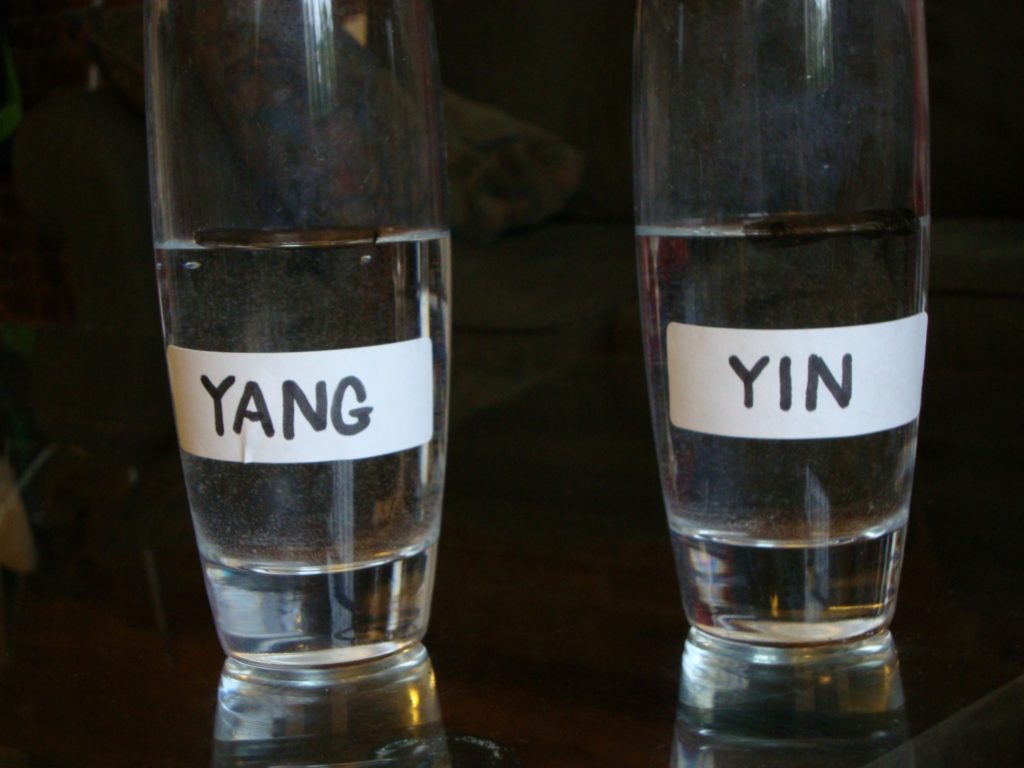
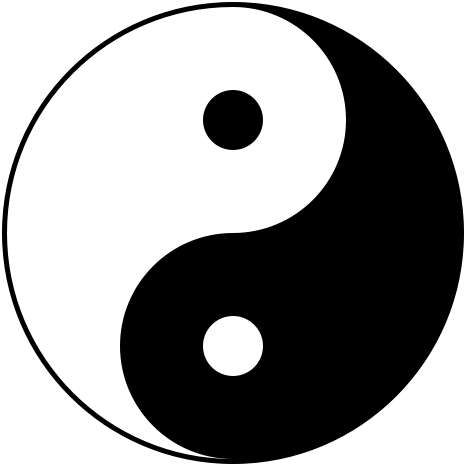
Oxidative stress describes an imbalance between the production of reactive oxygen species (ROS) and the body’s ability to neutralize them through antioxidants and other protective mechanisms.[1] Excess oxidative stress damages cells, accelerates aging, and contributes to chronic disease. In Chinese medicine, health is understood as a dynamic state of harmony, or homeostasis, in which opposing forces such as Yin and Yang remain regulated and supported.[2] When this balance shifts, degeneration and disease accelerate.
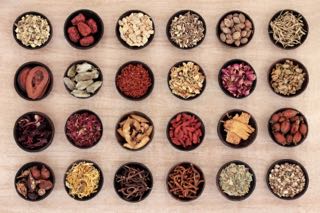
Table of Contents
Herbal Antioxidants
Chinese herbal medicine places strong emphasis on longevity and the treatment of age-related conditions, including arthritis, joint pain, cognitive decline, fatigue, and changes in skin health. Contemporary researchers propose that herbs traditionally used to tonify Yin and Yang may contain significant antioxidant activity, as these categories are central to treating degeneration and aging.[3]
Research supports this idea. Yang tonic herbs such as Gao Ben (Ligusticum sinensis) and Yin tonic herbs such as Qing Hao (Artemisia annua) both demonstrate DNA-protective effects in laboratory studies.[4] These findings suggest that herbal strategies designed to restore internal balance also protect cells from oxidative damage at a biochemical level.
Traditional classification systems offer another way to examine antioxidant activity. For centuries, Chinese medicine has categorized herbs by taste, temperature, and function to describe their actions in the body. Modern analysis shows that herbs with bitter and sour flavors tend to contain the highest levels of antioxidants.[5] These flavors are traditionally associated with clearing heat, preserving fluids, and regulating inflammation.
Studies evaluating antioxidant levels by Yin–Yang classification show higher antioxidant activity in Yin-tonifying herbs.[2] Bitter flavor profiles were shared by all Yin herbs examined, reinforcing the overlap between classical theory and modern biochemical findings.
Green Tea Antioxidant
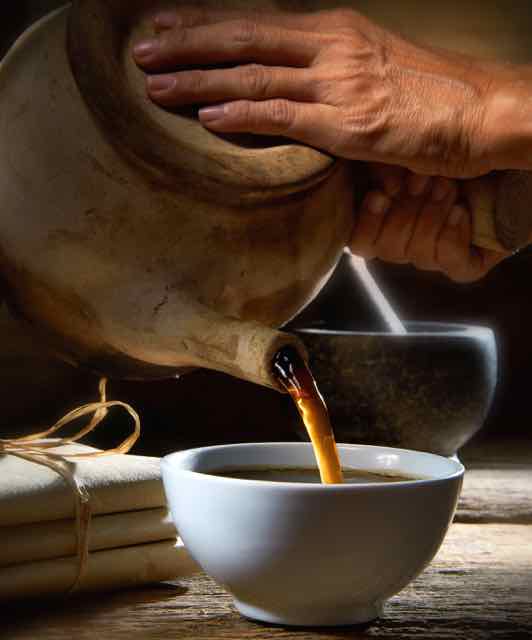
Green tea remains one of the most widely consumed beverages throughout Asia and has served both culinary and medicinal roles for centuries. Rich in catechins, green tea provides potent antioxidant activity with documented benefits for cardiovascular health, metabolic regulation, and cancer prevention.[6–9]
Skin health research highlights additional benefits. Green tea supports protection against UV-induced damage, may reduce the risk of certain skin cancers, and helps limit abnormal scar formation such as keloids.[10] These effects mirror its traditional use for clearing heat and supporting skin resilience.
Topical applications of green tea also have deep historical roots. Brewed tea was traditionally applied as a facial rinse or compress, and contemporary skincare continues this practice through extracts in serums, masks, and creams.[9] Simple home applications, such as combining green tea with clay or honey, remain an accessible way to apply these principles today.
Acupuncture as Antioxidant
Acupuncture has a long clinical history in the treatment of age-related disorders, including neurologic, cardiovascular, and inflammatory conditions. Modern research suggests that acupuncture’s benefits in conditions such as Parkinson’s disease, dementia, and hypertension are partially mediated through antioxidant and anti-inflammatory mechanisms.[11]
By modulating the nervous system, improving circulation, and reducing systemic inflammation, acupuncture influences oxidative stress pathways. Within Chinese medicine, this reflects acupuncture’s role in restoring balance, promoting the smooth flow of Qi and Blood, and supporting the body’s intrinsic repair capacity.
Tai Chi Chuan as Antioxidant Practice
Tai Chi Chuan, commonly called tai chi or tai ji, is a slow, continuous movement practice rooted in balance, breath regulation, and relaxation.
Clinical research demonstrates tai chi’s benefits for cardiovascular health, neurologic function, balance, and chronic pain.[12–14] Additional studies show reductions in oxidative stress markers and DNA damage among regular practitioners.[15]
Tai chi nourishes both Yin and Yang by combining gentle movement with focused awareness and controlled breathing. This integration supports physical resilience while calming the nervous system, making tai chi a powerful longevity practice.
Protecting the Body From Oxidative Stress
Chinese medicine offers a cohesive framework for understanding aging through balance, regulation, and resilience. Herbal medicine, acupuncture, and tai chi act through distinct pathways while sharing a common goal: protecting tissues, reducing oxidative stress, and supporting long-term vitality. Rather than targeting aging as a disease, this approach emphasizes cultivating health over time—an outlook that aligns closely with modern longevity medicine.
References
1. Sies H. Oxidative stress: a concept in redox biology and medicine. Redox Biol.2015;4:180-183; PMID: 25588755.
2. Ou B, Huang D, Hampsch-Woodill M, et al. When east meets west: the relationship between yin-yang and antioxidation-oxidation. FASEB J.2003;17(2):127-129; PMID: 12554690.
3. Ko KM, Leung HY. Enhancement of ATP generation capacity, antioxidant activity and immunomodulatory activities by Chinese Yang and Yin tonifying herbs. Chin Med.2007;2:3; PMID: 17386115.
4. Szeto YT, Benzie IF. Is the yin-yang nature of Chinese herbal medicine equivalent to antioxidation-oxidation? J Ethnopharmacol.2006;108(3):361-366; PMID: 16870371.
5. Liao H, Banbury LK, Leach DN. Antioxidant activity of 45 Chinese herbs and the relationship with their TCM characteristics. Evid Based Complement Alternat Med.2008;5(4):429-434; PMID: 18955214.
6. Huang J, Wang Y, Xie Z, et al. The anti-obesity effects of green tea in human intervention and basic molecular studies. Eur J Clin Nutr.2014;68(10):1075-1087; PMID: 25074392.
7. Rahmani AH, Al Shabrmi FM, Allemailem KS, et al. Implications of Green Tea and Its Constituents in the Prevention of Cancer via the Modulation of Cell Signalling Pathway. Biomed Res Int.2015;2015:925640; PMID: 25977926.
8. Islam MA. Cardiovascular effects of green tea catechins: progress and promise. Recent Pat Cardiovasc Drug Discov.2012;7(2):88-99; PMID: 22670802.
9. Burlando B. Herbal principles in cosmetics : properties and mechanisms of action. Boca Raton: CRC Press; 2010.
10. Barbosa NS, Kalaaji AN. CAM use in dermatology. Is there a potential role for honey, green tea, and vitamin C? Complement Ther Clin Pract.2014;20(1):11-15; PMID: 24439638.
11. Zeng XH, Li QQ, Xu Q, et al. Acupuncture mechanism and redox equilibrium. Evid Based Complement Alternat Med.2014;2014:483294; PMID: 25097658.
12. Zheng G, Li S, Huang M, et al. The effect of Tai Chi training on cardiorespiratory fitness in healthy adults: a systematic review and meta-analysis. PLoS One.2015;10(2):e0117360; PMID: 25680184.
13. Lan C, Chen SY, Lai JS, et al. Tai chi chuan in medicine and health promotion. Evid Based Complement Alternat Med.2013;2013:502131; PMID: 24159346.
14. Mortimer JA, Ding D, Borenstein AR, et al. Changes in brain volume and cognition in a randomized trial of exercise and social interaction in a community-based sample of non-demented Chinese elders. J Alzheimers Dis.2012;30(4):757-766; PMID: 22451320.
15. Huang XY, Eungpinichpong W, Silsirivanit A, et al. Tai chi improves oxidative stress response and DNA damage/repair in young sedentary females. J Phys Ther Sci.2014;26(6):825-829; PMID: 25013276.