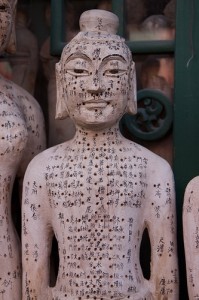
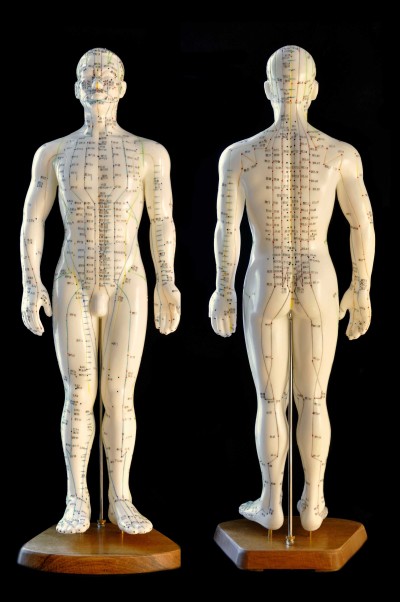
One of the most common questions I hear in my clinic is: How do you know where to put the needles? When you come in for acne, back pain, or digestive issues, I’m not just placing needles where it hurts. I’m carefully choosing points that will best support your body balance based on your unique pattern of symptoms, constitution, and overall health.
Each acupuncture point has specific functions—it might calm the nervous system, regulate digestion, boost immunity, or move stagnated energy (Qi). The points chosen for a treatment work in combination to create the most effective treatment. Selecting the right points is like creating a delicious recipe: each ingredient has a role, and together they create a therapeutic effect tailored to your needs.
Now, thanks to new research using functional MRI (fMRI), we can actually see how different acupuncture points activate or deactivate specific regions of the brain. A 2025 study found that three commonly used points—HT7 (Shenmen), ST36 (Zusanli), and KI4 (Dazhong)—each influenced distinct brain networks tied to emotion, digestion, cognition, and pain processing.
In this post, I’ll walk you through how acupuncturists select points and how modern science is confirming the wisdom behind this ancient practice.
Table of Contents
What makes one acupuncture point different from another?
Not all acupuncture points do the same thing. Each acupuncture point has its own unique function, set of clinical indications, and connection to a specific meridian.
Think of acupuncture points like tools in a toolbox. You wouldn’t use a wrench to do a screwdriver’s job—and in acupuncture, we wouldn’t use a point for digestion to treat anxiety (unless there’s a connection to the digestive Qi, which there often is!). Each point is carefully selected based on what your body needs that day.
Some points are calming and regulate the nervous system- like HT7, used for anxiety, insomnia, or emotional stress.
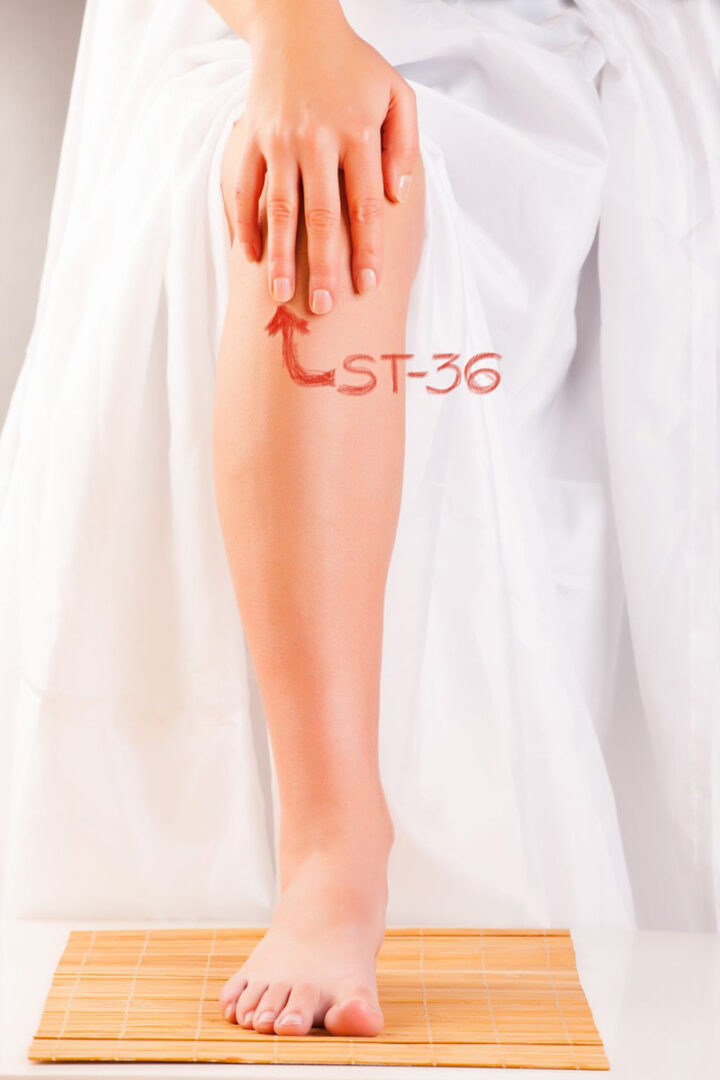
Others strengthen digestion and energy- like ST36, often used for fatigue, poor appetite, or immune support.
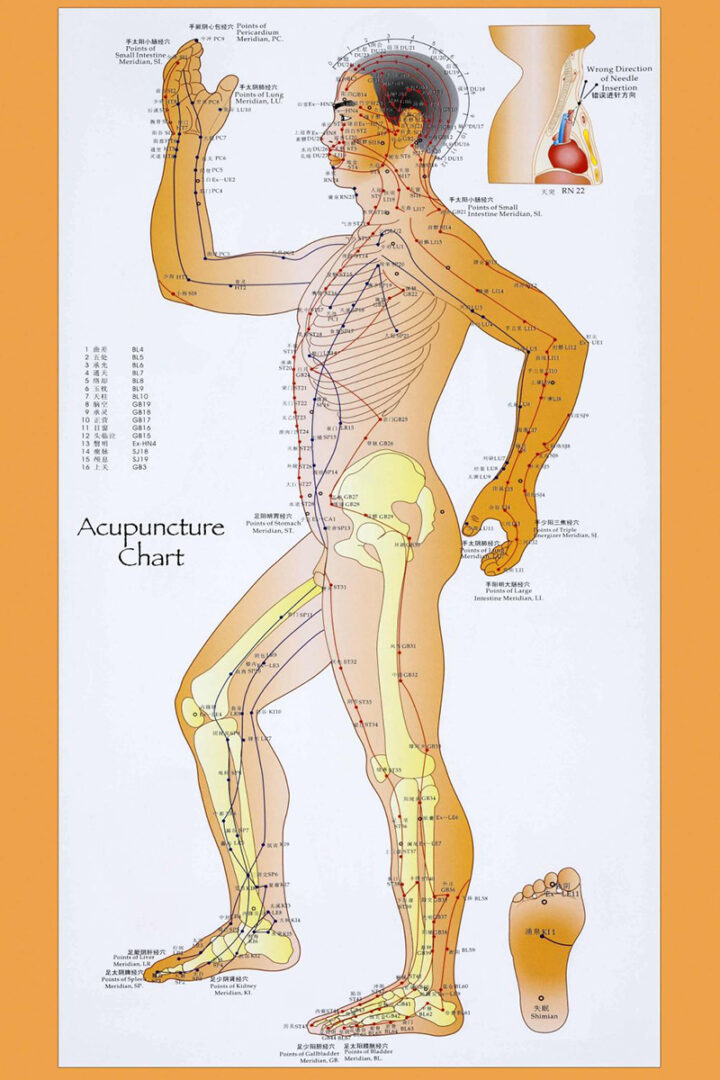
Some help anchor and ground the body, especially in pain or cognitive fog- like KI4, which connects to brain and memory function.
Each acupuncture point has a function related to their meridian—we can use them to tonify (strengthen), sedate (calm), move (circulate), or clear (release) based on your unique needs. That’s why acupuncture works so well for complex or chronic conditions: it’s personalized, targeted, and dynamic.
Brain imaging confirms: points work differently
Modern science is now showing us just how specific acupuncture really is. A recent brain imaging study used fMRI (functional magnetic resonance imaging) to explore how different acupuncture points affect the brain—and the results were fascinating.
Researchers looked at three well-known acupuncture points:
- HT7 (Shenmen) – used for anxiety, sleep, and calming the mind
- ST36 (Zusanli) – known for boosting digestion, energy, and immunity
- KI4 (Dazhong) – used for grounding, pain relief, and cognitive function
Healthy adult volunteers received acupuncture at these points while inside an MRI scanner. Each person experienced the deqi sensation—the characteristic tingling, heaviness, or warmth that often comes with acupuncture and is considered a sign the treatment is working.
The study found that each acupuncture point activated different parts of the brain. While all three points influenced areas involved in pain regulation and emotional processing, they did so in distinct ways:
- HT7 calmed areas tied to emotion, attention, and spatial awareness
- ST36 influenced regions related to digestion, hunger cues, and mood
- KI4 activated parts of the brain involved in pain processing and language function
Interestingly, all three points led to calming of a specific part of the brain called the left cerebellar Crus II, a region connected to emotion, memory, and mental focus. But beyond that, the patterns were unique—revealing that each acupuncture point has its own “fingerprint” in the brain.
This research helps explain why acupuncture can be so versatile and specific to different conditions. Whether you’re dealing with stress, digestive issues, or chronic pain, we’re not just calming the nervous system—we’re carefully selecting points that influence the right brain and body pathways for your needs.

How acupuncturists know where to put the needles
Patients often ask, “How do you know where to place the needles?” After two decades of clinical practice, my answer is this: it’s a blend of science, experience, observation, and the deep traditions of Chinese medicine.
In acupuncture school, we begin by learning the anatomy of point locations, the meridian pathways, and the classical indications for each point. But the real learning begins once you’re treating real people. Over the past 20 years, I’ve seen how the same point can behave differently in different patients, and how subtle shifts in the underlying imbalances can guide entirely different treatment strategies.
I’ve also been lucky to study with master practitioners—teachers whose insight doesn’t just come from textbooks, but from treating thousands of patients with care and precision. They taught me to pay attention not just to the symptoms, but to the whole person: their voice, their energy, the way their body tells its story. These clinical details, along with the traditional pulse and tongue diagnosis, help determine which points will create the greatest shift.
And now, research is helping confirm what we’ve long observed. Even though each point was stimulated using the same technique, the brain responded differently depending on which point was used.
We see that that way acupuncture stimulates the brain is one of the ways that the selection of points matters. Their effects are specific—not interchangeable.
This also is a window to one of the many ways acupuncture works. Acupuncture points carry specific instructions to the body and brain.
Feel better, get personalized acupuncture
Acupuncture treatments are carefully crafted to activate specific functions and processes in the body. Modern brain imaging studies now confirm what Traditional Chinese Medicine has known for thousands of years: each acupuncture point has a unique effect on the brain and body.
Whether you’re coming in for stress, poor sleep, digestive issues, or chronic pain, your treatment is never one-size-fits-all. The points I choose are selected based on what your body needs in that moment—to support healing from the inside out.
References:
- Hu L, Zhang J, Wu X, et al. Shared and distinct brain activation patterns of acupoints HT7, ST36, and KI4: a task-based fMRI study. Front Neurol. 2025;16:1596306. doi:10.3389/fneur.2025.1596306.