

Quitting smoking is one of the best things you can do for your long-term health, and one of the hardest habits to break. Acupuncture offers a natural way to support you through it, minimizing cravings, easing nicotine withdrawal symptoms, and providing steady support during the transition.


You can do it!!!
Quitting is a real challenge, but it’s absolutely possible, especially with the right support in place.
Although it’s not as widely known as nicotine patches and gums, acupuncture has been shown to help smokers quit. A 2019 systematic review and meta-analysis of 24 randomized controlled trials, involving nearly 4,000 participants, found that acupuncture was significantly more effective than no treatment at all for both short-term and long-term smoking cessation. The review also found that combining acupuncture with counseling, an educational cessation program, or moxibustion produced better long-term results than acupuncture used alone, though the authors noted that the overall quality of the trials reviewed was generally low, and called for more rigorous research.¹
That combination approach is exactly how I recommend using acupuncture: as one part of a broader plan, alongside stress reduction techniques, nicotine replacement if needed, and a supportive group of friends and family.
Besides helping smokers quit, acupuncture can also help you feel more relaxed and less stressed during the process. It eases the emotional and physical withdrawal symptoms associated with quitting, which can be genuinely hard to manage alone, and supports the body’s natural ability to detoxify.
What to Expect
Treatments can last anywhere from five to 30 minutes. Most patients receive treatment once or twice a week. Some people find relief after just one session, while others need several treatments to see lasting results. Many smoking cessation programs involve 4 to 6 sessions in the initial phase, followed by monthly treatments for the next four to six months.
It also helps to prepare mentally: make a list of your reasons to quit, line up friends and family who will support you, set a specific quit date, and build in regular exercise for stress relief. I also suggest deciding ahead of time what you’ll do instead of smoking when a craving hits, eating an apple or a pretzel, or chewing gum, can occupy the physical habit of doing something with your hands and mouth.
How Acupuncture Helps You Quit
Acupuncture helps relax the body and mind, calming cigarette cravings and making irritability more manageable. It also helps balance the nervous system by releasing your own natural endorphins, and feeling good can give your willpower a real boost.
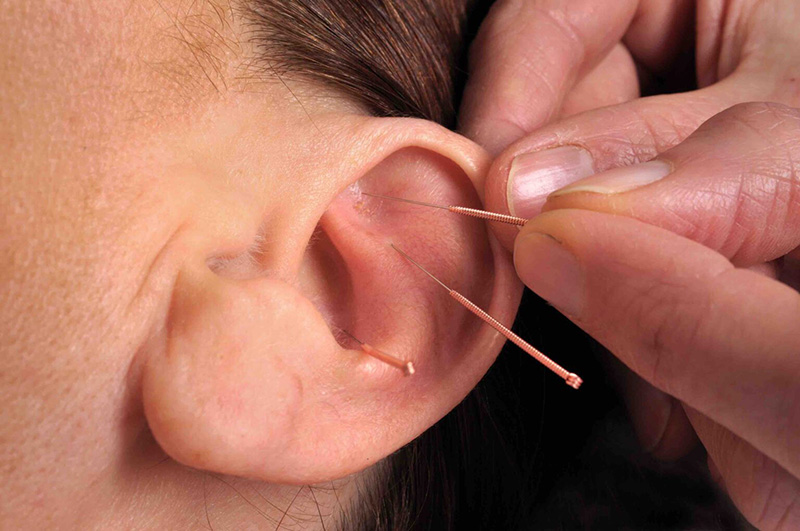
Treatment for smoking cessation often focuses on points in the outer ear. Acupuncture tends to work best in combination with other methods, such as stress reduction, nicotine replacement, and a supportive group of friends and family.
Acupuncture Help Eliminate Cravings
One of the most effective tools for eliminating cravings is stimulating specific points on the outer ear using small ear seeds. These are placed on the ear and pressed whenever a craving strikes, this same technique can also help smokers avoid the overeating and weight gain that sometimes accompanies quitting.
During treatment, acupuncture needles help release endorphins, which can replace some of the dopamine rush smoking once provided and promote an overall sense of wellbeing. Endorphins help the body cope with discomfort and can protect against the depression and anxiety that sometimes accompany quitting. Dopamine, meanwhile, drives the brain’s reward center and the pleasurable feeling smoking is designed to trigger. By easing the emotional pain tied to smoking, endorphins help the transition away from nicotine addiction feel more manageable.
Ready to Quit for Good?
Acupuncture can be a powerful part of your plan to quit smoking, supporting you through cravings, stress, and withdrawal every step of the way.
Schedule an appointment online or call 212-319-5757.
Reference
- Wang JH, van Haselen R, Wang M, et al. Acupuncture for smoking cessation: A systematic review and meta-analysis of 24 randomized controlled trials. Tob Induc Dis. 2019;17:48.