

Most adults need close to a third of their lives for sleep. For many people, getting that sleep is a lot easier said than done.
Insomnia is an issue that many of my patients experience. This is not so surprising, since many chronic illnesses and pain conditions are also associated with poor sleep. Difficulty falling asleep, waking repeatedly through the night, or waking too early and being unable to fall back asleep can all take a toll on mood, energy, and overall health over time.
There is hope. Acupuncture is very effective for treating insomnia. In my 20 years of practice, I have seen time and time again that acupuncture helps patients sleep better, often alongside whatever else brought them into the clinic.
Acupuncture for better sleep
Acupuncture is helpful for those sleepless nights. Patients often sleep better even when insomnia isn’t the reason they came in. So whether you’re being treated for back pain, headaches, or digestive issues, acupuncture tends to improve sleep along the way.
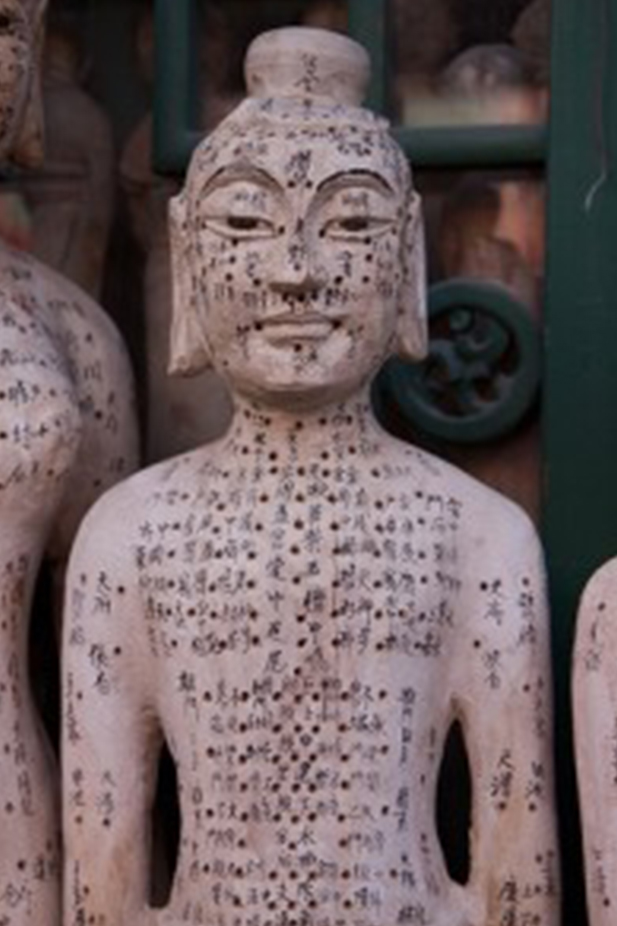
Health is a state when the body is in balance. When imbalances occur, we can develop illness. By correcting the underlying imbalances, the body works to heal itself. Acupuncture corrects imbalances by stimulating specific points on specific acupuncture channels. When stimulated, these points help the qi flow smoothly.
Imbalances are frequently related to the body’s energy, called qi (pronounced chee). Qi travels through channels in the body like water flowing through a winding river, connecting the body’s surface to the internal organs and muscles. This is why acupuncture can treat internal conditions as well as physical ones.
The root cause of insomnia in Chinese medicine
The underlying imbalance for insomnia often lies in the heart qi. In Chinese medicine, the heart’s energy governs the emotions, so disruptions in this organ system can show up as restlessness, anxiety, and palpitations alongside difficulty sleeping.
“Heat” is one pattern to watch for — easily overheated, a red complexion, and a red tongue. A pale complexion and pale tongue point instead to blood and qi deficiency. Identifying which pattern is at play is part of what shapes the treatment plan, since two patients with the same complaint of sleeplessness may need very different point selections.
What the research shows
Clinical research backs up what I see in the treatment room. A systematic review of randomized controlled trials on acupuncture for insomnia found that acupuncture is effective for treating insomnia.¹
More recent brain imaging research adds to this picture. fMRI studies have found that acupuncture affects the brain’s Default Mode Network, the network tied to the wandering, self-referential thinking that keeps many insomnia sufferers awake at night. For a deeper look at that research, along with a full case study from my practice, see Insomnia Relief: How Acupuncture Treats Insomnia Naturally.
A Simple Tool Between Sessions
Between sessions, gently pressing Heart 7 (Shen Men), located on the wrist crease on the pinky side, can help calm the mind and support sleep. It’s one of the acupressure points I often teach patients to use at home, and it takes only a minute or two.
Ready to Sleep Better?
Acupuncture works with your body to address what’s keeping you up, not just mask it. Every treatment starts with a consultation tailored to your specific pattern.
Schedule an appointment or call 212-319-5757.
Reference
Cao, H., Pan, X., Li, H., & Liu, J. (2009). Acupuncture for treatment of insomnia: A systematic review of randomized controlled trials. The Journal of Alternative and Complementary Medicine, 15(11), 1171–1186.