
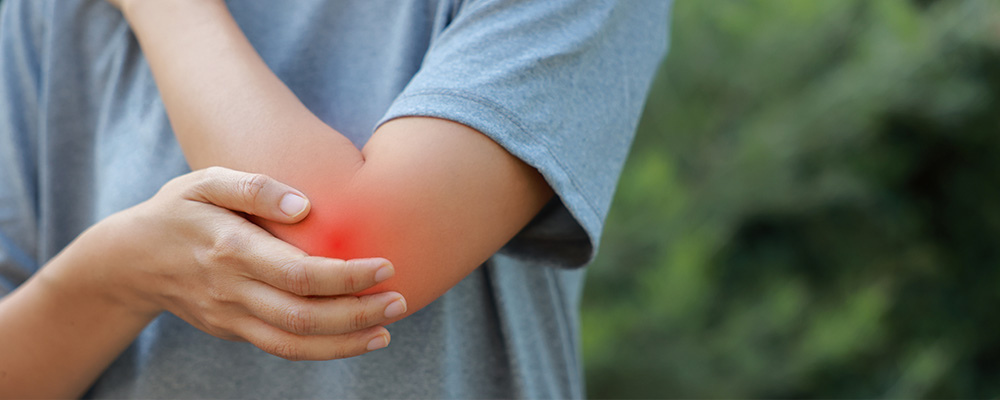
Tendonitis is a common condition that develops when tendons, the connective tissue linking muscle to bone, become irritated and inflamed. It’s often caused by overuse, repetitive strain, poor biomechanics, or unresolved injury.
Acupuncture treats tendonitis by reducing inflammation, improving circulation, and stimulating the body’s own healing response, including the release of natural pain-relieving chemicals.
In this article, I’ll explain how acupuncture works for tendonitis, review research supporting its effectiveness, and describe how treatment is customized for common conditions like tennis elbow, golfer’s elbow, and Achilles tendonitis.
Acupuncture for tendonitis
Acupuncture is a safe and effective treatment for many forms of tendonitis, including cases that haven’t responded well to rest, physical therapy, or injections. In my practice, I regularly help patients regain mobility and return to activities they had to give up because of persistent tendon pain.
Treatment focuses on both the local injury and the underlying factors that caused it. Acupuncture points are selected to reduce inflammation, improve circulation, and relieve pain. Herbal medicine and topical liniments are often used alongside acupuncture to support healing and calm irritated tissue.
In Chinese medicine, tendon pain is most often caused by stagnation of qi and blood. Repetitive stress, injury, or prolonged tension can impair circulation to the tendons, leading to pain, stiffness, and inflammation.
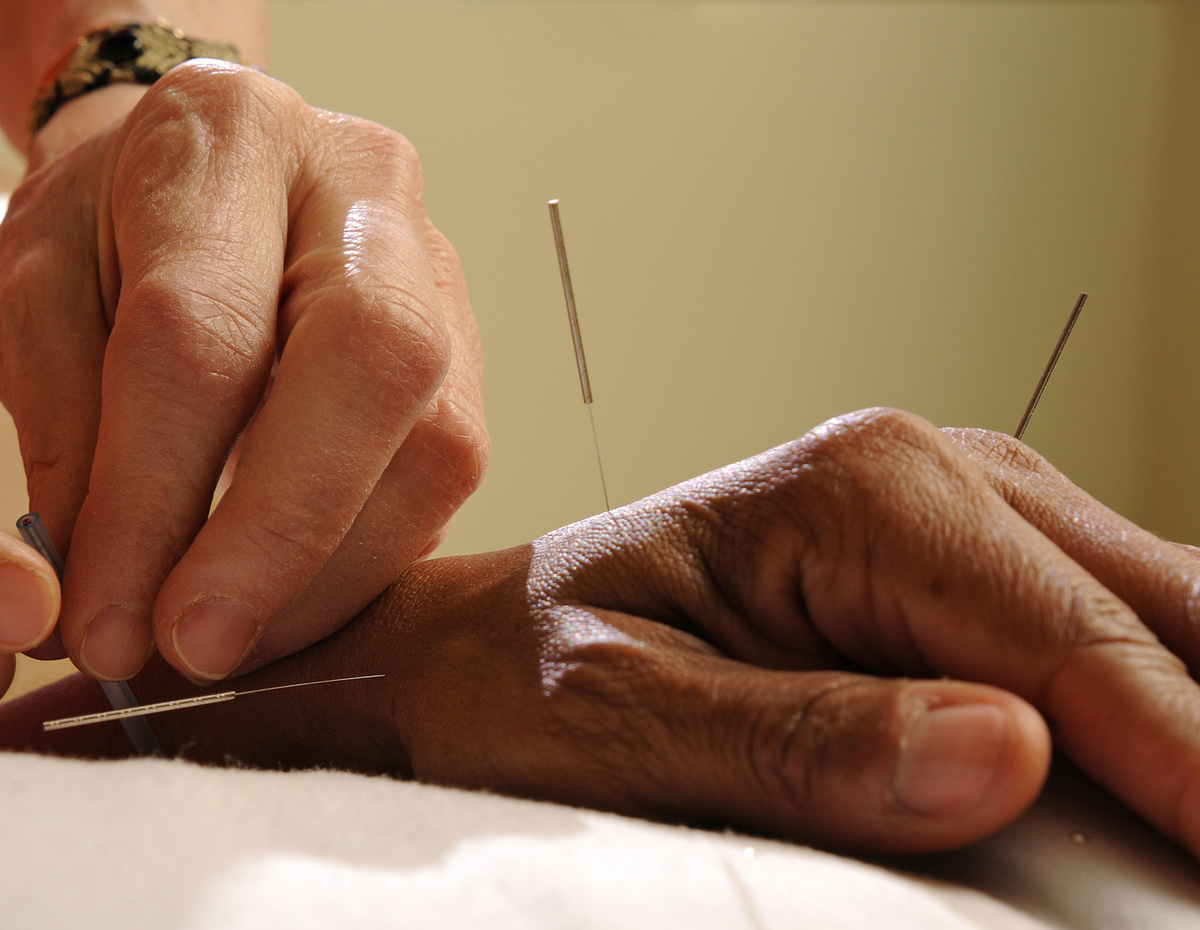
Your first visit includes a detailed intake, orthopedic assessment, and review of your activity history. Treatment plans are individualized and may include a combination of therapies such as acupuncture, electroacupuncture, tui na massage, herbal medicine, cupping, or moxibustion. Most tendon injuries respond best to a course of 8–12 treatments, typically one to two visits per week.
Book an appointment in our Upper West Side OfficeImproving microcirculation and bringing nutrients to the injured tendon
Acupuncture works by stimulating the body’s natural repair mechanisms. Needling increases local circulation, bringing oxygen and nutrients to damaged tissue while helping remove inflammatory byproducts.
When needles are placed into muscle and connective tissue, you’ll often feel a local twitch or gripping sensation. Research suggests this mechanical interaction stimulates fibroblasts, the cells responsible for repairing collagen and connective tissue. This is the way acupuncture works like a scaffold to give structure for the body to rebuild and reorganize the damaged fibers.
Studies show acupuncture can reduce pain, improve function, and in some cases perform as well as or better than steroid injections, without the long-term risks. It’s commonly used alongside physical therapy to speed recovery and reduce the likelihood of surgery.
Tennis elbow (lateral epicondylitis)
Tennis elbow is one of the most common tendon conditions I treat in our office in Manhattan. It occurs when the tendons attaching to the outside of the elbow become irritated from repetitive gripping, lifting, or wrist extension. Pain is usually felt on the outer elbow and may radiate into the forearm, making everyday tasks like lifting a mug or turning a doorknob uncomfortable.
Acupuncture treatment focuses on the painful elbow itself, the surrounding forearm muscles, and related shoulder and neck tension that often contributes to overload.
Electroacupuncture is frequently added to enhance pain relief and reduce inflammation by gently stimulating the nerves and muscles with a low electrical current.
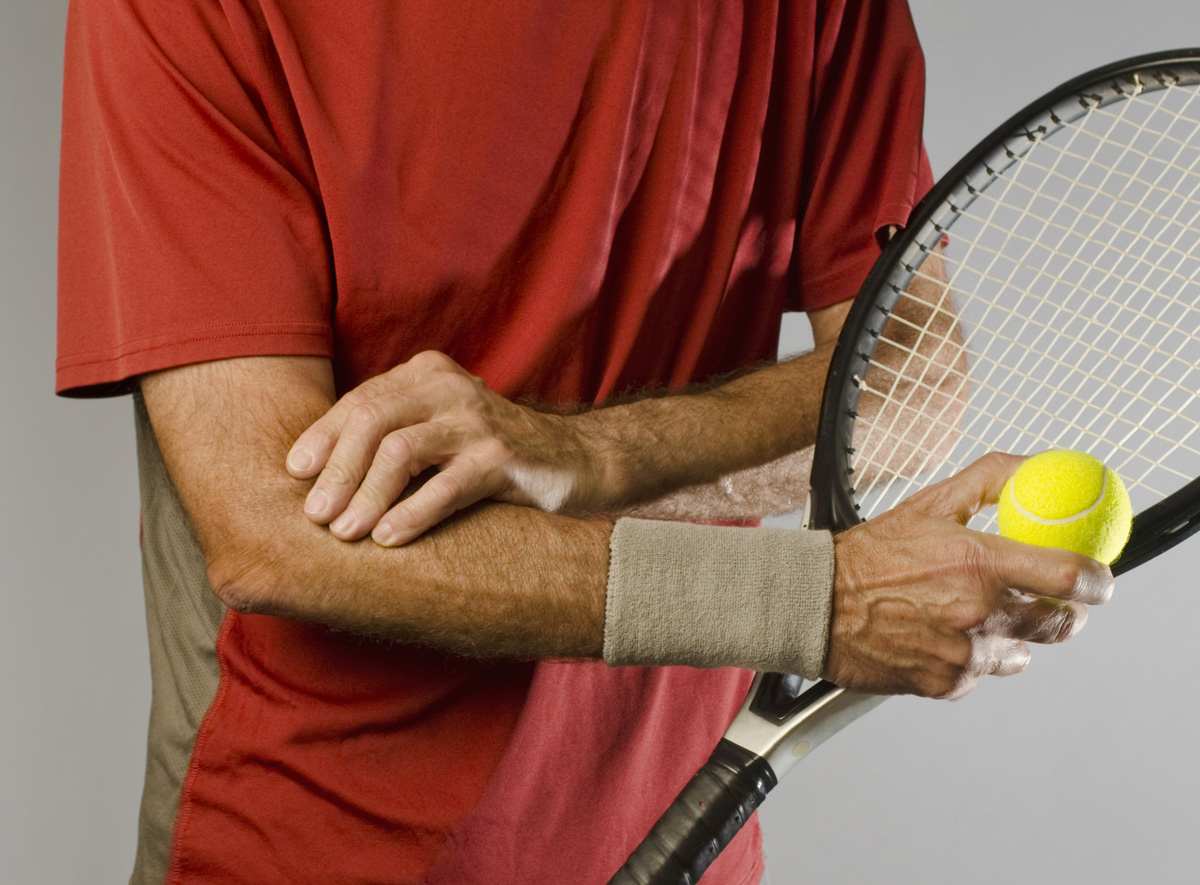
Research consistently shows acupuncture can reduce pain and improve grip strength in people with tennis elbow ( 1, 2). In practice, patients often notice improvement in pain and function within the first few weeks, especially when treatment is combined with activity modification and strengthening.
Golfer’s elbow (medial epicondylitis)
Golfer’s elbow affects the inside of the elbow and is caused by overuse of the wrist flexors and forearm muscles. Symptoms include pain and tenderness on the inner elbow, weakness with gripping, and discomfort during lifting or repetitive hand motions.
Although the location differs from tennis elbow, the treatment principles are similar. Acupuncture is used to improve circulation along the affected tendons, reduce inflammation, and address contributing patterns such as shoulder instability or poor wrist mechanics.
Achilles tendonitis
Achilles tendonitis occurs when the tendon connecting the calf muscles to the heel becomes inflamed, often due to overuse, sudden increases in activity, or poor footwear. Symptoms include pain, stiffness, and swelling near the heel, especially first thing in the morning or after activity.
Acupuncture treatment targets the Achilles tendon directly, along with the calf muscles, ankle, and related hip mechanics. Electroacupuncture is commonly used to stimulate circulation and promote tissue repair. Treatment also addresses contributing factors such as tight calves, poor shock absorption, or altered gait.

Research shows acupuncture can reduce pain and improve function in Achilles tendonitis by decreasing inflammation and stimulating healing ( 3, 4 ). I see many patients whose recovery has stalled with rest or physical therapy alone find help in acupuncture.
Herbal liniments for tendonitis
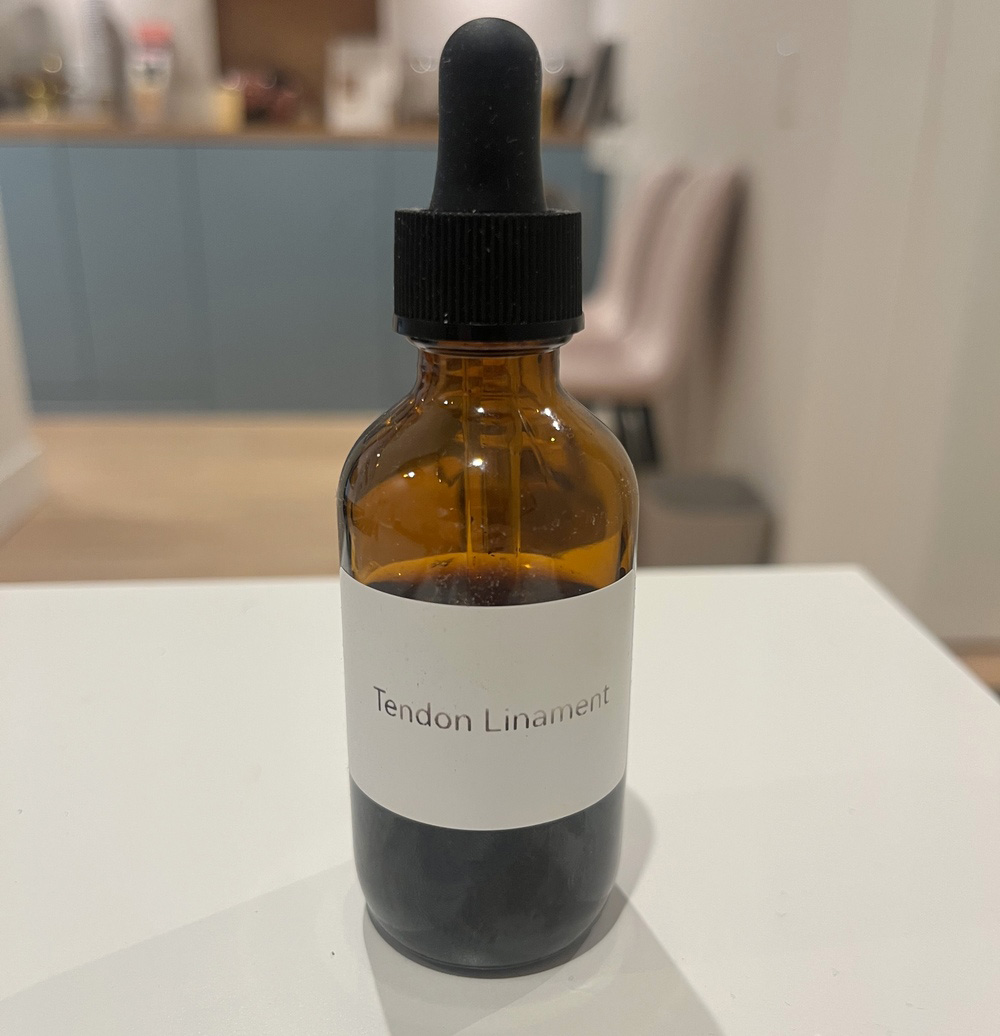
We also use topical herbal liniments to support tendon healing. These formulas are designed to reduce inflammation, improve circulation, and relieve pain when applied directly to the affected area.
Our tendon liniment is made from herbs including dang gui to promote blood flow, ru xiang and mo yao for their anti-inflammatory and tissue-repair properties, and hong hua to reduce stagnation and pain. Liniments are when the herbs are extracted in alcohol.
Topical herbal liniments can be a helpful addition to treatment, especially for chronic or stubborn tendon injuries.
Feel better, get acupuncture
Acupuncture offers an effective, drug-free approach to treating tendonitis, including tennis elbow, golfer’s elbow, and Achilles tendonitis. By improving circulation, reducing inflammation, and supporting tissue repair, acupuncture helps the body heal rather than simply masking pain.
Research supports its use for pain reduction and functional improvement, and in clinical practice it often works best when combined with movement therapy, strengthening, and activity modification.
If you’re dealing with persistent tendon pain, acupuncture can be a valuable part of your recovery plan. Treatment is individualized, progressive, and designed to get you back to moving comfortably and confidently again.

Frequently Asked Questions
I commonly treat tennis elbow, golfer’s elbow, Achilles tendonitis, rotator cuff tendonitis, and patellar tendonitis. Treatment is always tailored to the specific tendon involved and the demands placed on it.
Yes. Acupuncture supports healing and improves blood flow, which helps long-standing injuries recover. We have helped many patients with tendonitis in our clinic.
Most patients notice improvement in pain and function within two to four treatments. Acute tendonitis may improve within four to six visits. Chronic cases that have been present for several months often require eight to twelve treatments, and sometimes more. Consistency is important, especially for long-standing injuries.
Acupuncture stimulates the body’s repair mechanisms. Needling increases local circulation, bringing oxygen and nutrients to damaged tissue while helping remove inflammatory byproducts. It also regulates the nervous system and supports the release of natural pain-relieving and anti-inflammatory chemicals.
References:
- Trinh KV, et al. Acupuncture for the alleviation of lateral epicondyle pain: a best-evidence synthesis. Rheumatology (Oxford). 2004;43(9):1085-108
- Zhou Y, et al. Effectiveness of acupuncture for lateral epicondylitis: a systematic review and meta-analysis of randomized controlled trials. Evidence-Based Complementary and Alternative Medicine. 2020;2020:3618573.
- Zhang B, et al. Acupuncture for chronic Achilles tendinopathy: a randomized controlled study. Chinese Journal of Integrative Medicine. 2013;19:900-904.
- Hawks M, et al. Treatment of insertional Achilles tendinopathy using adjunct electroacupuncture therapy: a randomized controlled trial. Med Acupunct. 2023;35(2):76-81.