Archive for the ‘Chinese Herbs’ Category
Acupuncture and Chinese Medicine for Skin Conditions
Apr 24, 2013
Skin diseases are one of the most common reasons to see your doctor. Yet, they are often stubborn conditions which do not respond to medications. Or even worse the medications have side effects. Acupuncture and Chinese medicine offers a natural and effective treatment for many skin conditions, such as acne, eczema, psoriasis, perioral dermatitis, and others.
Acupuncture and Chinese medicine has been treating skin diseases for at least 3000 years. The treatment of many skin diseases were discussed in the first known book of Chinese medicine, The Yellow Emperor’s Inner Classic (Huang Di Nei Jing). In the thousands of years since, Chinese medicine doctors and scholars discussed and debated the best approaches to treatment of skin conditions.
Traditional Chinese Medicine Understanding of Skin Conditions
The key to effective Chinese medicine treatment of skin diseases is diagnosis of the underlying imbalance causing the condition. Not everyone with a given skin condition will have the same symptoms. The different symptoms reflect the imbalance which needs to be corrected. My teacher of Chinese Medicine Dermatology, Mazin Al-Khafaji, describes this as Chinese medicine’s method of assessing various types of inflammatory processes causing the skin condition.
Let’s take eczema as an example. Some eczema may presents with wet, weeping, and crusty lesions. In this case, the imbalance is Heat and Damp Eczema. In other cases, the eczema is dry and red. This type of eczema is understood to be caused by Heat and Dryness. The Chinese medicine practitioner will use this imbalance to guide the writing of the acupuncture and herbal prescription.
Traditional Chinese Medicine Treatment Approaches
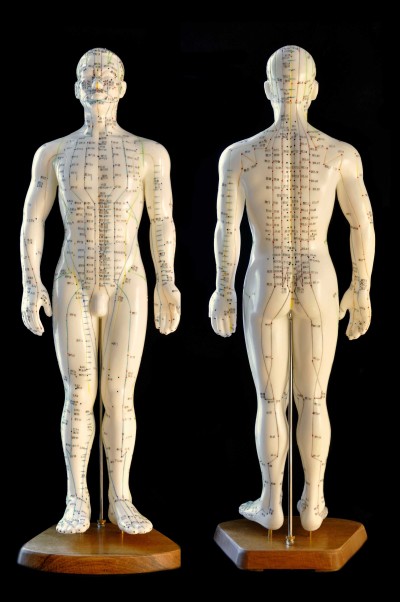
The acupuncture and herbal formula must address the imbalance causing the skin condition. To do this, the herbal ingredients and acupuncture points are tailored to the specific imbalance causing the disease. Let’s return to the eczema I described earlier. Eczema caused by Heat and Dampness must be treated with herbs that remove heat and damp, such as huang qin and long dan cao, among others. Acupuncture points such as GB 34 and Sp 9 may be used to reduce dampness and heat. While the eczema caused by heat and dryness will require herbs that clear heat and moisten the skin including sheng di huang and mu dan pi, among others. In this case, acupuncture points such as LI 4 and LI 11 may be used to drain heat from the body.
By correcting the underlying imbalance, acupuncture and Chinese medicine can lead to long term improvement.
Here are a number of articles which explain Acupuncture and Chinese medicine treatment of skin conditions.
- Eczema Treatment with Acupuncture and Chinese Medicine
- Psoriasis Treatment with Acupuncture and Chinese Medicine
- Acne Treatment with Acupuncture and Chinese Medicine
- Perioral Dermatitis Treatment with Acupuncture and Chinese Medicine
About my Bike Ride (Hint, it’s allergies)
Apr 12, 2013
It finally warmed up here in New York (well kind of) and I was out for a bike ride in Central Park. It was a beautiful sunny blue sky day. The tulips are in bloom and buds on the trees are coming out. Everyone is excited to get out on their bike or go for a walk in the park. Spring is in the air.
Spring being in the air also means pollen is too. During my ride, my throat became a little scratchy. My eyes were becoming dry and irritated. After I returned home, my sinuses felt full and heavy. Allergies have arrived.
Acupuncture and Herbal Formula for Sinus Congestion
Acupuncture and herbs work wonders to prevent and treat the symptoms of allergies. Later that day I put myself on a treatment course of acupuncture and herbs to reduce these symptoms and stop the allergies from progressing.
I chose to use an acupuncture point prescription to reduce the itchy eye and boost my qi (energy). It included acupuncture points such as Large intestine 4, Stomach 36, Liver 3, San Jiao 5, Yin Tang, Du 20. He Gu, LI 4, helps to ride the head of pain. SJ 5 reduces eye itchiness. St 36 boosts qi and Liv 3 clears the wind to reduce the itching. Yin Tang relaxes and clams pain in the sinuses.
For herbal therapy, I used an herbal formula called The Sinus Congestion Formula which reduces sinus pressure, itchy eyes, and headaches.
After the acupuncture my sinus felt more open and eye itching was relieved. I’ll keep this acupuncture up weekly during the allergy season. The herbs are great to reduce the sinus pressure and discomfort.
Photo: kataghs photostream
Chinese medicine for April Allergies
Apr 1, 2013
April allergies can be cruel. Headache, itchy eyes, sneezing, and scratchy throat are overwhelming. Chinese herbal formulas are very effective for reducing the runny nose and stuffiness, headaches, and itchy eyes,
Nasal Symptoms and Sinus Headache
For people with hay fever and sinus symptoms like sneezing, runny nose, and sinus headache the overall most effective formulas is called Bi Min Gan Wan, the nasal congestion formula. This is a mild formula that helps to reduce headache, nasal congestion.
Itchy Eyes
In Chinese medicine, itchy eyes from allergies is generally from heat. The herbal formula best for itchy eyes form heat is Sang Ye Tang. This formula has mulberry leaf and chrysanthemum flowers that help to relieve itchy eyes. Another effective formula for itchy eyes is called Qi Ju Di Huang Tang, which has gou qi zi and ju hua that stop eye itching.
Asthma with Allergies
Because allergies and asthma are so closely connected, allergies can trigger asthma attacks, those with asthma often need different herbal formulas. Sometimes there is too little qi. In this case, formulas like Jade Wind Screen works to boost qi and release external wind. Also, the mushroom Cordyceps or Reishi is helpful to boost the qi.
What is Chinese Herbal Therapy?
Nov 27, 2012
Yesterday, an acupressure student of mine asked “What is Chinese Herbal Medicine?”. This is a good question that deserves a proper explanation.
Chinese herbal therapies have been used for centuries for improving health and treating disease. Chinese herbs work to bring the body’s systems back into balance so the body can heal itself, naturally.
The Chinese herbal pharmacy consists of over 500 herbs. Herbs are taken as combinations of 5-15 medicinal substances, which is called an herbal formula. Each formula is tailored to correct the specific imbalance that is the cause of the illness.

Ku Shen and Huang qin
The herbal formula can be taken in a number of forms: raw herbs, pills, tinctures, or granules. “Raw herbs” are dried herbs which are then cooked together to make a strong tea or soup called a decoction. Tinctures are herbs which are extracted in an alcohol base. Granules are made by extracting the herbs and condensing the cooked formula to make a powder. To take the herbs, you can reconstituted them as a tea.
How do Chinese herbs work?
The basic idea of Chinese medicine is that the Chinese herbs and acupuncture work by correcting imbalances in the body. For example, if you have eczema which is caused by damp heat and toxins, the herbal formula will contain herbs that rid the body of damp heat such as long dan cao and huang qin.
Of course, herbs also affect the body physiologically. For eczema, many of the herbs that are used are known to have immunoregulatory properties that help to regulate the inflammatory process causing the eczema. Other herbs have immune boosting properties or anti-bacterial and antiviral capabilities.
Chinese herbal therapies are very safe when taken under the care of a Chinese medicine practitioner.
Traditional Chinese Medicine Treatment of Perioral Dermatitis
Jul 27, 2012
Traditional Chinese Medicine has been used to treat skin conditions for thousands of years. While Perioral Dermatitis is a newly recognized disease, only about 35 years old, the Traditional Chinese Medicine treatments for similar skin conditions remain helpful in addressing the condition.
Symptoms of Perioral Dermatitis
Perioral Dermatitis is a skin disorder which causes an erythema (redness of the skin), red bumps (called papules and pustules), and scaling. Perioral Dermatitis can look like acne, although it is not the same condition.
As the name infers, the most common locations of Perioral Dermatitis include around the mouth, on the chin, cheeks, and next to the nose. It can also occur around the eyes or on the eyelids, which is referred to as Periocular Dermatitis. Characteristic of Perioral Dermatitis is the sparing of the vermillion border around the mouth. The condition is generally not itchy.
Perioral Dermatitis most often affects young women, but the condition can occur in children and men. The cause is unknown. It was thought to be triggered by topical steroid creams. However, there are many people who contract the condition without having used topical steroids. Stress can be a significant factor at the onset of the condition. In children, the dermatitis may be associated with foods or other substances irritating the face.
Although Perioral Dermatitis does not pose a serious risk to your health, it can be very stressful and upsetting to an otherwise healthy person.
Perioral Dermatitis in Traditional Chinese Medicine
Chinese medicine takes a holistic approach to the diagnosis and treatment of skin conditions. In Traditional Chinese Medicine, a state of health is reached when the body is in balance. In order to address Perioral Dermatitis, acupuncture and Traditional Chinese Medicine bring the body back to balance.
During the examination, the acupuncturist will consider physical, emotional, and environmental factors, as well as the appearance of the skin. For example, the degree of redness, presence of papules and pustules, or scales will factor into the determinations of the imbalance. This is combined with information from taking the pulse, observing the tongue and the skin, and asking in-depth questions.
The predominant imbalances causing Perioral Dermatitis are stagnation and heat. If caused by stagnation or lack of circulation, symptoms most often include redness, thin scaling, and only a few pustules. The more redness and pustules, the more heat is present. If the erythema is persistent or becomes worse when you are hot or in the sun, the heat is more intense and deeper in the body. Digestive health can also be a factor.
Acupuncture and Traditional Chinese Medicine Therapy for Perioral Dermatitis
The goal of acupuncture and Traditional Chinese Medicine is to correct the imbalance underlying your condition. Once the imbalance is removed, the body is able to heal itself.
Acupuncture and Traditional Chinese herbal therapy are tailored to your specific symptoms and imbalance. Both the herbal ingredients and the acupuncture points will vary, depending on the condition. Chinese herbs are generally given in combinations of 8-12 herbs. The herbs are thought to work by synergistically regulating the inflammatory process underlying the condition.
It is important to consult an acupuncturist or Chinese Medicine practitioner before taking herbs. When treating Perioral Dermatitis from stagnation, the herbs may include those which help circulate the qi such as chai hu. If there is more erythema, herbs such as sheng di huang will help remove the heat. If there are many pustules, herbs that reduce inflammation, such as ye ju hua, are used.
Natural Remedies for the Common Cold
Oct 11, 2011
This herb is best for preventing colds. Now, the change of seasons, is the perfect time to begin taking Ling Zhi. When the seasons change it is easy to get cold. Ling Zhi helps to prevent getting the cold be giving an immune boost. I take only a small dosage and still feel the improvement in my health.
It actually grows all over the United States. A few weeks ago, I went on an foraging tour with Wildman Steve Brill. We actually found Ling zhi on our trip in Westchester. If you are picking wild ling zhi, it is very important to go with a guide as many mushrooms can be dangerous.
How to Cook Chinese Herbs
Sep 2, 2011
Cooking Chinese herbs is easy. But it does take some time. Many people like to take the time to cook herbs as it gives them an opportunity to take part in their healing process.

Ceramic pot for cooking Chinese Herbs
It is good to get a Chinese herbal pot. You can buy a ceramic Chinese Herb cooking pot for under $10 or you can use an electric Chinese herb cooking pot
, which costs about $50-80.
If you cannot find a ceramic pot use glass or pyrex.
I would recommend against stainless steel because I have seen it become stained from herbs. Also, metals may interact with the properties of the herbs.
Cooking Instructions for Chinese herbs:
1. Place one packet or bag of the herbs in the herb pot. cover with 2 cups of water. Bring to boil, cook for 20 minutes.
2. After 20 minutes, remove the liquid. Save the herbs in the pot.
3. Fill pot again with 2 cups of water. Cook again for 30 minutes.
c4. Combine liquid from batch 1 with batch 2. Drink half in the morning and half in evening about 30 minutes to an hour after eating.
Cooking times may vary depending upon the particular instructions from your acupuncturist or herbalist. For example, for herbs for colds, you may cook it for a shorter period of time. But if you are using strong herbs to boost the energy in the body, you may cook it for a longer period of time.
Sometimes you cook certain herbs for a longer time in the beginning, or you may add herbs very close to the end of the cooking process. This helps to accentuate specific properties of each herb.
photo: Tianyake
How Chinese Herbs are Prepared
Aug 31, 2011
Chinese herbal remedies have been used for centuries for many conditions and to boost overall health. For many conditions the combination of acupuncture and herbs is the most effective approach. I almost always use herbs when treating acne, eczema, psoriasis, and other skin conditions.
The current Chinese pharmacopeia contains more than 5000 herbs and medicinal products. A pharmacy will most often contain 500-1000 of the most commonly used herbs. Some of the herbs are only used in the region they are grown and are not easy to find elsewhere.
Chinese herbs are most often combined into formulas rather than given as a single herb. This approach produces synergy, the combination is more powerful than any one herb. The herbs are combined and specifically tailored to your imbalance.
Chinese herbs are holistic, that is they target the underlying imbalance as well as the symptoms, herbs can address many conditions at the same time.
There are many ways to take Chinese herbs.

sheng di huang and dan shen
Raw Herbs: The most traditional way, and the most potent for certain conditions, are raw herbs. Raw herbs are generally dried herbs.
The are prepared by boiling in water to make a very strong tea. The herbal dregs are discarded and the tea is drank. The herbs should be cooked in a ceramic herb pot or a glass pot. Metal pots, even stainless steel, should be avoided.
Many herbal pharmacies have pressure cooking machines that can prepare the herbs for you. The tea is then vacuum packed into a small bag.
Raw herbs are very potent. I believe they are the strongest form of herbs. I most often use raw herbs for skin conditions like acne, eczema, and psoriasis.
Pills or Capsules

Chinese herbal pills
Herbal pills are possibly the most common way to take herbs. This is also a traditional method, as many formulas were designed to be made into honey pills. Honey pills consist of ground herbs which are binded together with honey.
I find prepared herbs very effective for many chronic health concerns such as anxiety, insomnia, and allergies. They are very easy to take and easy to store. They may not be strong enough for certain women’s health or skin conditions.
Tinctures

Herbal tincture
Tinctures are alcohol extracts of herbal formulas. That is, the herbal formula is boiled down to make a very concentrated tea. A small amount of alcohol is added as a preservative. They are very easy to use, quite effective, and affordable.
Granules or Powders
Granules are concentrated boiled herbs. The herbal formulas are boiled down and the liquid is concentrated. Mix this powder with warm water to reconstitute the herbs. Sometimes the herbs are also encapsulated for pills.
Cooling Herbal Tea for the Summer
Jul 5, 2011
It is officially hot here in New York City.
Chinese medicine has many remedies to cool down and reduce the risk of heat conditions in the summer. One of my favorite secrets is a cooling herbal tea made of chrysanthemum flowers and gou ji berries.
The Summertime Eight Treasures tea is also another way to cool the body down. This tea has a couple more herbs like yi yi ren and bai zhu to drain dampness as well. Good to humid environments like NYC.
Herbal Remedy for Mosquito Bites
Jun 10, 2011
Mosquito bites are annoying, no doubt about it.
When travelling to a hot humid place, such as the jungles in Peru, Southern China, or even right here with my New York City acupuncture patients, mosquito bite itching can be troubling.
Herbs can he very helpful for reducing itching. One of the best and easiest herbal formulas to use for itching is called Yin Care.
Yin Care is a topical wash used for itching and inflammation of the skin. The herbs such as she chuang zi and di fu zi work to calm itch while sheng di huang and jin yin hua reduce inflammation.
Use about a dime size amount and rub on effected area.