
Acupuncture and Chinese Herbs Treatment of Pompholyx Eczema
Pompholyx eczema is a distinctive type of eczema that affects the hands and feet, causing intensely itchy vesicles (small blisters) on the sides of the fingers and palms, and occasionally the soles of the feet. It’s also known as dyshidrotic eczema, since many people with the condition also experience excess sweating from the palms.
Pompholyx eczema most often affects people between 20 and 40 years old, and occurs slightly more frequently in women. It accounts for a meaningful share of the eczema cases I see in the clinic, roughly 80% of cases involve the hands only, with the remainder affecting the feet alone or both together.¹
Acupuncture and Chinese medicine help relieve itching and reduce inflammation in pompholyx eczema by treating the root imbalance driving the condition, rather than only suppressing the symptom. This approach can lead to long-term improvement rather than the temporary relief many patients experience with topical steroids alone.
What Triggers Pompholyx Eczema?
Pompholyx eczema tends to follow a few recognizable patterns of onset. Many patients notice their first flare during hot weather, often in late spring or summer, and some people find their eczema is seasonal, clearing on its own once the weather cools. Others trace the onset to a period of intense emotional stress, frustration, or grief. Frequent hand washing, common among new mothers, or regular exposure to detergents and cleaning chemicals without protection, can also trigger or worsen an outbreak.¹
How Pompholyx Eczema Progresses
Understanding the typical course of pompholyx eczema helps set expectations for treatment. The vesicles usually appear first, accompanied by intense itching, and this vesicular stage typically lasts one to two weeks. Most vesicles are reabsorbed by the skin without ever breaking, though in some cases they burst and discharge, which can lead to crusting. As the vesicular stage resolves, it’s followed by a dry, desquamating (peeling) phase, during which the itching usually decreases and is replaced by soreness as the skin heals. In chronic, long-standing cases, this cycle can shift toward drier, thickened (lichenified) skin with fewer new vesicles.¹
Chinese Medicine Imbalances
The goal of treatment is to correct the underlying imbalance in the body causing your condition. To determine the specific imbalance, I will examine the skin, take your pulse, look at your tongue, and ask about your overall health, including digestion, emotional stress, and any seasonal pattern to your flares.
There are three underlying patterns I most commonly see in pompholyx eczema:
Liver Damp-Heat with Fire-Toxin and Wind is by far the most common pattern, accounting for roughly 70% of cases. It’s often triggered or worsened by emotional stress, and tends to affect the palms more than the feet. The skin typically shows numerous vesicles, intense itching, and possible yellow crusting if infection develops. Herbs for this pattern focus on draining damp-heat from the Liver and Gallbladder and resolving fire-toxin, such as Long Dan Cao (Gentiana) and Huang Qin (Scutellaria), alongside herbs that specifically calm itching and scatter wind, such as Bai Ji Li (Tribulus) and Bai Xian Pi (Dictamnus bark).¹
Spleen Channel Damp-Heat with Fire-Toxin is seen more often in pompholyx affecting the feet, or in patients whose digestive symptoms, bloating, poor appetite, or loose stools, are prominent alongside the skin eruption. Herbs for this pattern drain damp-heat from the digestive system as well as the skin, and often include Huang Bai (Phellodendron) and Bai Jiang Cao, sometimes alongside herbs that support the Spleen’s function as the condition improves.¹
Qi and Blood Deficiency with Fire-Toxin and Hot Blood is typically seen in chronic cases, often of two or more years’ duration, where vesicles have become less frequent and the skin instead shows dryness, fissuring, and lichenification. Treatment shifts toward nourishing Qi and Blood while still addressing residual heat, using herbs such as Sheng Di Huang (Rehmannia) and Huang Qi (Astragalus), alongside lighter fire-toxin resolving herbs so as not to overtreat a pattern that is now rooted more in deficiency than excess.¹
Chinese Medicine Treatment
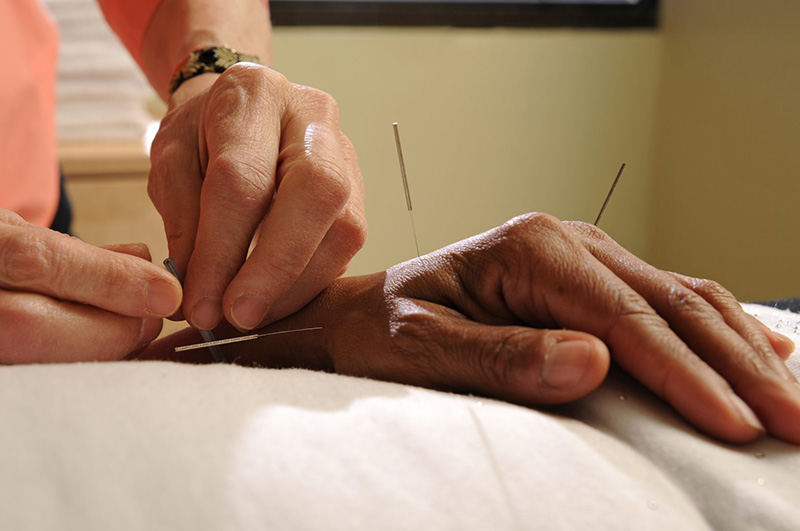
The treatment will usually combine herbal medicine taken as a strong tea, external herbal soaks, and acupuncture. The herbal formula is customized to your specific pattern and adjusted as your condition evolves, since pompholyx eczema often shifts from a more active, vesicular presentation toward a drier one as treatment progresses. Although two patients may have the same diagnosis of pompholyx eczema, they may not share the same underlying pattern, and so may receive quite different formulas.
External Herbal Soaks
External herbal soaks are a valuable adjunct therapy during active flares. A typical soak is used once or twice daily during an acute attack, and many patients notice a reduction in itching and vesicle formation within the first few soaks. If the skin is already very dry, soaks are used sparingly, since they can have a drying effect.¹
External herbal creams, oils, and washes can also be applied directly to the affected areas to relieve itching, redness, and inflammation. For some patients, herbal soaks alone are sufficient without oral herbal medicine.
Treatment Course
Most cases resolve within 10 to 14 weeks of consistent treatment, though this varies with the severity and duration of the condition. Generally, I want to see a decrease in itching, inflammation, and the formation of new vesicles within the first 4 to 6 weeks. The condition often continues its characteristic cycle of flaring and settling for several weeks even as it improves overall, rather than resolving in a single smooth decline, so I find it helpful to explain this pattern at the outset so patients aren’t discouraged by an occasional flare during an improving course.
Once the eruptions have stopped, I typically continue treatment at a reduced dose for two to three weeks before stopping completely, and recommend continued hand care for several months afterward to protect the long-term result.
Cases that are recent in onset, seasonal, or follow a clear, predictable cycle of vesicles and drying tend to respond fastest. Chronic cases of two or more years, or those with widespread eruption up the hands and arms, take longer, though the long-term prognosis with consistent treatment is excellent.¹
Protecting Your Skin
Because the hands and feet are constantly exposed to irritants, a few precautions can meaningfully support your treatment and prevent flares:
- Wash your hands as infrequently as possible, and use lukewarm water; avoid perfumed, tar-based, or sulfur soaps
- Wear cotton or plastic gloves for housework, dishwashing, and exposure to cleaning products or chemicals
- Wear gloves when handling raw fruits, vegetables, or meat, all of which can irritate the affected skin
- Choose plastic gloves over rubber, and wear thin cotton gloves underneath if possible; avoid wearing plastic gloves for more than 20 minutes at a time
- Continue these precautions for 4 to 6 months after your hands have healed, to protect against recurrence
Find Relief from Pompholyx Eczema
Through targeted herbal formulations, both for internal consumption and topical application, alongside acupuncture, Chinese medicine therapies aim to rectify the underlying imbalance causing your eczema, providing relief from immediate discomfort while addressing the root cause. Pompholyx eczema responds well to this approach precisely because its patterns are so clearly reflected in the skin itself, making an experienced, individualized diagnosis especially effective.
To schedule your appointment please call us at 212-319-5757 or click here to schedule your appointment online.
Reference:
- Al-Khafaji M. Treatment by Chinese Herbal Medicine: Pompholyx Eczema. Journal of Chinese Medicine. 2001;(66):15-26.