
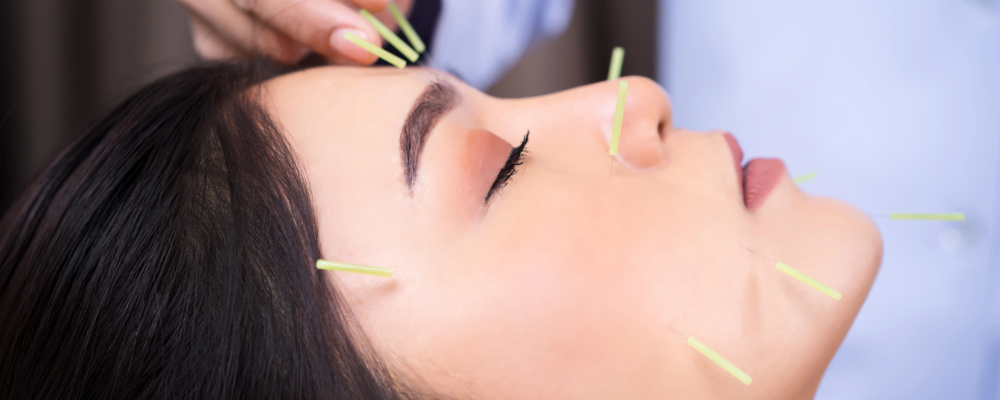
Acupuncture and Traditional Chinese Medicine are safe and effective methods to treat melasma. The approach focuses on correcting the root of the problem, balancing the hormones, and restoring the body’s qi and blood.
Melasma is a skin discoloration disorder that affects people of all ages and genders. Melasma, also called chloasma, is a skin condition that causes dark, discolored patches to appear on the face, particularly on the cheeks, nose, forehead, and upper lip.
It is often triggered by hormonal changes and is more common in women, particularly during pregnancy or when taking birth control pills..
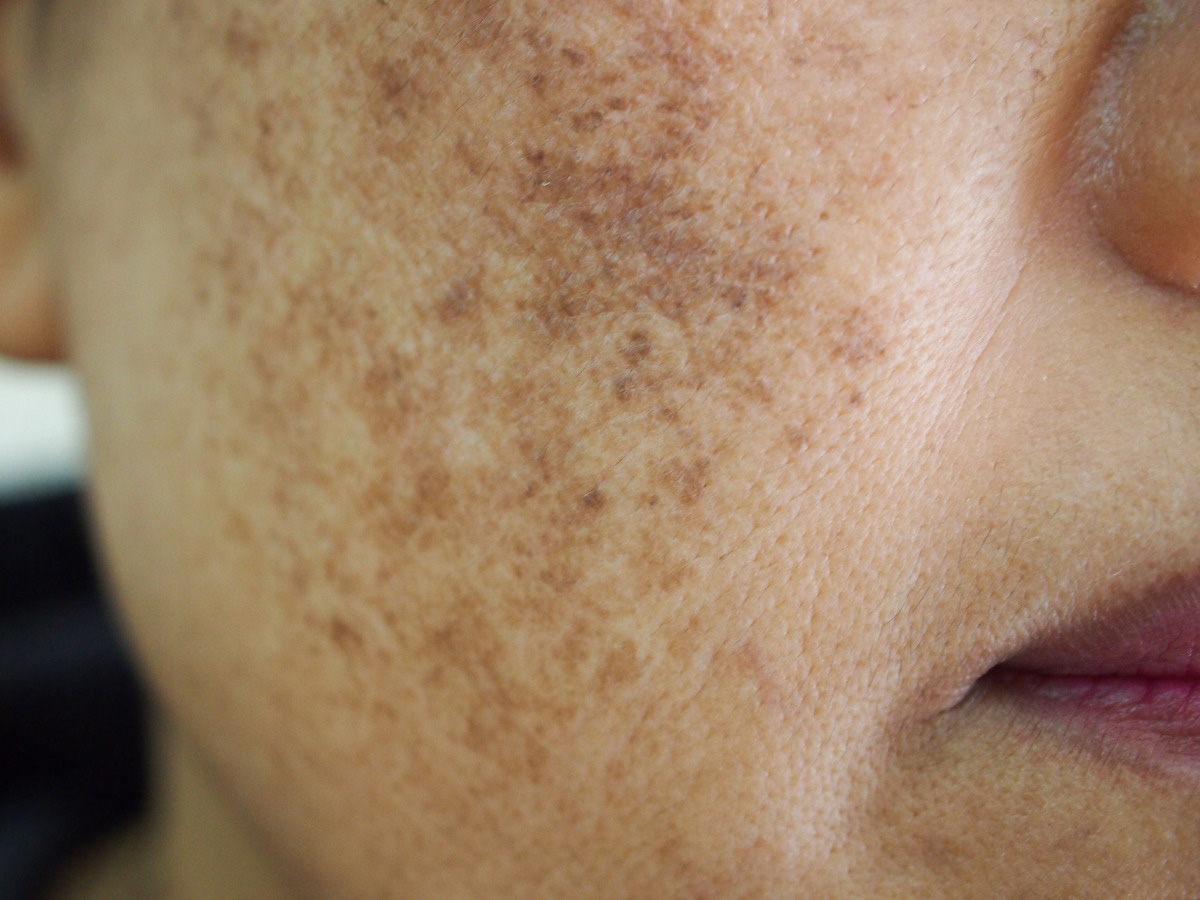
Acupuncture works by stimulating the lymphatic system, accelerating qi circulation, and improving blood circulation. Stagnation, the lack of circulation, is the most common cause of melasma. Improving the movement of blood and qi will help to renew and heal the skin. Acupuncture can be used alone or in combination with conventional treatment of melasma.
Chinese herbal medicine works to balance hormones and increase qi and blood circulation to balance color on the skin.
In this article, I will tell you how acupuncture and Chinese medicine work to treat melasma and share how different treatment methods help reduce the condition.
Causes of Melasma
Ultraviolet light, infrared light from the sun, and hormones are the main factors in the development of melasma.
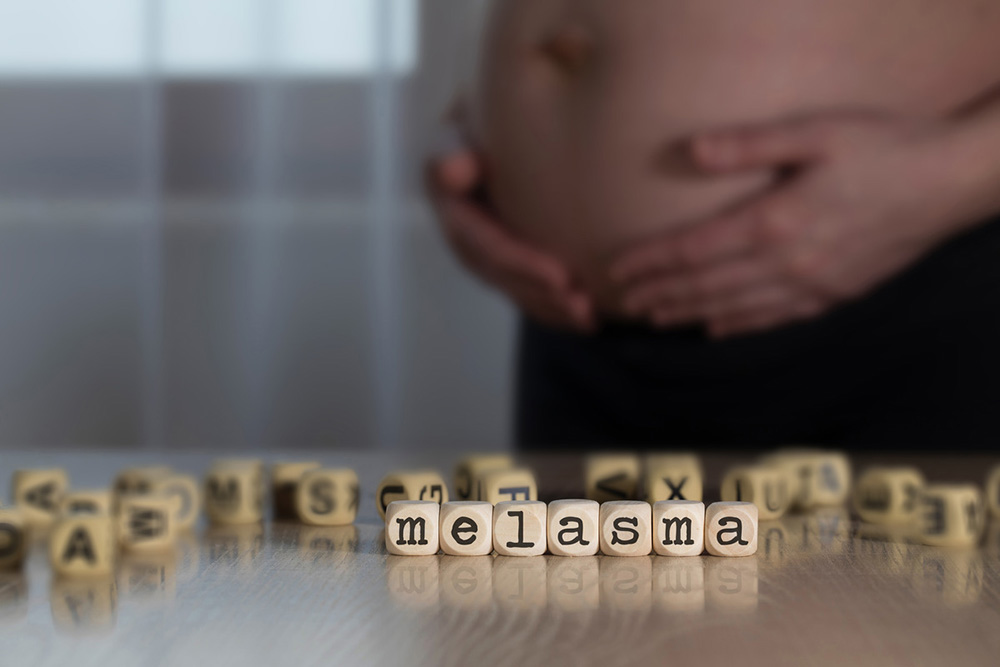
Hormonal changes as women age, oral contraceptives, and hormone replacement medications are all related to melasma. Pregnant women are also susceptible to chloasma.
Some theorize that the increased levels of estrogen, progesterone and the melanocyte-stimulating hormones during the third trimester of pregnancy play a role.
Many medications can lead to melasma if they make your skin sensitive to light, such as antiseizure medication, NSAIDs, diuretics, and retinols.
Melasma is also likely to run in families.
Man-made light may also be a factor. LED lights from your TV, tablet, or phone may contribute to developing melasma. So it is important to block this light with a blue light filter or sunscreen containing iron oxide.
Additionally, UV light from tanning beds will damage your skin and is another cause.
Using a broad-spectrum, iron-tinted sunscreen is also very important. The SPF must be at least 30, and reapplying it every two hours is recommended.
Imbalances:
In Chinese medicine, melasma is thought to be caused by an imbalance in the body. The treatment approach is to determine the imbalance and then use customized acupuncture and herbal medicine to correct it.
When considering each patient, we always treat the whole person, not only the skin itself. The color of the melasma, its location, and the length of the condition all factor into our diagnosis of the imbalance. We will also consider digestion, sleep, stress levels, and hormone balance.
Imbalances may include
Liver qi stagnation: if the melasma is exacerbated by or accompanied by stress and irregular periods, liver qi stagnation may be involved.
Spleen qi vacuity with dampness is characterized by poor digestion, fatigue, and frequent colds.
Kidney yin deficiency may be accompanied by hot flashes and spontaneous sweating.
Blood Stagnation: Over a long period of time, any of these conditions can turn into blood stagnation.
To treat melasma, I will use a combination of acupuncture, Chinese herbal medicine, and dietary and lifestyle recommendations to help restore balance to the body and clear up the skin.
Acupuncture
For treating melasma, both facial acupuncture and body acupuncture are combined to treat the root and branch of the condition. Body acupuncture is needed to address the underlying imbalance, what we call the root cause. The facial acupuncture helps to more rapidly improve circulation and balance the pigments, which is referred to as the branch. Combining both leads to the best long-term results.
Each imbalance will have acupuncture points specifically chosen to address that root cause. These may include:
- Liver qi stagnation: St 36, Sp 6, Liv 3, Li 4
- Spleen qi vacuity with dampness: Ren 12, St 36, Sp 6
- Kidney yin deficiency: Ki 3, Ki 2, Sp 6
- Blood Stagnation: Sp 10
Facial Acupuncture
Facial acupuncture is based on Traditional Chinese Medicine practices that have been used for thousands of years. Its goal is to improve the appearance of skin and prevent premature aging, increase circulation, and reduce inflammation. It is also known to stimulate elastin and collagen.
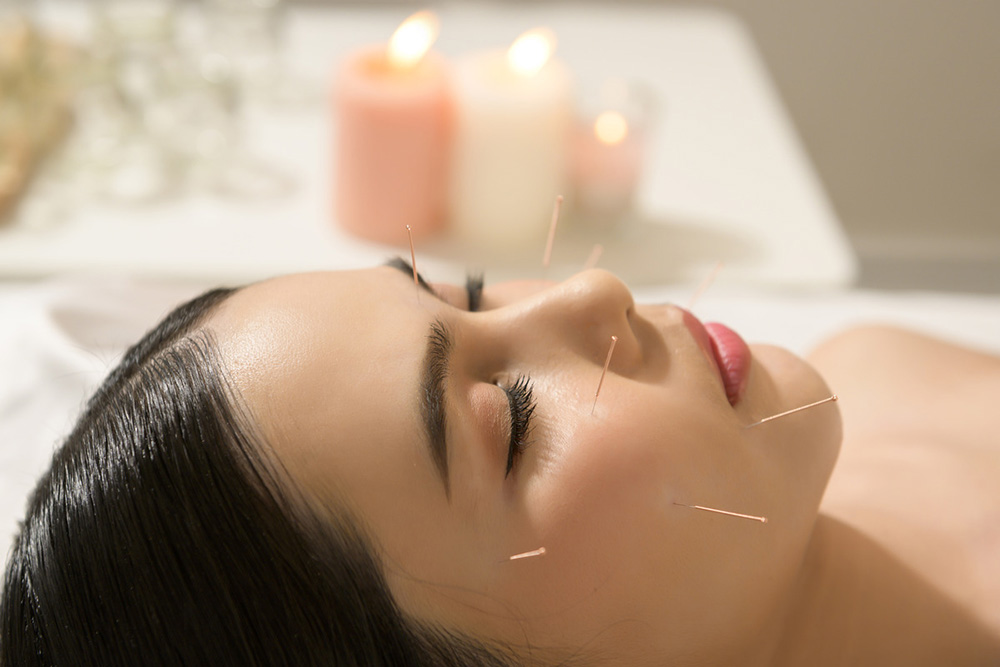
Facial acupuncture targets specific areas of concern to reduce inflammation and stimulate circulation. We will often use acupuncture along the jaw line, nasolabial folds, as well as around melasma areas on the cheeks or forehead.
The treatment course is usually 10 weekly visits. Some people will be completed at that time while others may continue at a reduced frequency for maintenance.
Acupuncture is very safe and is safe to use during pregnancy. Side effects are rare, with bruising being the most common. Most people feel very relaxed and light during the acupuncture treatment.
Chinese Herbal Medicine
Chinese herbal formulas are combinations of herbs that are prescribed to correct the specific imbalance causing the melasma.
Chinese herbal formulas are made up of a combination of 8-15 herbs that work together to address specific health concerns. The herbs in a formula may be chosen for their ability to tonify, invigorate, sedate, or drain specific imbalances within the body. For melasma, herbs for the root cause, the imbalance, are used along with herbs that invigorate the blood to help with circulation and balance the skin.
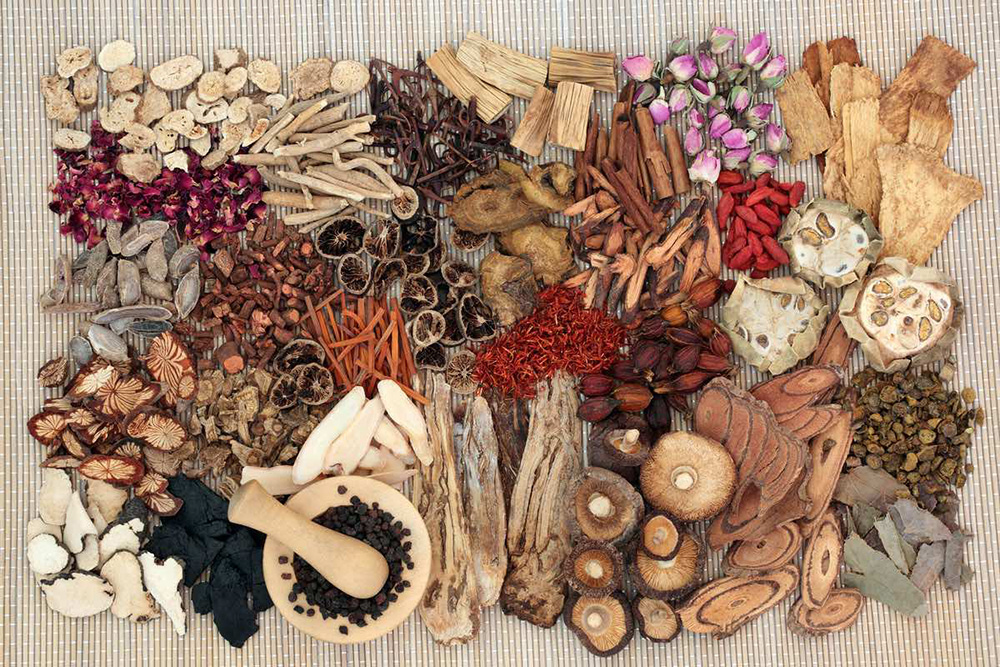
Several herbs commonly used in melasma formulas have also been studied for their direct effect on melanin production. Gan Cao (licorice root) contains glabridin, shown to inhibit the enzyme tyrosinase, which the skin uses to produce excess pigment.¹ Ku Shen (Sophora flavescens) and Sang Bai Pi (mulberry) have shown tyrosinase-inhibiting activity comparable to conventional skin-lightening agents in laboratory studies.¹ Ren Shen (ginseng) and Jiang Huang (turmeric) have also demonstrated antioxidant and pigment-modulating effects.¹ These findings help explain, at a mechanistic level, why herbal medicine can support a reduction in melasma alongside its role in correcting the broader internal imbalance.
Chinese herbal formulas are usually taken in the form of a decoction, which is made by boiling the herbs in water. The decoction is then strained and the liquid is taken as a tea. Chinese herbal formulas can also be taken in the form of pills or capsules.
Topical herbal medicines are also used as creams, oils, and herbal washes.
Research
Several studies have been conducted to evaluate the efficacy of acupuncture and Chinese herbal medicine for melasma.
A 2025 meta-analysis of 22 randomized controlled trials, involving over 1,600 women, found that acupuncture significantly outperformed conventional treatment for melasma, reducing both the size and color intensity of skin lesions, with infrequent adverse effects.2
A large real-world study of 1,000 women further supports treating melasma according to its underlying Chinese medicine pattern: patients with kidney-deficiency and blood-stasis syndrome, the same patterns I look for in my own diagnosis, saw a significantly greater reduction in melasma area when treated with a formula matched to that pattern, along with a lower rate of recurrence two months after treatment ended.3
Unlike conventional methods, acupuncture for melasma can target the root of the problem. Besides removing melasma, the needles can also improve circulation and lymphatic drainage. It is a holistic approach to the skin condition that has been successfully used for centuries.
Get Relief from Melasma
Melasma can affect far more than your skin, touching your confidence and how you feel day to day. Acupuncture and Chinese herbal medicine offer a natural way to address the underlying imbalance at its root, supporting long-term improvement rather than temporary relief.
Please call or text us at 212.319.5757 to make your appointment, or you can make an appointment online.
Reference:
- Rathee P, Kumar S, Kumar D, Kumari B, Yadav SS. Skin hyperpigmentation and its treatment with herbs: an alternative method. Future J Pharm Sci. 2021;7:132.
- Su J, Quan T, Liao T, Luo Y, Fan X, Pan M, Tang H. Effectiveness and safety of acupuncture for melasma: A meta-analysis of randomized controlled trials. Explore (NY). 2025;21(1):103108.
- Lv MY, Yang Y, Fei WT, Liu JL, Zhang R, Zhou LH, Zhang FH, Wang C, Wang LY, Zhang JJ. A real-world study to observe the efficacy and safety of Lutai Danshen Baishao Granules for improving melasma. Medicine (Baltimore). 2025;104(6):e41394.
Feedback from a client
“I have been struggling with melasma for years and have tried countless products and treatments with little success. However, since starting facial acupuncture treatments with Dr. Joe, I have noticed a significant improvement in the appearance of my skin. The dark patches on my face have significantly lightened and my overall complexion looks brighter and more even. Generally, my skin is tiger and I have less wrinkles. I also appreciate the holistic approach of acupuncture. I’m sleeping better and have more energy and fewer migraines. And Dr. Joe gave me herbs that stopped my hot flashes too! Overall, I am extremely satisfied with the results I have experienced from acupuncture and would highly recommend it to anyone struggling with melasma or other skin concerns.”
~ T.R., Queens