

Irritable Bowel Syndrome
If you’re dealing with bloating, gas, abdominal pain, constipation, diarrhea, or an unpredictable mix of both, acupuncture can help. IBS doesn’t just affect your gut. It shows up at work, at school, and in social situations you’d otherwise enjoy.
There is hope to feel better. In my 20 years of practice, I’ve helped hundreds of patients with IBS improve through acupuncture and Traditional Chinese Medicine.

Causes of Irritable Bowel Syndrome
There’s no single cause of IBS, it looks different for everyone. Modern research points to several contributing factors working together. IBS is now understood as a disorder of the gut-brain connection, where the communication between the digestive system and the central nervous system becomes disrupted. (1) This often shows up as visceral hypersensitivity, meaning the gut sends stronger pain and discomfort signals to the brain than it should in response to normal digestion. Other contributing factors include gastric motility issues (which can lean toward constipation or diarrhea depending on the person), low-level inflammation in the digestive system, increased intestinal permeability, and dysbiosis, an imbalance in gut bacteria. Some people have specific food triggers, and for many, stress plays a significant role in bringing on symptoms.
For some, IBS symptoms start after a gastrointestinal infection. Even after the infection clears, digestive problems can linger, often because the gut’s healthy bacteria never fully rebalance, or because the infection leaves behind low-grade inflammation and lasting sensitivity in the gut lining.
Acupuncture has long recognized that imbalances can remain in the body after an infection has cleared. Treatment focuses on correcting these imbalances, calming the digestive system’s heightened sensitivity, and restoring the body’s energy.
Research on acupuncture for IBS
A 2024 multicenter randomized controlled trial found that acupuncture provided significant relief for patients with refractory IBS, those who hadn’t responded to standard treatment. Patients receiving real acupuncture saw their symptom severity scores drop more than twice as much as those receiving sham acupuncture, with improvements in abdominal pain, bloating, and satisfaction with bowel habits that lasted through a 4-week follow-up period. (2)
Research into the underlying mechanism helps explain why. A 2020 laboratory study found that electroacupuncture reduces the activity of a specific pain receptor (P2X3) on the nerve cells connecting the colon to the spinal cord, the same receptor responsible for transmitting visceral pain signals in IBS. By calming this receptor’s activity, acupuncture appears to directly reduce the nervous system’s oversensitivity to normal digestive sensations, rather than simply masking discomfort.(3)
Acupuncture treatment for IBS
Acupuncture and Chinese herbal therapy are helpful for all types of IBS, relieving pain and discomfort, regulating bowel movements, and improving overall health. During your first visit, we’ll discuss your digestive symptoms as part of your overall health, including patterns unique to your case that point toward the specific imbalance driving your IBS.
Your treatment is built around the specific combination of symptoms and imbalances driving your IBS, not a one-size-fits-all protocol. The most common imbalances I see are a lack of digestive energy (Qi vacuity), a lack of energy flow (Qi Stagnation), and an accumulation of toxins in the digestive system. Different acupuncture points and herbs address each of these.
Acupuncture also works physically on the body to improve digestion and gut motility. One technique I use, electro-acupuncture on the point Stomach 36, has been shown to regulate gastric motility.⁴ Once gut motility returns, the natural gut microflora is more likely to rebalance. Alongside this, I also work to release abdominal tension, since tight muscles and fascia in the abdomen can pull on the digestive system and contribute to pain. Relieving this tension, combined with restoring healthy motility, helps reduce discomfort and improve overall digestive function.
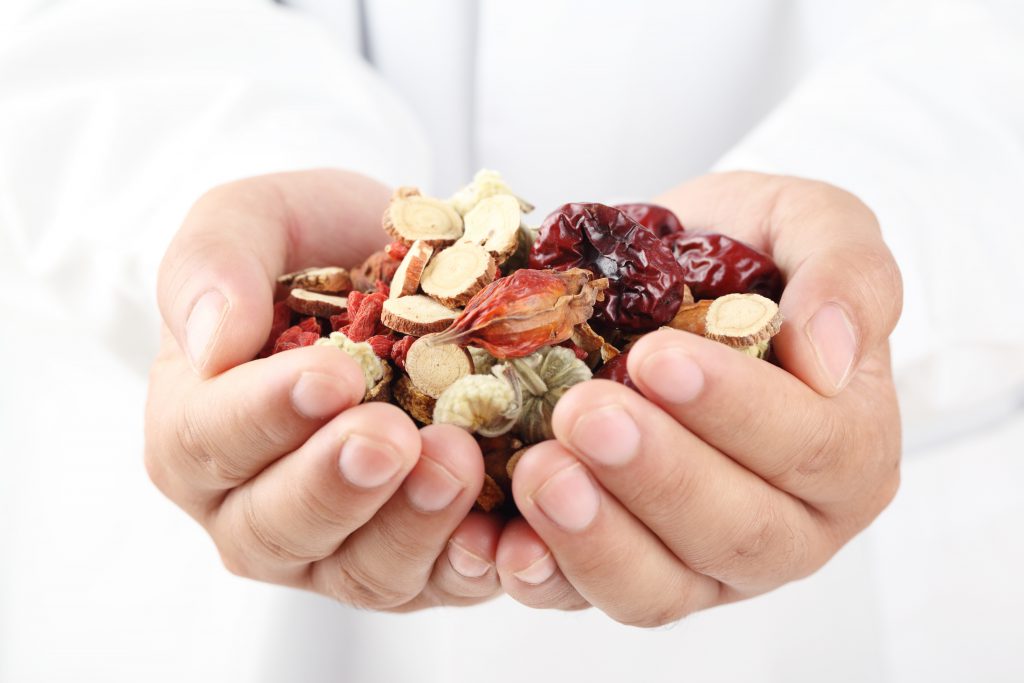
Chinese herbal therapies for IBS
Herbs are tailored to each person’s imbalance, and formulas for IBS often differ significantly depending on whether diarrhea, constipation, or a mixed pattern predominates. Herbs are prescribed in formulas consisting of multiple ingredients that work together, rather than a single herb addressing the whole condition, allowing the formula to be adjusted as your pattern shifts over the course of treatment.
For diarrhea-predominant IBS, herbal formulas typically focus on strengthening the Spleen’s digestive energy and resolving dampness, since TCM sees loose stools as a sign of the digestive system’s inability to properly transform and transport food. One such formula, Xiang-Sha-Liu-Jun-Zi tang, was shown in a randomized, placebo-controlled trial to reduce diarrhea symptoms in IBS patients over four weeks of treatment, consistent with its traditional use for spleen-deficiency and Qi-stagnation patterns. (5)
For constipation-predominant IBS, formulas instead focus on moving stagnant Qi and nourishing fluids to restore regular movement. A randomized controlled trial of a standardized Chinese herbal formula for constipation-predominant IBS found that patients receiving the herbal treatment were significantly more likely to report adequate relief than those on placebo, with meaningful improvements in stool consistency and straining during bowel movements over eight weeks. (6)
When pain and bloating are the dominant complaints regardless of bowel pattern, formulas often address Qi and blood stagnation, since in TCM the Liver’s role in keeping Qi flowing smoothly is closely tied to the gut’s response to stress and emotional tension, one reason herbal treatment for IBS often improves alongside a reduction in stress-related symptoms.
Living Well with IBS
IBS can feel unpredictable, but it doesn’t have to run your life. Whether your symptoms lean toward constipation, diarrhea, or a mix of both, acupuncture and Chinese herbal medicine offer a treatment approach built around your specific pattern of imbalance, not a one-size-fits-all protocol. With 20 years of experience treating IBS, I’ve seen firsthand how consistent treatment can restore regular digestion, ease pain and bloating, and help patients feel like themselves again.
If you’re ready to feel better, I’d love to help you get there.
Schedule a consultation today to discuss your symptoms and start building a treatment plan tailored to you.
References:
- Nathani RR, Sodhani S, Goosenberg E. Irritable Bowel Syndrome. [Updated 2025 Nov 30]. In: StatPearls [Internet]. Treasure Island (FL): StatPearls Publishing; 2026 Jan-. Available from: https://www.ncbi.nlm.nih.gov/books/NBK534810/
- Zhao J, Zheng H, Wang X, et al. Efficacy of acupuncture in refractory irritable bowel syndrome patients: a randomized controlled trial. Front Med. 2024;18(4):678–689.
- Zhang F, Ma Z, Weng Z, et al. P2X3 Receptor in Primary Afferent Neurons Mediates the Relief of Visceral Hypersensitivity by Electroacupuncture in an Irritable Bowel Syndrome Rat Model. Gastroenterol Res Pract. 2020;2020:8186106.
- Yang, Q., Xie, YD., Zhang, Mx. et al. Effect of electroacupuncture stimulation at Zusanli acupoint (ST36) on gastric motility: possible through PKC and MAPK signal transduction pathways. BMC Complement Altern Med 14, 137 (2014). https://doi.org/10.1186/1472-6882-14-137
- Shih YS, Tsai CH, Li TC, et al. The effect of Xiang-Sha-Liu-Jun-Zi tang (XSLJZT) on irritable bowel syndrome: a randomized, double-blind, placebo-controlled trial. J Ethnopharmacol. 2019;238:111889.
- Bensoussan A, Kellow JE, Bourchier SJ, et al. Efficacy of a Chinese herbal medicine in providing adequate relief of constipation-predominant irritable bowel syndrome: a randomized controlled trial. Clin Gastroenterol Hepatol. 2015;13(11):1946–1954.