Archive for the ‘Improve Your Health’ Category

Acupuncture and Chinese Medicine for Atopic Eczema

May 16, 2013

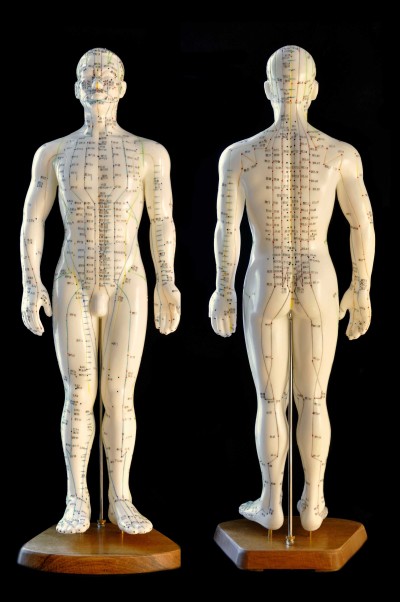
acumannikin1 200x300 Acupuncture and Chinese Medicine for Atopic Eczema

The itch in atopic dermatitis can take over your life. It is so intense, those with atopic eczema of wake up scratching. And after your scratch, the skin becomes more inflamed, itchy, dry, and lichenified.

Most people with atopic eczema have a family history eczema, hay fever, and asthma. Allergies to foods, mold, or irritant substances may cause a flare in the condition (1). Atopic eczema is increasing rapidly in industrialized countries. Atopic eczema is treated most often with topical steroids that suppress the inflammatory response. Unfortunately, steroids also have many side effects.

Acupuncture and Chinese medicine can help reduce eczema naturally.

Acupuncture and Chinese Medicine approach to Atopic Eczema

Traditionally, Chinese medicine called eczema the “wind of four crooks” referring to the eczema rashes on the inside of the elbows and knees which are the common locations of the condition (2).

Chinese medicine treats eczema not by suppressing the immune response, but rather correcting the imbalances that are causing the eczema. By correcting or removing these imbalances your body is able to heal on its own.

In eczema, the most common underlying imbalances are dry heat or dampness. To determine the imbalance, I will observe how the skin looks. If the skin is dry, cracked, and irritated, then too much dry heat may be the most significant factor in the eczema. If there is more swelling, crusting, and vesicles, then dampness may be the most significant factor.

Because Chinese medicine is holistic, we also consider how digestion, allergies, sleep, and emotional health play a role. Acupuncture points and herbs are selected specifically for their ability to correct that specific imbalance.

Acupuncture and Chinese medicine treatment of Atopic Eczema

The therapy may combine acupuncture, Chinese herbs, and topical herbal creams.

Chinese herbal medicine focuses on correcting the imbalance. If heat is the cause of the eczema, we will use herbs that traditionally are used to “clear heat” from the body, such as sheng di huang (rehmannia) and jin yin hua (honey suckle). Many of the heat reducing herbs are also potent anti-inflammatory and immunoregulatory properties.

If dampness is causing the eczema, herbs that drain dampness such as ku shen (sophroa) can be used. There are also herbs specifically for the symptoms. For example, di fu zi (broom cypress) is very effective in reducing itch.

External herbal creams are very effective at decreasing inflammation and stopping itching. For some people, reduction in inflammation and itching happens after the first visit.


ear 150x150 Acupuncture and Chinese Medicine for Atopic Eczema

Ear Acupuncture Model

Acupuncture is very effective to control the itching in eczema. I find that auricular and body acupuncture combination to be the most effective. After the acupuncture, I often will use magnet stickers in ear acupuncture points that correspond to the specific area of the body the itch is found. It is possible that the same physiological mechanisms which acupuncture uses to reduce pain are effective for stopping itch in eczema (3).

For many patients, acupuncture and Traditional Chinese Medicine leads to long term reduction of symptoms. This is because Chinese medicine focuses on correcting the root imbalance causing the condition, not just masking the symptoms. The long term benefit of the herbs may be due to immunoregulatory mechanisms of Chinese medicine.

References

1. PubMed Health. Atoptic Eczema. Accessed 5/14/2013.

2. Mazin Al-Khafaji. Atopic Eczema “Wind of the four crooks.” Journal of Chinese Medicine. Number 77: p5-8. February 2005.

3. Pfab F, Huss-Marp J, Gatti A., et al. Influence of acupuncture on type I hypersensitivity itch and the wheal and flare response in adults with atopic eczema – a blinded, randomized, placebo-controlled, crossover trial.Allergy. 2010 Jul;65(7):903-10. Epub 2009 Dec 11.

image

Our New Office

Mar 4, 2013

We are happy to announce the new home of Alban Acupuncture at 124 East 40th Street, Suite 902, New York, NY.  We are conveniently located in Midtown close to Grand Central.

Our new expanded beautiful office has many features to better serve05 Joes Office 3 033 150x150 Our New Office
our patients including a larger waiting room and 5 spacious treatment
rooms.

Nearby transportation includes the 4, 5, 6, S, 7, and Metro North at
Grand Central Terminal. Also, I’ve found the walk to 6th Ave/Bryant park trains (B,D,F,M) is pretty quick (5-6 minutes).

Please call us at 212.319.5757 to make an appointment.

image

What is Qi?

Dec 4, 2012

Qi is the body’s energy (Qi is pronounced “chee,” and is sometimes spelled “chi.”)

There is a mystical aspect to qi. In Chinese philosophy, qi is the building blocks of the universe. Energy combines and multiplies. It is the universal energy present in all living things as well as nature.

But there is a practical aspect to qi as well. Qi is the energy we use to keep us healthy. It allows us to work, grow, exercise, and reproduce. Imbalances in the qi can lead to many health issues.

Qi needs to be abundant and circulate through channels in the body or else illness occurs. In Chinese medicine, it is said “When the qi flows there is no pain, when qi stops, there is pain and illness.” Lifestyle habits such as poor diet, overwork, and stress or a person’s constitution can affect the amount and flow of qi. Chinese medicine and acupuncture focus on correcting these imbalances.

Imbalances of Qi

The main imbalances of Qi are  Qi vacuity, or too little Qi or the Qi circulation in the channels can be impaired. This is called qi stagnation.

Those with too little qi may experience the symptoms of frequent colds, fatigue, shortness of breath, coughing, soft voice, poor digestion, a weak pulse, and pale tongue. This is also true often for people with chronic respiratory infections or autoimmune conditions, such as asthma, eczema, chronic bronchitis, or sinusitis and chronic sinus headaches.

Qi stagnation, when the qi is not circulating well, can also cause frequent colds and makes it difficult to fight them off. Those with qi stagnation will often get a cold after a stressful or emotional situation. They also may be prone to headaches, irregular bowel movements, ribside pain, and painful menstrual cramps.

image

What is Chinese Herbal Therapy?

Nov 27, 2012

Yesterday, an acupressure student of mine asked “What is Chinese Herbal Medicine?”. This is a good question that deserves a proper explanation.

Chinese herbal therapies have been used for centuries for improving health and treating disease. Chinese herbs work to bring the body’s systems back into balance so the body can heal itself, naturally.

The Chinese herbal pharmacy consists of over 500 herbs. Herbs are taken as combinations of 5-15 medicinal substances, which is called an herbal formula. Each formula is tailored to correct the specific imbalance that is the cause of the illness.

Ku shen and hunag qin 150x150 What is Chinese Herbal Therapy?

Ku Shen and Huang qin

The herbal formula can be taken in a number of forms: raw herbs, pills, tinctures, or granules. “Raw herbs” are dried herbs which are then cooked together to make a strong tea or soup called a decoction. Tinctures are herbs which are extracted in an alcohol base. Granules are made by extracting the herbs and condensing the cooked formula to make a powder. To take the herbs, you can reconstituted them as a tea.

How do Chinese herbs work?

The basic idea of Chinese medicine is that the Chinese herbs and acupuncture work by correcting imbalances in the body. For example, if you have eczema which is caused by damp heat and toxins, the herbal formula will contain herbs that rid the body of damp heat such as  long dan cao and huang qin.

Of course, herbs also affect the body physiologically. For eczema, many of the herbs that are used are known to have immunoregulatory properties that help to regulate the inflammatory process causing the eczema. Other herbs have immune boosting properties or anti-bacterial and antiviral capabilities.

Chinese herbal therapies are very safe when taken under the care of a Chinese medicine practitioner.

image

Mushrooms for Lowering Cholesterol

Oct 22, 2012

Mushrooms are phenomenally versatile organisms.  Some are delicious, some are remarkable medicine, and some are both.

When it comes to mushrooms to lower cholesterol, you can have your mushroom and eat it too!

How can mushrooms lower cholesterol?

Shiitakegrowing Mushrooms for Lowering Cholesterol

Shiitake Mushrooms: Courtesy of Wikipedia

Mushrooms are inherently good at lowering cholesterol due to their high fiber and protein content.  Mushrooms make great protein substitutes for high cholesterol foods.  For example in Asian cuisine, mushrooms are often mixed in a meat dish which reduces the amount of meat that is eaten and adds flavor.

Shiitake Mushrooms

Shiitake mushrooms in particular have cholesterol lowering abilities as medicinal mushrooms.1  This ability to reduce cholesterol is due to eritadenine, a component of shiitake. Eritadenine helps to increase the excretion of cholesterol which can lower circulating levels in the blood.

In one study, 9 grams of dried shitake mushrooms eaten daily lead to a reduction of 9-12% of total cholesterol.  Triglycerides were reduced by 6-7%. Because shiitake are not known to containing lovastatin, the active constituent in most cholesterol medication, it is safe to eat them if you are taking medication.

Shiitake have a particularly high percentage of protein and robust flavor which makes it a great meat substitute.

Oyster Mushrooms

oyster 225x300 Mushrooms for Lowering Cholesterol

Wild Oyster Mushroom: Courtesy of Cinnabar Foraging

Oyster mushrooms are very healthy and delicious. They’ve been touted for their cholesterol lowering capabilities because they naturally contain small amounts of lovastatin, the cholesterol lowering chemical that is widely used in cholesterol medication.

In nature, there are many strains of lovastatin, and the most potent comes from another fungus called Red Yeast Rice.  Red yeast rice is used as the red dye for the famous dish Peking Duck.

Oyster mushrooms also have a wide range of anti inflammatory and hepatoprotective effects as well as the ability to reduce blood glucose levels. 1,2  This is why oyster mushrooms are a great way to improve overall health and protect against the deleterious effects of high cholesterol.

It is important to consult your physician before beginning a mushrooms products particularly if you are taking cholesterol medication.


1. Powell M. Medicinal Mushrooms: A Clinical Guide. Mycology Press. September 2010.

2.Khatun K, Mahtab H, Khanam PA, et.al. Oyster mushroom reduced blood glucose and cholesterol in diabetic subjects. KA.Mymensingh Med J. 2007 Jan;16(1):94-9.

image

Preventing the a Cold during the Change of Seasons

Oct 3, 2012

Every year in early October I blog about home remedies for the common cold.  That’s because every year my patients come into the office coughing, sneezing, and with sore throats and ask me what to do.

Fortunately I don’t get a cold this time of year because I know a few techniques to prevent it.

Why do people get colds during the change of seasons?

Acupuncture and Chinese medicine explain that you are more susceptible to a cold because body’s energy, or qi, is stressed. The qi is responsible for your immune functioning.  So when your qi is taxed, your immune system is also slightly run down.

How to boost your qi?  

The good news is that there are many techniques to boost your qi.

Acupuncture for the common cold can be effective for boosting your qi to prevent a cold or help you get over it faster when you have a cold.

There are many Chinese herbs that help treat a cold.  Ling zhi, a medicinal mushroom, is excellent for boosting your immune system.  Gan mao ling, the common cold formula, is effective for treating the first stages of the common cold.

Eating delicious aromatic vegetables can help prevent you from getting a cold.  Trying making a vegetable soup for the change of seasons.

Other home remedies, such as gargling with apple cider vinegar or salt are effective for making the environment of your throat and respiratory system inhospitable for viruses.

image

Too Many Painkillers Maybe Causing Your Headache

Sep 21, 2012

Many people with chronic headaches take pain killers almost daily. But a report from the National Institute for Health and Clinical Excellence in the United Kingdom asserts that taking too many pain killers is actually making your headaches worse. The guidelines define overuse of pain medication for more than 15 days out of the month.

Types of chronic headaches include migraine headaches, tension headaches, and cluster headaches among others. What happens is the brain becomes accustom to the medication, which makes it require more and more medication for relief. But taking more of the medication may actually lead to another more intense headache.  This can lead to a cycle of headaches and pain relievers causing more headaches.

The guidelines suggest that the best thing to do is stop taking the medications and work to prevent the headaches with treatments such as acupuncture.

Acupuncture and Headaches

Acupuncture is unlike taking a pill.  Rather than simply stopping pain, acupuncture is also a tool to prevent headaches.  As an acupuncturist, we say that acupuncture works by correcting imbalances in the body that are causing the headache.  Once the imbalance is corrected you can experience long lasting pain relief.

Also, there are physiological reasons that acupuncture has a long term reduction on pain.  Acupuncture has been shown to reduce pain by regulating  neural pain pathways, stimulating the release of the body’s natural pain relievers, as well as regulating pain relieving receptors.  This regulation of the brain and the central nervous system is an important factor in the long lasting impact of acupuncture.

image

Focus on what you can eat

Aug 29, 2012

This morning NPR ran an interesting story discussing weight loss and food choices for women of the Baby Boomer generation.

The take home message is simple, focus on what you can eat.  Rather than bemoaning all the desserts and rich foods you cannot indulge in, think about increasing the fruits and vegetables.  This will help you to be satisfied so it is easier to cut down on dessert.  Not that you can’t have dessert, but a smaller portion and less often is better.

Simple choices and voila, you have yourself a healthy diet.  These healthy habits will follow you around, even when going out to eat at a restaurant.


image

All About Acupressure

Jul 11, 2012

Acupressure is the massage of acupressure points and channels.   I often use acupressure and tui na (Chinese medical massage) combined with with acupuncture in my NYC acupuncture clinic.

Acupressure in context

To really understand how acupressure works, we have to see it as part of the whole of Traditional Chinese Medicine.

Chinese medicine dates back thousands of years.  The first book of Chinese medicine is called the Huang di nei jing, or the Yellow Emperor’s Inner Cannon.   

hand 150x150 All About AcupressureThe book is a conversation between the Yellow Emperor and his doctor, named Qi Bo.  Qi bo explains that health comes from a state of balance within the body, and between the body and the environment.  To prevent illness, people should live a balanced life.  It is a very simple idea.

Chinese medicine uses many therapies, including acupuncture, acupressure, and Chinese herbs to bring balance to the body by regulating the nervous system, decreasing inflammation, and improving circulation.  Once the body is in balance, it can work to heal itself.

acupuncture channels All About AcupressureAcupuncture channels, called the jing lou in Chinese, connect the body.   These channels provide a pathway for the circulation.   Qi flows through the channels, warming the body and protecting it from disease.

Acupressure and acupuncture manipulates these channels to bring you back to a healthy state.


image

Allergies and Depression

May 29, 2012

I developed seasonal allergies in my 20’s.  For years I did not notice my allergies so much as I noticed I was moody when the flower bloomed.  I didn’t understand if everything is so beautiful why was I feeling so blue.

Eventually I realized my headaches, stuffy nose, and moodiness was allergies.

Scientists have reported that depression increases with allergy symptoms. Most people thought that mood changes during allergy season were simply related to feeling uncomfortable from the sinus pressure, headache, sneezing, and watery eyes.  Recently researchers have suggested there is a connection between the inflammatory processes that lead to allergies and the feeling blue.

Inflammatory diseases in general, such as asthma and psoriasis, have higher rates of depression compared to other chronic diseases.  This may suggest that the inflammatory process itself has some influence on the development of depression.

Read More:

image

  • Call 917.887.4946 or click to
    image
  • Sign up

    Enter your email address:

  • GET RSS FEED

    Subscribe via RSS
  • CATEGORIES

  • ARCHIVES

  • Like us on Facebook

  • RECENT BLOG POSTS

  • Recommended by

    Alltop, all the top stories
  • LEGAL

    Joseph Alban is a licensed acupuncturist. All information provided on alban acupuncture.com is for informational and educational purposes only. It is not meant for diagnosis or treatment. If you have a specific health concern, please contact us at 917.887.4946 regarding the applicability of any opinions or recommendations with respect to your symptoms or medical condition.


  •  
     
    © Alban Acupuncture P.C. 2013. New York City Acupuncture. 124 East 40th Street, Suite 902, New York, NY 10016.