Archive for the ‘Chronic Pain Relief’ Category
What goes into an acupuncture treatment?
Jul 24, 2012
The process of treating back pain with acupuncture, or any pain for that matter, is complex. As an acupuncturist, we have many factors to consider in the treatment.
Important factors for the acupuncturist to decide are what acupuncture points to use, how long the needles stay in, what position the patient should lie, the use of electro-acupuncture, additional use of cups, and other factors.
1. How to choose acupuncture points:
Acupuncture points can be chosen based on location of the pain, type of the pain, and the underlying imbalances causes the pain. Some pain, such as pain from sciatica, is best relieved by acupuncture locally in the lower back, around the sacrum, and throughout the course of the sciatic nerve.
2. Use of electroacupuncture is very helpful for many types of back pain. This technique enhances the relaxation of muscles as well as helps to reducing inflammation and pain. In addition, electroacupuncture may be helpful in stimulating the growth of muscle tissue and therefore can be helpful for balancing the muscle weakness.
3. The length of the acupuncture treatment can also vary. If there is an acute back spasm, it is better to have a shorter acupuncture treatment. For muscle weakness, the needles will be left in for a slightly longer period of time.
4. The patient needs to be comfortable during the acupuncture session. Some positions, such as lying face down, will put stress on the back. These patients will often benefit from treatment lying on their side or back and use distal acupuncture points on the most powerful acupuncture channels.
5. Cupping is an effective additional technique to acupuncture for back pain. It helps to relax the muscles and bring circulation to the area.
Acupuncture for muscle rehabilitation
May 8, 2012
Acupuncture has a unique effect to help individuals who have stubborn injuries and chronic pain which have not improved despite treatment.
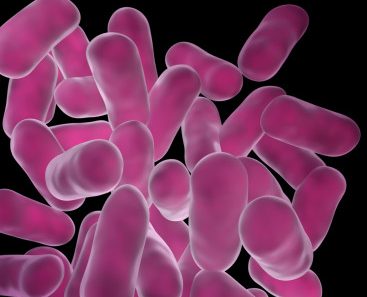
A recent report at the Experimental Biology 2012 meeting suggests that acupuncture helps to stimulate muscle tissue regrowth. The research group showed that acupuncture reversed the decrease in muscle mass in mice and in the mRNA expression level of the E3 ubiquitin ligase atrogin-1.
A story from the acupuncture clinic
This report is very important because it helps to explain why acupuncture can help patients can regain strength after an injury.
It is quite common for patients to come to the acupuncture clinic with chronic injuries and pain that are not improving. These patients are very diligent in seeking help yet their muscle weakness and pain are stubborn.
I have a patient who is in her 60’s who had an injury from falling. After her injury it was very difficult to regain muscle strength and decrease her pain despite physical therapy. She had weakness in her arm and shoulder.
I recommended that in addition to the acupuncture she continue with physical therapy. Within two weeks her muscle strength improved almost 50%. After two months of treatment she had very little pain and her muscle strength almost completely returned.
This is an exciting theory to explore new ways acupuncture helps to reduce pain and improve health.
photo: Journal of Cell Biology
Acupuncture for Arthritis
Mar 19, 2012
Osteoarthritis is the most common type of arthritis. Acupuncture has been used for thousands of years to reduce joint pain, swelling, and stiffness which comes from arthritis.
Acupuncture and Arthritis Symptoms

Acupuncture for arthritis of the back
Pain and stiffness are the most common symptoms from arthritis. Arthritis can effect both small joints, such as the hands and feet, as well as larger joints, such as the hips, back, knees, and shoulder. Arthritis may cause your joints to crack, swell, and have limited movement.
Acupuncture works to relieve pain and stiffness of arthritis by stimulating the release of natural pain relievers, such as opioids, as well as regulating pain relieving opioid receptors. Acupuncture also changes the way the nervous system feels pain, helping to relieve pain for long periods of time. In addition, acupuncture has an anti-inflammatory effect, reducing the circulating inflammatory hormones in the blood (1). Many clinical trials of acupuncture have shown acupuncture to be effective for reducing pain in patients with arthritis (2).
Acupuncture view of Arthritis
Most people with arthritis experience greater pain in the cold and damp weather. In acupuncture and Chinese medicine, the reason this occurs is because the cold and damp impede circulation in the joints. The lack of circulation leads pain, stiffness, and swelling. The goal of the acupuncture is to increase circulation and warm the joints to relieve pain.
What is the Acupuncture treatment for arthritis like?
During the first visit, we will complete a medical history and physical examination, which focuses on an examination of effected and painful joints. Acupuncture diagnosis and treatment focuses on identifying the specific root imbalance causing the condition and tailoring the treatment for you.
In addition to the acupuncture, treatment often includes manual therapies such as tui na (acupressure), cupping, and heat. Electroacupuncture is particularly effective for pain relief in arthritis.
Acupuncture is most effective through a treatment course. The treatment should decrease pain and inflammation and improve mobility in the joints. Many people find rapid relief, within a few weeks of beginning the treatment. For others, it may take longer to have an effect. Generally, patients come in for acupuncture once to twice a week depending on the severity, and gradually get acupuncture less frequently. The treatment course generally last 2-4 months. Often, patients will experience be long lasting pain relief.
References:
1. Napadow V, Ahn A, Longhurst J, et.al. The Status and Future of Acupuncture Mechanism Research. J Altern Complement Med. 2008 September; 14(7): 861–869.
2. Berman BM, Lao L, Langenberg P, Lee WL, Gilpin AMK, Hochberg MC. Effectiveness of Acupuncture as Adjunctive Therapy in Osteoarthritis of the Knee: A Randomized, Controlled Trial. Annals of Internal Medicine. 2004; 141(12):901910.
The Art of Electro-Acupuncture
Feb 6, 2012
The art of electro-acupuncture is in the details of how one uses the therapy. An effective electro-acupuncture treatment comes from what electric stimulation machine is used, proper selection of acupuncture points, how long you use the stimulation, and the proper frequency.
Acupuncture Microstim

Electro-acupuncture stimulator
In our New York City Acupuncture clinic, we use the Pantheon Research microstim machine. This is one the highest quality machines ensure a safe and effective treatment. Microstim means that the amplitude of the electric stimulation is much smaller. This is much more comfortable for the patient.
Acupuncture Point Selection
Selecting the best acupuncture points is important when using the electro-acupuncture. The acupuncture points should be chosen based upon the type of pain, the location of pain, and the muscle tightness.
This is particularly important when using acupuncture for shoulder pain. For example, if there is an acute shoulder pain with a tight knot on the corner of the shoulder blade or on the apex of the shoulder, then the leads can be placed on acupuncture points surround the area of pain.
If the spasm is very reactive to pressure, the muscle will resist too much stimulation. In that case, the leads should be placed on the acupuncture points along the effected acupuncture channel a little distance from the pain.
What is the optimal duration for electro-acupuncture?
The optimal time for electro acupuncture pain relief is 20 minutes. My preference is to perform electro acupuncture for 20 minutes. Afterwards, twirl the acupuncture needles to stimulate them and continue with 15 minutes more of regular acupuncture. This helps to get the pain relief and anti-inflammatory effects of both the electro acupuncture and regular acupuncture.
What is the best frequency for electro-acupuncture?
The lower frequencies of electo-acupuncture, such 2hz, 4 hz, or 10hz, can address both pain and inflammation. Most of the time, I use 4hz or 10hz, for most joint pain. These low frequencies can also be useful for insomnia and anxiety in some people.
Is there is chronic muscle tightness that is causing pain, the higher electro-acupuncture frequencies can sometime be effective. In my last post I wrote about electro-acupuncture for a patient with Chronic Pelvic Pain Syndrome.
Electro-Acupuncture for Pain Relief
Jan 30, 2012
Acupuncture is a constantly evolving art. Electro-acupunctrue was only developed within the last 100 years. Electro-acupuncture is used to augment the pain relieving and anti-inflammatory aspects of acupuncture

Electro-acupuncture stimulator
Electro-acupuncture is very similar to regular acupuncture. That is the acupuncture point selection is generally the same and the treatment time is also similar. Electro-acupuncture provides additional small amount electric stimulation to the acupuncture needles. The electric stimulation enhances muscle relaxation, the release of natural pain killers in the body, as well as decreases inflammation.
Electro-acupuncture is most often used for chronic pain and inflammatory conditions. The pain relief with electro-acupuncture can be so dramatic it has been used for certain types of surgery in China.
History of Electro-acupuncture
Electro-acupuncture for pain, much like other medical discoveries, was somewhat of an accident. In the early 20th century, acupuncture doctors were looking for a way to enhance bone healing by adding electrical current to an acupuncture treatment.
While it did not speed the bone healing, the physicians found it worked wonderfully for pain relief. A new therapy in the long history of acupuncture was born.
How to use Electro-acupuncture
There are many choices when using the electroacupuncture. This is where the art and skill of the acupuncture technique comes into play.

Electro-acupuncture leads
The first is what points to put the leads on. Each lead has 2 clips. You can put them on two acupuncture points that are relatively close together if you want to focus on relaxing a specific region of the body, such as the lower back. Or you can put them farther away if you want to increase circulation in the channels. It is important to place the leads ipsilaterally, that is only one side of the body and not cross the spine.
Then one chooses the frequency. Generally, I use a lower frequency between 4hz and 10hz. This is because the low frequency has been shown to decrease both pain and inflammation (1). The higher frequency, such as 100hz or 200 hz can be powerful for reducing pain, but not as much reduction of inflammation.
After the points and the frequency for electro-acupuncture have been selected I will turn the simulator on. We gradually increase the amplitude of the each lead until the patient gently feels a light tapping. The body generally adjusts and you feel the tapping only for a few minutes.
Success is in the details: How to select frequency
Frequencies can be changed in order to focus on different types of pain. This can be useful for a short stimulation for acute muscle spasm. Or it can help someone who has been experiencing chronic pain with persistent pain or partial relief some lower frequencies, I will use a higher frequencies of electro-acupuncture to stop the pain.
For example, recently I was working with a patient with chronic pelvic pain syndrome. After 2 months of treatment with acupuncture and electro-acupuncture, we were able to reduce the pain to less than half of the initial pain levels. But there was a persistent low level of pain remaining.
I changed from low frequency to high level frequency electro-acupuncture at 200hz on lower back and pelvic regions using acupuncture points such as Bladder 23, Bladder 35, and Gall Bladder 30 for 10 minute treatment. After 3 weeks of this additional treatment, the pain was reduced to almost nothing.
References:
1. Lixin Lao section on electro-acupuncture for pain relief in review article. For full article, please see
Napadow V, Ahn A, Longhurst J, et.al. The Status and Future of Acupuncture Mechanism Research. J Altern Complement Med. 2008 September; 14(7): 861–869.
The Body Acupuncture
Jan 17, 2012
Acupuncture can target chronic pain in any location of the body. Sometimes, an acupuncturist will put needles in the place of the pain. But other times an acupuncturist will place needles far away from the location, such as in acupuncture points on the legs and feet for chronic headaches.
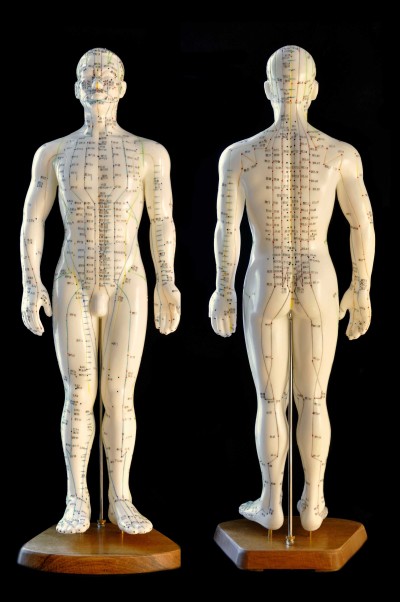
The primary way acupuncturists can focus the treatment for chronic pain in specific places because of the acupuncture channels. Acupuncture channels connect different parts of the body and run along different places in the body. The acupuncture channels create a type of map that interconnects different regions of the body.

Large Intesting 4
For example, the Large Intestine acupuncture channel starts on the hand, up the forearm, through the shoulder to the face. This is why LI 4 on the hand can be very effective for frontal and sinus headaches.
On the other hand, the Gall Bladder channel runs from the toes, along the sides of the body, and then to the sides of the head. This is why Gall Bladder 34 near the knee can be effective for headaches on the side or temples.
Auricular acupuncture
Auricular acupuncture, or ear acupuncture, is particularly effective for chronic pain.
In acupuncture, the ear lobe provides a map of the body with points for specific areas and organs.
In ear acupuncture, the best way to target the chronic pain is to find the most sensitive points in the ear for that region and place the needle in that acupuncture point.
Acupuncture for Chronic Pain
Oct 28, 2011
Chronic pain is mysterious. It can come and go. It can get worse, or get better. Often without explanation.
Chronic pain is serious. It interferes with work, school, and relationships. Chronic pain is the most common issue that comes into my acupuncture clinic. Pain can effect almost any place in the body: headaches, back pain, shoulder pain, neck pain, knee pain, and any other location.
Acupuncture for Chronic Pain
Acupuncture is a complex therapy and works in a combination of ways to reduce pain and inflammation.
Acupuncture works to reduce pain and inflammation through regulating neural pain pathways, stimulating the release of natural pain relieves in the body, such as opioids, as well as regulating pain relieving opioid receptors.
Many studies have also shown acupuncture to have a anti-inflammatory effect, reducing the circulating inflammatory hormones in the blood, such as cortisol. Interestingly, many of the hormonal and neural effects last long after the acupuncture treatment has finished, suggesting that acupuncture has both immediate and long term regulatory effective in reducing pain.
What is the acupuncture needle doing?
We also can think about what the acupuncture needle itself is doing. When inserting a needle, the muscles near the acupuncture needle or along the acupuncture channel will often twitch. Many scientists have looked at this “twitch response” which can change the inflammatory mediators in the area of the acupuncture point. This could point to a mechanism related to local pain reduction.
Connective tissue stimulation is another possible mechanisms for pain relief that the acupuncture needle site.
Acupuncturists will twirl the needle many times during the treatment. Researchers have shown that this stimulates subcutaneous loose connective tissue. Helene Langevin, the remarkable researcher who discovered this, writes, “Fibroblasts (the cells) within the loose connective tissue respond to the mechanical stimulation with active cytoskeletal remodeling that may have important downstream effects within connective tissue.”
We do not know the specific clinical effects of the connective tissue responses. But Langevin believes these results may eventually lead to an explanation of the acupuncture channel circulation and connecting the body.
The next steps in acupuncture research will look to understand how these complex mechanisms work together for long lasting pain relief.
References
Napadow V, Ahn A, Longhurst J, et.al. The Status and Future of Acupuncture Mechanism Research. J Altern Complement Med. 2008 September; 14(7): 861–869.
Langevin HM, Churchill DL, Wu J. Et. al. Evidence of Connective Tissue Involvement in Acupuncture. FASEB Journal. April 10, 2002. Published Online.
National Center for Complementary and Alternative Medicine Website. Acupuncture for Pain. Accessed 4/30/2013.
photo: Wikipedia
Acupuncture for Stress Induced Back Pain
Sep 15, 2011
This is the fourth article in a series focusing on acupuncture for back pain.

Acupuncture for Lower Back Pain
Car accidents, injuries, and training are not the only reason people develop back pain. Stress is also be a significant cause of back pain. Acupuncture is very effective for stress induced back pain because it can address both the physical and mental aspects of the cause of the pain.
This patient came to me with chronic back pain on the lower left side. When I asked where the pain was specifically, she pointed to the sacro iliac joint. This is a very common location for lower back pain. Stress also causes back pain by creating muscle tension and spasms.
She had back pain for a number of years and was not finding relief. Her pain was dull but persistent. While exercise made it feel better, the next day the pain was more intense. And the pain was worse with work stress.
The Acupuncture Treatment for Stress Induced Back Pain
Because of the chronic nature of the back pain and the weakness in the back muscles, this person does not have enough energy. The muscle stiffness should be relieved but also the qi of the body needs to be boosted to prevent the pain from returning.
To do this, I use less needles and more of a tonifying technique in the treatment. I also included acupressure. Focusing on points down the channels rather than at the pain helps. In this situation, I used 4 ashi, or ouch points, at the location of the pain. In addition I used UB 23, KI3, UB 40 to open up the back channel.
The acupuncture results
This patient responded remarkable well to the acupuncture. After only one treatment the pain had diminished greatly. The stiffness was much better and she was able to exercise without pain.
Gradually during the weeks that followed some pain returned. She followed up in two weeks for a second visit which provided pain relief again. Seeing that the treatments were effective but did not totally resolve the back pain, we created a maintainence schedule of coming once per month for a period of 6 months. The effects of acupuncture are cumulative and each visit can be more dramatic in effect.
After the 6 month treatment period she was mostly pain free with little back pain.
Read More about Acupuncture, Stress, and Back Pain:
- Stress, Depression, and Inflammation
- Acupuncture for Stress and Depression
- Relieve Back Pain with Acupuncture
An Athletic Back Pain
Sep 12, 2011
This is the third article in a series focusing on acupuncture for back pain treatment.

New York City Marathon
Back pain commonly challenges serious athletes. This next case study discusses a young man who was training for a marathon when he developed back pain.
This patient came to me after developing back pain while training for a marathon. He was building up strength and running time when he developed pain in the lower back on the right side. The pain was most intense after running and sometimes traveled down through the butt. Back stiffness and spasms were also a problem.
After a visit to his orthopedist and an MRI, he was diagnosed with a bulging disc.
Acupuncture treatment for lower back pain
We began with treatments once a week. This patient had more stagnation than deficiency, so I focused on creating circulation by using more needles and electro-acupuncture. But in athletes it is important also to boost the energy to support the training.
The points I used were UB 23, UB 32, Yao Yan, GB 30, and UB 40. KI 3 and KI 7 on the inside ankle were also used to help boost the qi.
I also looked for tender areas on the right ride, which are traditionally called ashi points, which literally means “ouch” points. There were a lot of ouch points along the upper part of pelvis. At the end of each acupuncture session, I did tui na to help relax the muscles and increase the circulation.
The Acupuncture Results

New York City Marathon Finish Line
After the first visit, the patient began to feel better. His back was less stiff, and he experienced less pain after running. We continued with weekly sessions throughout his training. At times, when he increased his mileage during the training, his back pain was somewhat exacerbated. After the following acupuncture session, the pain was generally relieved and he could continue.
By the time the marathon rolled around his back pain was under control and muscle stiffness was virtually gone. He was able to successfully complete the New York City Marathon.
Car Accident Back Pain
Sep 7, 2011
This is the second article in a series focusing on acupuncture for the treatment of back pain.
This is a case explaining how acupuncture can treat back pain after a car accident.
The patient is a young man in his early thirties who came to me for acupuncture for his back pain after being in a car accident. The car accident had occurred over 2 years before he began treatment. Despite therapy, the pain persisted. The pain and tightness was focused in his lower back that sometimes radiated down his legs.
His back pain was very persistent, although he had no disc problems or nerve impairments diagnosed on his MRI.
The pain was very intense, it hurt all day during his job and even kept him from sleeping soundly. It was difficult for him to exercise. When people stop moving and using their region of pain, the pain is often exacerbated.
Naturally, his situation caused a lot of worry and anxiety that his condition would never improve.
Upon our first visit, I saw that he had restrited range of motion in his lower back. It was difficult to bend forward or to the side.
I assessed his problem as qi and blood stagnation.
The Acupuncture Treatment

Acupuncture for Lower Back Pain
Because he tended to have more stagnation than vacuity, I focused on increasing the circulation in the back. To do this, I will tend to use more needles, electro-acupuncture, acupressure and tui na and cupping.
The points I used were on the lower back, such as UB 23, UB 25, UB 32, GB 30, Yao Yao, as well as points on the legs that open up the back channels. UB 40 on the back of the knees is a special point for back pain. I also used Kidney 3 to boost the kidneys and relieve the pain. Electro-acupuncture was also used on the lower back to relieve the pain. I used tui na rolling technique as well.
The Results

Chinese Fire Cups
After the first two visits his back pain began to diminish. And he had increased range of flexibility. By the fourth visit, his back pain, tightness, and tingling in his legs was much less. After six visits, the pain was only minor.
At this point, I advised my patient to return to exercising. Light cardiovascular and a stretching routine. Stretching is very important to maintain flexibility and prevent back pain in the long run.
We continued with four more weekly visits. The pain was much diminished and range of motion had significantly returned.
The patient was now comfortable while working and was able to return to exercising.