Archive for the ‘Chinese Herbs’ Category

Heat Illness: A Balance of Yin and Yang

Jul 26, 2010

In New York City we have already had a number of heat advisories this July.  It is important to stay cool and hydrated to avoid getting heat stroke or exhaustion.

Symptoms of chronic illness often flare up during heat waves.  This can occur due to the extra stress on the body from the weather, but also because the heat itself can lead to many illnesses.

Chinese medicine see illnesses developing from imbalances in the body as well as imbalances between the body and the environment. Heat imbalances are very common

A Balance of Heat and Cool

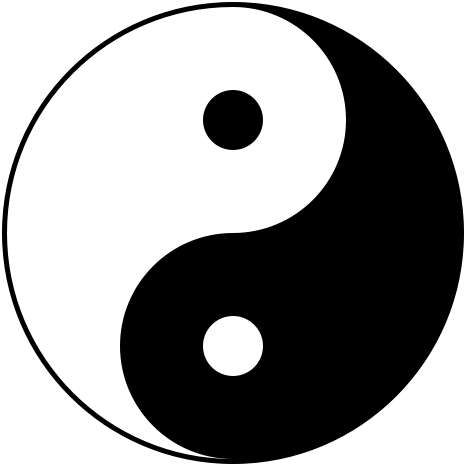
500px Yin and Yang.svg Heat Illness: A Balance of Yin and Yang

tai ji symbol

Heat and coolness are balanced and balance each other in the body.  Chinese scholars have described this terms of yin and yang: yin is the cooling properties while yang is the warming properties.

This symbol, the Tai Ji, represents the concept of yin (black) and yang (white).  The yang comes to an end and the yin begins.  The yin gets large, and yang recedes.  And vice versa.  In the center of the yin, we see yang, and in the center of the yang, there is yin.

Types of Heat

There are two major types of heat, when there is excess heat itself, and when there is a lack of cooling in the body.  Either of these imbalances make the body susceptible to the an exacerbation during the hot weather.  Chinese medicine and acupuncture work by restoring the balance of heating and cooling, or the balance of Yin and Yang.

Yin and Yang are Balanced 300x225 Heat Illness: A Balance of Yin and Yang

yin and yang are balanced

I am going to use images of water glasses to explain the types of heat.  In this image, you can see that yin and yang are at equal levels in the body.

They are balanced which is normal and healthy.  In the image below, Yin gets too low.  You can see there is relatively more yang.

Deficient Yin 300x225 Heat Illness: A Balance of Yin and Yang

yin level is too low

This results in too much heat in the body because there is not enough cooling properties of yin.  This is the most common cause of hot flashes.  In order to treat yin deficient heat, I use acupuncture and Chinese medicine to increase the yin in the body and restore balance.

Excess Yang 300x225 Heat Illness: A Balance of Yin and Yang

yang level is too high

There can also be too much yang.  In the image on the lower left, you can see the levels of yang are too high, leading to too much heat which overpowers the cooling of the yin.  This is a common cause of headaches and digestive illnesses.  I treat this by using acupuncture and herbs to reduce the amount of excess yang.

Illnesses Caused by Heat

There are too many illnesses that come from heat to list. Here are some of the most common.  It is common for the hot weather to exacerbate your symptoms because they are caused by heat imbalances.

  • Headaches
  • Hot Flashes
  • Hyperhydrosis
  • Acne
  • Eczema
  • Irritable Bowel Syndrome
  • Parkinson’s Disease
  • Burning and painful urination
  • Joint pain

The Treatment of Heat

Chinese medicine and acupuncture work by restoring the balance of yin and yang.  The treatment focuses on the specific type of heat.  For yin deficient heat, the yin properties of the body are increased.  For yang excess heat, the heat is drained from the body.

Read more:

images: Wikipedia

Cooling Summertime Tea

Jul 19, 2010

It’s a hot summer here in New York City.  In China there is a very simple herbal tea which is used to stay cool:

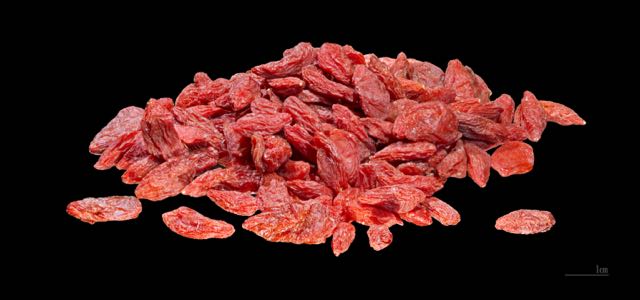
Chrysanthemum flowers and Wolfberry (Ju Hua and Gou ji zi) Tea

Chrysanthimum and Wolfberries

Chrysanthemum and Wolfberries

Ingredients:
Ju hua and gou qi zi- 6 grams each
2 sugar cubes
hot water

Directions:
Combine ingredients in a cup and add hot water.  Enjoy!
When you finish, refill the cup again. The same herbs can be used a few times.

How it works:

The tea is not cold itself, traditionally it is drunk while still warm. But the herbal properties make it cool. Ju hua are chrysanthemum flowers and Gou ji zi are wolfberries (which recently have become well known for the powerful anti-oxidant abilities).

Ju Hua (Chrysanthimum flowers)

Ju Hua (Chrysanthimum flowers)

Ju hua is cooling while gou qi zi generates fluids, preventing dehydration. Ju hua is especially helpful for summer time colds and headaches.  This combination can also be used for eye allergies like redness and tearing.

Wolfberries (Gou qi zi)

Wolfberries (Gou qi zi)

Acupuncture and Chinese Herbs Can Help Eczema

Apr 26, 2010

Eczema, also called atopic dermatitis, is a chronic skin disorder which causes the skin to become red, inflamed, intensely itchy, and in some cases blister.  It is most commonly seen in children and often resolves on its own over time.  But for some, eczema can persist into adulthood, and leading to chronic discomfort, itching, and for many insomnia.

Chinese herbs and acupuncture can often help.  For thousands of years, Chinese medicine physicians have used acupuncture and herbs to help eczema.
Chinese Medicine Diagnosis

taking the pulse 199x300 Acupuncture and Chinese Herbs Can Help EczemaChinese medicine takes a holistic approach to diagnosing eczema, considering physical, emotional, and environmental factors. By taking the pulse, asking in depth questions, and observing the tongue and the skin, I diagnose the what particular imbalance is causing the symptoms.

Often, that imbalance is due to too little energy or that the energy is not circulating in the body.  Too much “heat” is a common cause of eczema, which leads to the irritation, itching, swelling, and papules.

Acupuncture and Chinese Herbs Treatment

The treatment goal is to correct the root cause of the condition, which can lead to long term benefits, even long after the treatment has stopped.  The treatment and diagnosis are tailored to each person’s symptoms.  Depending on the severity of the condition, treatment may involve acupuncture, Chinese herbs, or both.  Some conditions will clear rapidly, but others may take longer.  In general, a treatment course is three to six months.

My Approach

acupuncure on feet 199x300 Acupuncture and Chinese Herbs Can Help EczemaEvery person is individually diagnosed to for their specific imbalance which is causing their symptoms.  Most often, focusing on clearing heat, boosting the energy, and promoting circulation will help clear the lesions and stop the itching.  This can help to treat the root of the disease as well as help resolve the symptoms.  Clearing heat usually will include the acupuncture points of Large intestine 11, 5, and 4.    Because the lungs are so often related to eczema, lung 5 and lung 6, on the front of the elbow are often added.  Spleen 6 and Spleen 10 are effective at moving the blood.

Chinese herbs focused on clearing heat are effective such as sheng di huang (rehmannia) and jin yin hua (honey suckle) may be used to clear heat.  If damp heat is present, often ku shen (sophroa) is efffective.  Specifically for the itch, di fu zi (broom cypress) may be added.  The goal of the treatment is to clear heat, dispel the wind and dampness, and move the blood to stop itch and promote healing.

Clinical Research

A number of studies in England have shown that a Chinese herbal formula is effective in treating eczema.  One double blind randomized crossover study treated 40 adults with chronic eczema with an herbal formula (in later studies, this formula is entitled Zemaphyte).  This study concluded that the herbal formula was effective for reducing skin lesions, redness, itching, and helped the patients sleep better.  This same formula later showed to have immune system regulatory effects.

Learning More

If you would like to learn more about acupuncture and Chinese herbs for the treatment of adult eczema, you can call us at 917-887-4946 to schedule an appointment or a complementary consultation.

Read more about acupuncture and Chinese medicine and the Immune System

Reset Your System: Long Lasting Effect of Chinese Medicine

Feb 11, 2010

reset 300x223 Reset Your System: Long Lasting Effect of Chinese MedicineThis year I have a fellowship at a hospital in New York City researching Chinese herbal therapies for asthma and allergies.

The other day we were in a meeting discussing an herbal formula’s effect. The study was in mice, focusing on asthma. It showed that the herbs had a long lasting positive effect even 3 months after the animals stopped taking the medication.

Many of the researchers were perplexed. Generally medicine only has an effect while it is still in the body, but these were positive effects for months afterwards.

Why could this be?

Sometimes medications can stay in the body for a long time after they have been taken. In this case we knew it was metabolized.

Rather, the herbs changed the immune response of the cells, correcting them to be healthy once again.

I like to describe this effects has resetting the body. When we are chronically ill, it is often because the normal healthy process has been altered. Acupuncture and Chinese medicine help to reset this pathway and bring it back to healthy functioning. This is certainly true with many conditions, like allergies and asthma, headaches and migraines, back pain and shoulder pain, and many others.

Once the problem has been reset, the treatment can have a long lasting effect. 

Read More about How Acupuncture and Chinese Herbs can reset imbalances in the body

Photo: Tomas Rotger

Chinese herbs for traveling

Jun 1, 2009

Next week I am going to Mexico, and in addition to being very excited. I am reminded to prepare for my trip by getting some Chinese herbs which can take care of those stomach issues on the road.

The best all around herbal formula for travelers digestive woes is Huo xiang zheng qi tang, which translates to the Patchoui formula for correcting the qi. This formula is very useful for mild to moderate stomach problems like traveler’s diarrhea. Take it as soon as you feel a little bad. This is an aromatic formula which boosts digestion through pungent herbs like patchoui and ginger.

Acupuncture for Overactive Bladder

May 20, 2009

Illu bladder Acupuncture for Overactive Bladder

Overactive bladder is a syndrome characterized by the frequent, strong, and sudden urge to urinate. The syndrome can seriously disrupt your life by interrupting your work and make you avoid social situations.

Chinese medicine can help.  Chinese medicine has been treating syndromes of frequent urination for over 2000 years.

Overactive bladder from the Western and Eastern Viewpoints

The precise cause of overactive bladder is often unknown.  Like many other syndromes, the search for the single cause is often impossible as the condition arises from a complex interaction of causes.  For overactive bladder, the name throws us off because it suggests that the bladder alone is responsible and is somehow hyperactive.  The syndrome probably involved many of the organs and muscles involved in urination.

Urination is a complex action involving the nervous system, smooth muscles of the bladder, the urinary sphincters, and pelvic floor muscles.  The symptoms of OB may be from any one of these functions: from the involuntary contraction of the bladder creating the sudden need to urinate, a sudden feeling of urination when the bladder is filling, although it is not totally full, or contraction of the pelvic floor muscles.

Most often, the symptoms of overactive bladder are serious, but the syndrome itself does not pose a threat to your health.  But in rare cases it can be due to a growth or obstruction or a neurological disorders such as Parkinson’s disease, strokes, and multiple sclerosis.  So it is important to check in with your physician about these symptoms.

Chinese medicine offers a holistic approach to address overactive bladder.  Chinese medicine views the body as an interconnected whole.  Rather than examining the body to find a specific organ, muscle, or tissue that is diseased, Chinese medicine seeks to understand the imbalance of the interactions between the organs, muscles, and tissues.  Once the imbalance is corrected, the root of the problem is improved and body can work to heal itself.

Chinese Medicine Imbalances of Overactive Bladder

Overactive bladder is very similar to the Chinese medicine syndrome of frequent urination.  This can be caused by many factors such as an injury to the pelvic floor while giving birth, congenital issues, an injury, and factors in your life, such as stress, grief, and pain.

The root of this imbalance can be in the kidneys, spleen, urinary bladder, or liver, and, more often than not, these imbalances are interconnected.  Please note that while the organ names and some of the functions are the same in both TCM and Western medicine, a dysfunction of the TCM kidney, spleen, and liver does not mean a disease in the western medicine organ.

In TCM, the kidneys are said to “govern water.”   In other words, the kidneys are in charge of water metabolism and urination.  Just like in western medicine, the kidneys filter out the urine.  But unlike western medicine, kidney qi (or energy) also contributes to the ability to hold urine in the bladder.  So problems with the kidney qi may cause overactive bladder.

The functions of the kidney can be described in terms of yin and yang.  The ability for the bladder to sufficiently hold urine is a yin function.  When there is too little kidney yin, the bladder cannot hold urine and may result in overactive bladder symptoms, such as the frequent and sudden need to urinate, which is called urge incontinence.   Weak kidney yin can also cause stress incontinence, which is when urine leaks while laughing, coughing, or sneezing.  Other symptoms of kidney yin deficiency are night sweats, hot flashes, a red face, thirst, frequent nighttime urination, a rapid pulse, and a red tongue.

The spleen is also an important organ in overactive bladder.  If the overactive bladder is accompanied by extreme fatigue especially in the morning, loose stools, poor digestion, and a pale swollen tongue, the imbalance may be in the spleen.  Often, the spleen problem is combined with an imbalance in the liver.

The liver is said to “govern the muscles and sinews,” which means the liver reflects the general health of the muscles in the body.  Because the many different muscles are the key to having the ability to hold urination, imbalances in the liver can lead to overactive bladder.    Another sign of liver involvement is when the condition is worsened by stress or anger.

A Holistic Treatment with Acupuncture and Chinese Herbs

The acupuncture and Chinese herbal treatment are focused on correcting the root imbalance in the body.  The treatment is usually once or twice a week with acupuncture and a treatment series is usually 10-12 sessions.  The treatment should increase one’s ability hold urination, decrease number of times one urinates at night, decrease urinary urgency, and create a smoother urine flow.  In addition, patients can see an improvement in sexual function over the same period of time.

acupuncture on feet close 150x150 Acupuncture for Overactive BladderAcupuncture points such as Ren 4 and 6 on the lower abdomen as well as Bladder 23 and Du 4 on the lower back all tonify the Kidney.  Kidney 7 can be added to tonify the yang, while Kidney 2 will be used if there is more yin deficiency with heat. Other points, such as Ren 3 and Bladder 64 can directly tonify the Bladder and help with incontinence. If the spleen is involved, Spleen 3 and 9 will be helpful.  If the liver is in disharmony, Liver 5, 3, or 2 can help move the qi and open the channels in the genitals.

Chinese Herbal Formulas

Herbal formulas such as liu wei di huang tang can be used for kidney yin deficiency, while ba wei di huang tang is effective for yang deficiency.  If the root imbalance is in the spleen, wu ling san or bu zhong yi qi tang can be effective   When taking Chinese herbs, it is very important to get diagnosed and treated by a trained practitioner of Chinese medicine.

Research on Acupuncture or Overactive Bladder

There is some research into acupuncture for overactive bladder.  In one randomized controlled trial, women with overactive bladder who received acupuncture once a week for 4 weeks saw a decrease in urge incontinence and urinary frequency.

If you are interested in finding out more about how acupuncture can help your overactive bladder symptoms, please call us at 917.887.4946 for a free consultation.

Photo: Wikipedia

Resetting the Immune System: Allergies, Asthma, and Acupuncture

Apr 8, 2009

Mast Cells

The immune system is a wonderful thing.  Without it we could not live a second–we would be totally consumed by bacteria and viruses.  But, it is fickle.  It can overreact or react in response to something that is not a pathogen.

I’ve recently written a couple posts about allergies (click here to read about acupuncture and allergies and click here to read about allergies in New York this season).  Allergies are caused by the immune system reacting in a way it should not, and giving us problems.  Asthma is also caused by the immune system overreacting.

Why do asthma and allergies often occur together?

Asthma and allergies are both caused by a hyper reaction in your immune system. And it is no surprise to those with asthma, that allergies make asthma worse.  The same allergen will also irritate your lungs and cause an acute flare up with many asthma attacks and difficult breathing.  With some people, this can even happen with skin allergies.  You can read more about that in this article from the Mayo clinic.

How does Chinese medicine approach asthma?

Chinese medicine therapy is not one treatment, but involves many.  Some are done by a Chinese medicine doctor, and others that are done by the patient themselves.  In my experience, combination therapies is the most powerful and effective way to treat and prevent asthma symptoms.

The idea behind Acupuncture and Chinese medicine treatment is that it corrects imbalances in the body.  In other words, it works to reset the body’s immune system.  In chronic immune conditions, your body becomes hypersensitive to what should not cause a major reaction.  The acupuncture, acupressure, and Chinese herbs work to correct the imbalance and stimulate the body to heal itself.

1. Acupuncture is frequently used for treating asthma.  As with all acupuncture, the treatment focuses on correcting the root imbalance that is causing your asthma, resetting the body to be healthy.

I have written in the past about how acupuncture helps to boost immunity and also acupuncture’s effect on our brain to regulate pain.  It is possible that acupuncture works both to stimulate the immune system as well as regulate the hormonal regulation of the brain  to helps to reset the immune hypersensitivity and reaction that causes your asthma.

There is some research beginning in asthma, allergies and acupuncture. One study from Taiwan showed that concluded that acupuncture does have an immediate improvement in breathing.   Also, there is a growing interest in laser acupuncture  for pediatric asthma because it is not as scary to a child.  Here is a great study about laser acupuncture and a probiotics for kids with asthma.  I personally don’t do laser acupuncture, Virgina Mims, one of my colleagues does.

2. Chinese herbs have long been used to treat asthma, and researchers are beginning to explore this idea.  Just like acupuncture, the herbs are focused on correcting the imbalance and regulating the immune system.  Most often, Chinese herbs are given as formulas, that is a combination of many different herbs combined which are taken together.

The combination helps to create a synergy.  Herbs correctly combined together are more powerful than single herbs. They also work together to reduce side effects.

For some people with asthma and allergies, the formula Jade Wind Screen is effective.  This helps to gently boost the qi while reducing allergy symptoms.  It is important to consult an herbal practitioner before taking Chinese herbs.

3. Acupressure is the massage of different acupressure points on the body.  It can be done by a professional (like me)

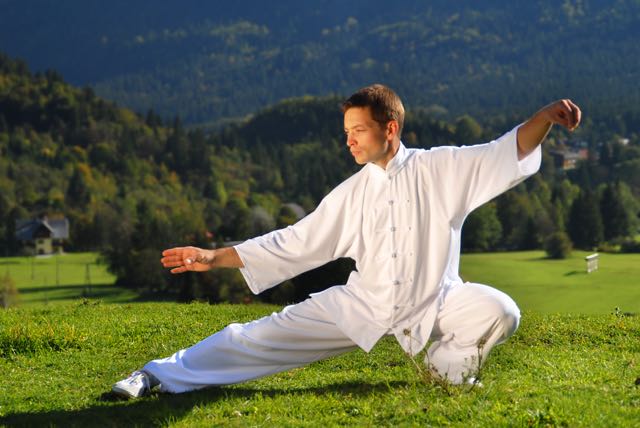
Qi gong practice

Qi gong practice

or you can do it yourself as a self care technique.  Gentle rubbing the points of PC6, LI 4, and ST 36 can boost your energy and immunity.  LI 4 works specifically to treat frontal headaches.

4.  Tai ji and qi gong are slow moving exercises which help to improve the circulation of qi. Chen Man-ching, one of the early and most famous tai ji teachers in America, began to study tai ji in order to help a chronic lung problem.  The exercises helped to heal him and prevent his condition from coming back.

5. Chinese cupping is a technique which glass or plastic cups create a suction on the

Zorba the Greek using Cupping

Zorba the Greek using Cupping

skin.  This helps to increase the circulation at that area.   It has been used with many different type of respiratory conditions.  With asthma, it helps to open the lungs and increase the expectoration of phlegm.  The tradition has also been used in Europe for a couple centuries and was captured in the movie Zorba  the Greek.

6. It is also important to watch what you eat.  Avoiding dairy and greasy food is important for those with asthma.  Dairy often stimulates the production of mucus and phlegm.  Ice cream and milk are the worst offenders.  Yogurt in moderation maybe ok. For those with severe asthma, it is better to avoid dairy products in general to help the body clear out the phlegm.

Photos: euthman, Oda’s courses, barelyfitz

Five Essential Stretches for Neck Pain

Mar 5, 2009

After sitting down at my computer for a few hours I often notice a nagging neck m 150x150 Five Essential Stretches for Neck Painpain in my neck. More than the automatic updates, the random pop-ups, or the crashing of my computer, I attribute it to sitting for long periods of time without getting up to move and stretch.

An ancient Chinese medicine saying states, “When qi moves freely, there is no pain. When qi stops, pain occurs.” Qi, the body’s energy, must circulate for good health. When its flow is impeded, pain and disease occurs. (For a more detailed explanation of qi circulation and pain, please see this post). The details of diagnosis and treatment can be very complicated, but in general we can say that the greater the pain, the worse the stagnation.

I find patients generally follow a downward spiral towards chronic pain. An injury or minor pain makes a person use that part of their body less, which then leads to greater stagnation and an increase in pain. Whether it is neck pain, back pain, hip pain, tendonitis, knee pain, or frozen shoulder, the quicker you are able to move the joint and regain normal qi flow, the faster and more sustainable the recovery.

Getting up from the computer, to do stretches of the neck, shoulders, and arms often helps my pain. Sometimes stretching is not enough for those in chronic pain. Combining stretching and exercise with acupuncture and Chinese herbs can often speed up relief and lead to a more sustainable recovery.

The Five Essential Stretches for neck pain

Dr. Xiao, and Students, I am on the far right

Dr. Xiao, and Students, I am on the far right

Dr. Xiao, my Tui Na (Chinese Medical Massage) professor in Hunan China, was famous not only for his technique, the Gun Fa (rolling technique), but also for his compassion for his patients and dedication to their health. In addition to his treatment, he educated his patients and their families about how to maintain and improve health through exercises and stretches. “Every person, not just those in pain, should do these exercises to keep their body loose and their qi moving,” Dr Xiao instructed me. “Remember to smile, it will help your qi flow.”

The following simple movements can help alleviate and prevent neck pain by relaxing the muscles and increasing blood circulation. You may even find it helps you think clearer afterwards.

1. Relax Your Breathing. If you do nothing else, do this simple breathing technique. Natural breathing is the foundation for the mind and body to relax and for qi to flow throughout the body. Stand in a comfortable position with your feet shoulder width apart, arms at your side, and knees slightly bent. Breathe into your stomach, allowing your abdomen to gently rise on inhale and fall on the exhale. After practicing for a while, this type of breathing often becomes your natural breath and you will feel more relaxed and calm. For a more in depth explanation, read this post.

2. Shake It Out. Maintaining the relaxed breathing, slowly begin to rock your shoulders and arms back and forth. Gradually increase this movement and shake out any tension. Remember to smile and have fun with it. You might even try adding a hardy belly laugh.

3. Gaze at the Heavens and Earth. Standing in the same position, relax your face and eyes. Slowly, bend your neck down and look at the ground, allow your muscles to relax. Then gently raise your head and look up. Try not to focus your gaze on any one particular object, but relax and look into the distance. Repeat this motion for about ten repetitions.

4. Look Both Ways Before You Cross. From a forward looking position, rotate your head to the left. When you have reached your limit, hold your head there for a moment and inhale, then slowly turn your head back to the right. Be careful not to over rotate which can cause pain and injury.

5. Rotate your head. Very very slowly roll your head in circles. Keep your eyes and face relaxed. Start rolling to the right ten times and then to the left. This is great to do in the middle of the day if you have minor neck pain.

top photo: Irina Souiki

Acupuncture and Chinese Medicine for Polycystic Ovarian Syndrome

Mar 2, 2009

I received this question on an expert site which I wanted to share with you about acupuncture and Poly Cystic Ovarian Syndrome or PCOS.

Question: I was diagnosed with PCOS a year ago. My husband and I are trying to get pregnant. I have many of the symptoms typical for PCOS including few and irregular periods, body hair, acne, and weight gain which is difficult to take off,  but do not have the actually cysts on my ovaries according to my ultrasound.

What would you recommend for my situation?

Answer: Hello,
Thank you for your question. I understand you’re in a difficult situation, PCOS is a very common and trouble getting pregnant is frustrating and can be very hard.

There is hope.  PCOS is very treatable with acupuncture and herbs.  Your body’s natural healing mechanisms are actually the only way to heal, but as long as the imbalance persists, there can be no healing.

Traditional Chinese medicine works by bringing the body back into balance so it can heal itself. That’s why I can often treat conditions that other approaches cannot.

Chinese medicine is not a one size fits all medicine, and formulations have to be carefully tailored to your specific presentation.  Chinese medicine examination includes a series of questions, taking your pulse, looking at your tongue, and palpating acupoints on your body.

Some of the imbalances often associated with PCOS are liver qi stagnation with blood stasis, and also your spleen may be effected.  Don’t worry, the names of the organs are the same, but an imbalance in your Chinese medicine liver and spleen does not mean an imbalance in your western liver.

Qi, the body’s energy, flows through the body, and when it flows well, your health is generally good.  When it is slowed down or stops, disease occurs.  Qi can stagnate for many reasons.  The Liver in Chinese medicine is responsible for the free flowing of qi.

Emotional health can be a factor.  You know, the mind and the body are not separate, but each effect one another.  In Chinese medicine, each organ is effected by specific emotions.  Often the liver is related to frustration, anger, and stress.

The spleen can also be affected as well. The root of the problem may be dampness, and for that you may need a customized herbal formula.  In Chinese medicine the spleen is related to the digestion. Poor digestion leads to dampness.  The fact that it is difficult to lose weight may be related to a spleen dysfunction.  It is also associate with poor digestion and fatigue.

In addition to getting a customized herbal formula from a TCM practitioner, I would recommend regular exercise, avoiding greasy heavy food, and cutting down on carbohydrates.

I recommend finding an acupuncturist in your area.  Also, if you are in New York, please give us a call at 917-887-4946 to schedule an appointment.  If not, you can use acufinder.com to find an acupuncturist near you.

In good Health,
Joseph

What to do about the Flu in New York City

Feb 10, 2009

teacup What to do about the Flu in New York CityIn a press release yesterday, NYC has announced that the flu has come to New York City.

In Chinese Medicine there are two main ways to prevent getting the flu.  First, boost your own immune system, which Chinese medicine  (read this post for more info).  Second, fend off any invaders before you get sick.

It is best to treat a disease before you get it by boosting your immune system.  I recommend taking the mushroom reishi, also called ling zhi in Chinese, which will help boost your immunity and your energy.

But when the flu is going around, it is important to take an herbal formula which will help prevent the sickness.  Gan Mao ling is a great formula for this. If you get the flu, this formula will not be powerful enough.  At this point it is important to seek advice from a Chinese medicine doctor for the right formula.

Check out these posts for other Chinese medicine tricks and tips on how to prevent and kick the common cold and flu.

People who get chronic colds will need a more customized herbal formula and acupuncture treatment.

Photo by JJohn.

Alltop, all the top stories

SEARCH

Sign up

Enter your email address:

CATEGORIES

GET RSS FEED

Subscribe via RSS


LEGAL

All information provided on alban acupuncture.com is for informational and educational purposes only. It is not meant for diagnosis or treatment. If you have a specific health concern, please contact us at 917.887.4946 regarding the applicability of any opinions or recommendations with respect to your symptoms or medical condition.