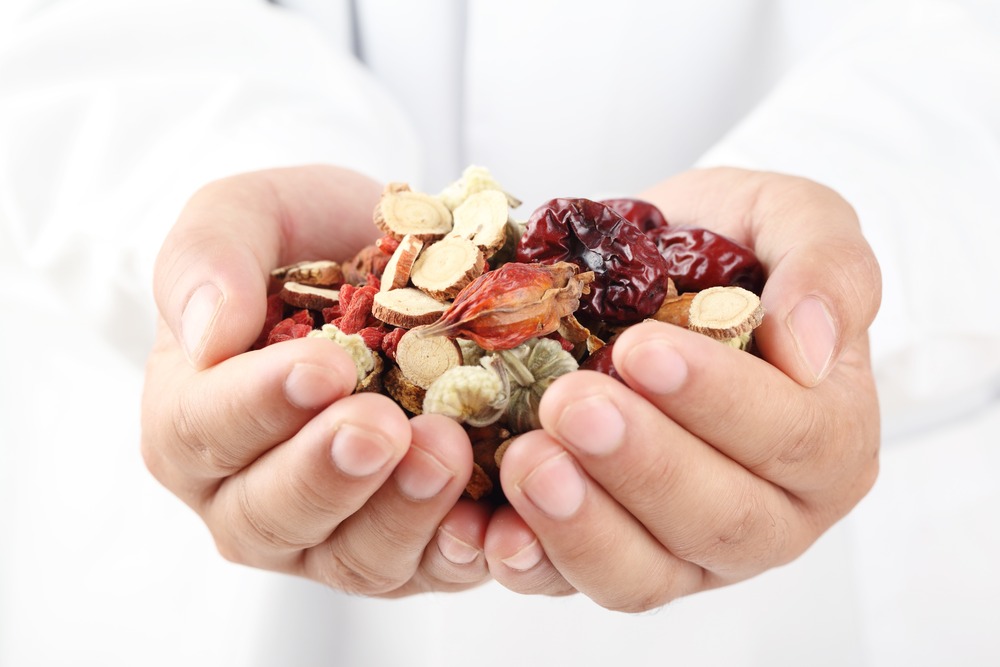
This year I have a fellowship at a hospital in New York City researching Chinese herbal therapies for asthma and allergies.
The other day we were in a meeting discussing an herbal formula’s effect. The study was in mice, focusing on asthma. It showed that the herbs had a long lasting positive effect even 3 months after the animals stopped taking the medication.
Many of the researchers were perplexed. Generally medicine only has an effect while it is still in the body, but these were positive effects for months afterwards.
Why could this be?
Sometimes medications can stay in the body for a long time after they have been taken. In this case we knew it was metabolized.
Rather, the herbs changed the immune response of the cells, correcting them to be healthy once again.
I like to describe this effects has resetting the body. When we are chronically ill, it is often because the normal healthy process has been altered. Acupuncture and Chinese medicine help to reset this pathway and bring it back to healthy functioning. This is certainly true with many conditions, like allergies and asthma, headaches and migraines, back pain and shoulder pain, and many others.
Once the problem has been reset, the treatment can have a long lasting effect.
Read More about How Acupuncture and Chinese Herbs can reset imbalances in the body
Photo: Tomas Rotger
In my last post, I discussed some of the scientific theories about how acupuncture works. The science is fascinating and there is a lifetime of exploring left to be done. Yet, it does not tell us about the power of Chinese medicine, which is the theory behind acupuncture. The skill and success of the practitioner is based upon how they apply this theory.
Acupuncture Channels and Qi Flow
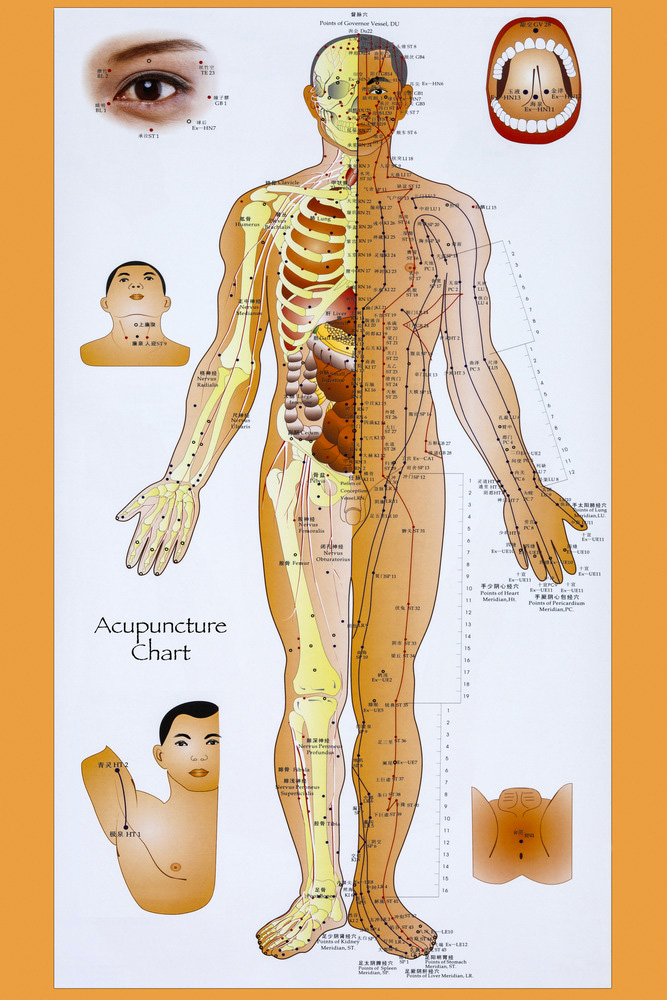
The core of acupuncture theory is the channel system and network. Some people like to describe the channels like the meridians on a globe revealing the geographic relationship between parts of the body. They are somewhat different than meridians, because while they travel on the surface of the skin, they also dredge deep into the body to link with the organs and the viscera. This is why I prefer to use the word channel to meridian.
No matter what you call them, the channels are an alternative communication mechanism that connect and integrate the body, That is why we can use points on your leg to treat digestive diseases, headaches, acne, or asthma.
Qi, the body’s energy, circulates in the channels. This is another reason they are like channels, because material flows through them. Good health is maintained when there is a good amount of circulation and amount of qi in the channels. Injuries, stress, and illnesses can cause the qi to slow down or stagnate in the channels.
Acupuncture Points
Acupuncture points, for the most part, lie on the channels. Points are regions of the body that the qi is more accessible. This is why we needle or massage them to influence the flow and circulation of qi. Each point has a specific healing action such as moving the qi in the digestive system, stimulating production of reproductive qi, or sometimes it will focus on a specific region of the body. By elegantly combining the points, the skilled practitioner helps to balance the body and promote self healing.
There are almost as many treatment styles as there are acupuncturists. Sometimes acupuncturists will not treat the painful area of the body, but the opposite. For example, I prefer to put needles in points on the feet for headaches, in order to drain the energy down out of the head.
Rotator cuff tendinitis is an injury that plagues athletes and non-athletes alike. It most often occurs from repetitive actions like throwing a ball, lifting, or even sitting at a computer. But the good news is that acupuncture can help. I believe that acupuncture for shoulder pain, and specifically, rotator cuff tendonitis, is possibly the most effective and safest treatment available.
What is the rotator cuff?
The rotator cuff consists of four muscles that connect the shoulder to the humerus of the arm: the suprspinatus, infraspinatus, teres minor, and subscapularis muscle. These muscles stabilize the arm while it moves.
How does an injury develop?
Rotator cuff tendinitis is an injury to the tendons, but the muscles can also be injured. Injuries can develop from an acute sudden injury like falling or lifting something too heavy. As I mentioned, it can also happen from repetitive movements like throwing a ball.
From the injury, one may develop pain, weakness, difficultly moving the arm, and irritation. If left untreated, it may become worse. Due to lack of motion of the arm, you may loose muscles mass and develop long term weakness. Also, I have seen rotator cuff and neck injuries lead to wrist problems and arm pain.
Acupuncture and rotator cuff tendinitis
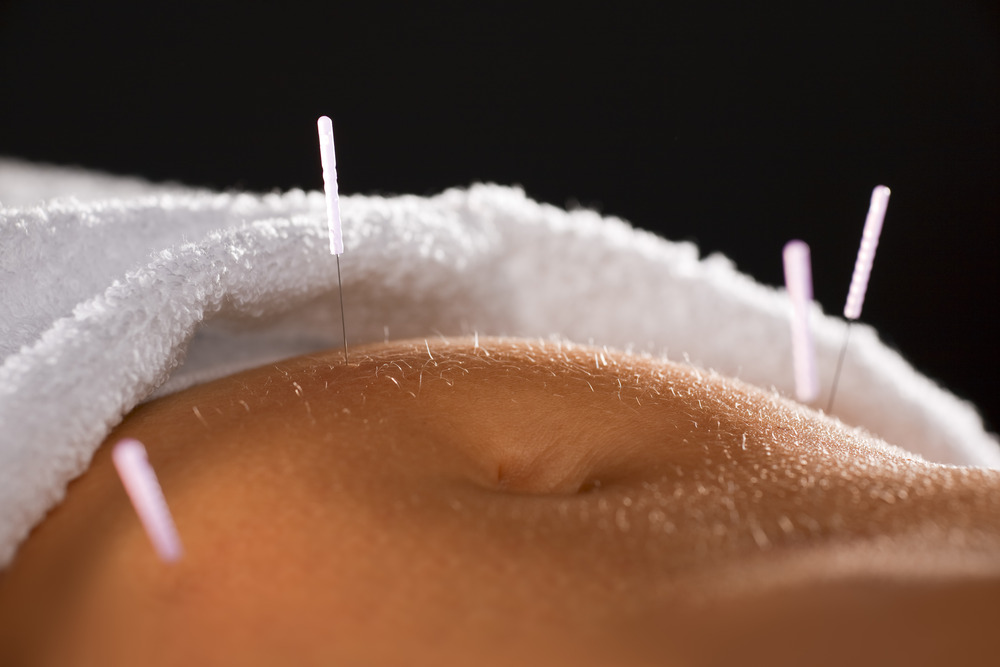
Acupuncture works great for rotator cuff tendinitis. First, it works by increasing the circulation to the area and decreasing inflammation in the tendons. Secondly, acupuncture may stimulate regrowth of the cells and tissues in an injured area. And also, it helps to reduce pain. Sometimes in pain conditions, the central nervous system remembers the pain, even if the injury is healed. Acupuncture may help to reteach the brain and nervous system to be healthy again.
Research on Acupuncture for Rotator Cuff Tendinitis
There is a wonderful study done on acupuncture for rotator cuff tendinitis published in 1999 in the journal Pain.
52 people were enrolled and received acupuncture 2 times per week for 4 weeks. In this study, they used an interesting placebo needle. When the acupuncturist goes to insert the needle, the tip of it retracts, so there is no needle insertion. The acupuncture group’s pain was reduced much more than the placebo acupuncture group.
This was a great study. I think even better results can be obtained with the inclusion of acupressure, which I regularly do in my treatment for shoulder pain. I have already written about my unique acupressure and tui na technique for shoulder pain.
Exercises and Stretches
In addition to acupuncture and acupressure, it is important to include stretches and exercises. In my next post, I will write about the 3 essential shoulder stretches for shoulder and rotator cuff rehabilitation.
Read more about preventing neck and shoulder pain
Photos: Wikipedia
These last six weeks have been monsoon season here in New York City. Everything was soaked, soggy, and slippery.
And that makes for poor bike riding conditions. A few weeks ago, I was riding home from my Tai Ji class in central park. I wa
s trying to be cautious, but when I hit a muddy spot on a turn my bike slipped out form under me.
Splat, I fell on my left elbow.
I was worried. Is this going to require a serious rehab time? I knew, no mater what, it soon swell up badly and needed quick treatment. I would get an x-ray later in the day, and luckily nothing was broken. But I knew I could start reducing the inflammation immediately.
I rode home, and got out my cups, acupuncture needles, and the all too valuable herbal anti-inflammatory topical poultice San Huang San.
My arm was swelling up, becoming red and hot. These are all signs of the inflammation in the area. As the swelling increase, my range of motion decreased. From previous similar injuries, I knew if I did not do anything this would take at least 2-3 months to heal.
The best way to reduce the inflammation and swelling is the ancient technique of cupping and bleeding. Cupping is

Chinese Fire Cups
done by creating a vacuum in a glass (or wooden) cup with a flame and then pressing that cup to the skin, drawing up the muscle beneath it.
For acute injuries, the bleeding helps to reduce the inflammation and swelling. Tom Bisio, one of my teachers and an expert on treating traumatic injuries, says in his wonderful book A Tooth from the Tiger’s Mouth,
this is like breaking holes in a beaver dam. Once you open a little hole, it gets larger and larger, and more and more water will flow through. For injuries, this allows qi to flow through to promoting healing.
By using a small thick lancet, I pricked the swollen area to draw a little blood. Then, I used cupping to draw that blood away from the injury. I also needled some points for qi and blood circulation.
After the cupping treatment I used the herbal poultice called San Huang San, which has anti-inflammatory and cooling properties, and wrapped my arm for the night.
The next day I felt better, and the swelling had gone down considerable. I repeated the cupping and bleeding, and again wrapped my arm. Each hour I felt more circulation and relaxation. I repeated for another day. After that, there was very little swelling and I had almost full range of motion.
That week I treated myself with acupuncture two more times, and by the end of the week, I was 90% better. Within two weeks, the pain and tightness was completely gone.
I still have to rebuild some of the strength, but thanks to the cupping and acupuncture, my rehabilitation will be only a few weeks, rather than a couple of months.
photos: magicattic88
Chronic pelvic pain syndrome (CPPS) is the most common form of prostatitis, yet not many clinicians know how to treat it. I have written about what chronic pelvic pain syndrome is and also how acupuncture can help.
A recent research study is also supporting the use of electroacupuncture to relieve chronic pelvic pain in men.
Electroacupuncture and Chronic Pelvic Pain Syndrome
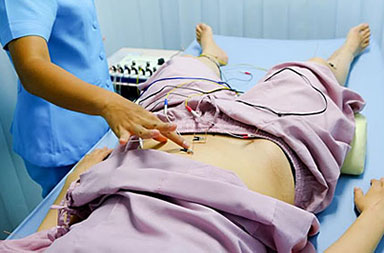
Electroacupuncture is when electric stimulation is attached to the acupuncture needles. It is generally used for pain relief. I often use it for treating pain and with men with CPPS.
This study showed that electroacupuncture reduces pain in men with CPPS by using just six standard acupuncture points on the sacrum and buttock. There was also a placebo acupuncture group, in which the patients received acupuncture at non-acupuncture points. Lastly, they had a group that was instructed in relaxation techniques and used a sitz bath.
After 3 weeks the men with electroacupuncture experienced a greater relief than the other two groups. After 6 weeks, the pain was nearly cut in half. There was also a reduction in prostaglandin E, an inflammatory marker, in the electroacupuncture group alone.
Beyond the research
This is great news for men with CPPS. These results support the use of acupuncture for relieving pain with CPPS. Hopefully, this will encourage men with CPPS to find help through acupuncture.
As much of great medical research does, the answer to a question gives us practical advise, and at the same time, creates more questions.
I would like to see researchers go further into examining the acupuncture methodology to see if they can produce more powerful results. For example, I believe that the best acupuncture is done through individualized diagnosis and treatment which addresses the underlying imbalance causing the pain. This type of treatment is based in Chinese medicine theory and practice. It will reduce inflammation and muscle spasm, as well as correct the imbalance that is causing the disease. This could be done through a study that includes an individualized treatment group.
Second, I would like to see a study address questions of how the acupuncture can best reduce the pain. Should the electroacupunture be set at 4HZ, 100 HZ, 200HZ, or a mixed pattern? What is the optimal time dosage? Another great question is to look into if the length of the needle affects the outcomes.
Through these type of question, we can search to find the optimal method that not only reduces pain, but eliminates the pain totally.

Overactive bladder is a syndrome characterized by the frequent, strong, and sudden urge to urinate. The syndrome can seriously disrupt your life by interrupting your work and make you avoid social situations.
Chinese medicine can help. Chinese medicine has been treating syndromes of frequent urination for over 2000 years.
Overactive bladder from the Western and Eastern Viewpoints
The precise cause of overactive bladder is often unknown. Like many other syndromes, the search for the single cause is often impossible as the condition arises from a complex interaction of causes. For overactive bladder, the name throws us off because it suggests that the bladder alone is responsible and is somehow hyperactive. The syndrome probably involved many of the organs and muscles involved in urination.
Urination is a complex action involving the nervous system, smooth muscles of the bladder, the urinary sphincters, and pelvic floor muscles. The symptoms of OB may be from any one of these functions: from the involuntary contraction of the bladder creating the sudden need to urinate, a sudden feeling of urination when the bladder is filling, although it is not totally full, or contraction of the pelvic floor muscles.
Most often, the symptoms of overactive bladder are serious, but the syndrome itself does not pose a threat to your health. But in rare cases it can be due to a growth or obstruction or a neurological disorders such as Parkinson’s disease, strokes, and multiple sclerosis. So it is important to check in with your physician about these symptoms.
Chinese medicine offers a holistic approach to address overactive bladder. Chinese medicine views the body as an interconnected whole. Rather than examining the body to find a specific organ, muscle, or tissue that is diseased, Chinese medicine seeks to understand the imbalance of the interactions between the organs, muscles, and tissues. Once the imbalance is corrected, the root of the problem is improved and body can work to heal itself.
Chinese Medicine Imbalances of Overactive Bladder
Overactive bladder is very similar to the Chinese medicine syndrome of frequent urination. This can be caused by many factors such as an injury to the pelvic floor while giving birth, congenital issues, an injury, and factors in your life, such as stress, grief, and pain.
The root of this imbalance can be in the kidneys, spleen, urinary bladder, or liver, and, more often than not, these imbalances are interconnected. Please note that while the organ names and some of the functions are the same in both TCM and Western medicine, a dysfunction of the TCM kidney, spleen, and liver does not mean a disease in the western medicine organ.
In TCM, the kidneys are said to “govern water.” In other words, the kidneys are in charge of water metabolism and urination. Just like in western medicine, the kidneys filter out the urine. But unlike western medicine, kidney qi (or energy) also contributes to the ability to hold urine in the bladder. So problems with the kidney qi may cause overactive bladder.
The functions of the kidney can be described in terms of yin and yang. The ability for the bladder to sufficiently hold urine is a yin function. When there is too little kidney yin, the bladder cannot hold urine and may result in overactive bladder symptoms, such as the frequent and sudden need to urinate, which is called urge incontinence. Weak kidney yin can also cause stress incontinence, which is when urine leaks while laughing, coughing, or sneezing. Other symptoms of kidney yin deficiency are night sweats, hot flashes, a red face, thirst, frequent nighttime urination, a rapid pulse, and a red tongue.
The spleen is also an important organ in overactive bladder. If the overactive bladder is accompanied by extreme fatigue especially in the morning, loose stools, poor digestion, and a pale swollen tongue, the imbalance may be in the spleen. Often, the spleen problem is combined with an imbalance in the liver.
The liver is said to “govern the muscles and sinews,” which means the liver reflects the general health of the muscles in the body. Because the many different muscles are the key to having the ability to hold urination, imbalances in the liver can lead to overactive bladder. Another sign of liver involvement is when the condition is worsened by stress or anger.
A Holistic Treatment with Acupuncture and Chinese Herbs
The acupuncture and Chinese herbal treatment are focused on correcting the root imbalance in the body. The treatment is usually once or twice a week with acupuncture and a treatment series is usually 10-12 sessions. The treatment should increase one’s ability hold urination, decrease number of times one urinates at night, decrease urinary urgency, and create a smoother urine flow. In addition, patients can see an improvement in sexual function over the same period of time.
Acupuncture points such as Ren 4 and 6 on the lower abdomen as well as Bladder 23 and Du 4 on the lower back all tonify the Kidney. Kidney 7 can be added to tonify the yang, while Kidney 2 will be used if there is more yin deficiency with heat. Other points, such as Ren 3 and Bladder 64 can directly tonify the Bladder and help with incontinence. If the spleen is involved, Spleen 3 and 9 will be helpful. If the liver is in disharmony, Liver 5, 3, or 2 can help move the qi and open the channels in the genitals.
Chinese Herbal Formulas
Herbal formulas such as liu wei di huang tang can be used for kidney yin deficiency, while ba wei di huang tang is effective for yang deficiency. If the root imbalance is in the spleen, wu ling san or bu zhong yi qi tang can be effective When taking Chinese herbs, it is very important to get diagnosed and treated by a trained practitioner of Chinese medicine.
Research on Acupuncture or Overactive Bladder
There is some research into acupuncture for overactive bladder. In one randomized controlled trial, women with overactive bladder who received acupuncture once a week for 4 weeks saw a decrease in urge incontinence and urinary frequency.
If you are interested in finding out more about how acupuncture can help your overactive bladder symptoms, please call us at 917.887.4946 for a free consultation.
Photo: Wikipedia

President Obama
Last week at President Obama’s Town Hall Meeting in St. Louis, a local acupuncturist asked him a question regarding acupuncture and national health care policy.
Here is the transcript from that interaction…
–Q I’m a licensed acupuncturist and licensed massage therapist in Florissant. And so –
THE PRESIDENT: I could use one right now. (Laughter.) My back is stiff. I’ve been working hard.
Q I’ll be happy to help you. (Laughter.) And this kind of fits into what you were just talking about as far as health care. I’m wondering, as a practitioner of Oriental medicine, knowing that the National Institutes of Health and the World Health Organization has discovered through their studies that alternative medicine often is more cost-effective and very effective, how will alternative medicine fit in your new health care program?
THE PRESIDENT: Well, look, my attitude is that we should — we should do what works. So I think it is pretty well documented through scientific studies that acupuncture, for example, can be very helpful in relieving certain things like migraines and other ailments — or at least as effective as more intrusive interventions.
I will let the science guide me. We just swore in an outstanding new Secretary of Health and Human Service, Kathleen Sebelius, former governor of Kansas. (Applause.) It’s good to see that a Jay Hawk got applause on this side of the border here. (Laughter.) But she’s going to do an outstanding job. And my charge to her is, as we’re going through health care reform let’s find out what works…
–
He then goes on to discuss other aspects of his healthcare plan.
Okay, so it is not a policy…
But it is a start.
First off, he seriously answers the question instead of avoiding it or joking it off. This is very important. It shows that the President considers acupuncture as a legitimate and effective health care choice.
Secondly, President Obama actually knows, without prepping for this question, that there is evidence supporting acupuncture’s efficacy for “migraines and other aliments.” Not many people know that there is a lot of research about acupuncture. In fact, many journalists and authorities often wrongly state that there is no evidence at all. This is one well informed President!
Personally, I think President Obama should support acupuncture. Not only because I am an acupuncturist, but because he is a self described pragmatist. And acupuncture is pragmatic- it is an affordable and safe answer that solves problems.
Photo: Change.gov
Recently, a young mother came into my office suffering from shoulder and neck pain. The center of the pain was a tight knot at the apex of her left shoulder. The pain was strong and nearly constant. It radiated from the shoulder to the base of the skull and there was a feeling of tightness that radiated across the front of the chest.
She is a busy mother. Playing and lifting her daughter exacerbated the problem. She had been seeing a chiropractor and a pain management doctor who was doing injections for 3 years without relief. She ended up taking pain medication almost everyday, she was extremely frustrated with her situation, and her sleep was terrible from the pain and tightness.
After one acupuncture session her pain was lessened by about half. At the end of a series of five treatments, along with some exercises at home, she had only occasional minor pain, and did not take any pain medications.
What is your approach to treatment?
The results of the acupuncture treatment depends upon the skill and approach of the practitioner. My success comes from the combination of acupuncture and acupressure over large muscle groups, using the whole acupuncture channel, treating the root of the condition, and my unique acupressure technique, which I learned in China. Also,I advise patients to do exercises and stretches at home to prevent the problem from returning.
Shoulder and Neck muscle groups
Trapezius Muscle from Gray's Anatomy
The body is interconnected, tension from one area can create problems in other muscles. In Tai ji we say that tension in the little toe can create tension in the whole body. Often, trying to target and treat only the location of the pain does not relieve the tension in the surrounding muscle groups. This is particularly true when treating pain in the neck and shoulders. All of the muscles in the region need to be addressed.
In my patient’s case the knot was on her shoulder, specifically in her trapezius muscle. Focusing on this muscle alone, and not relaxing the detoids, rhomboids, SCM, and even the biceps leaves the surrounding muscles tight.
Acupuncture Channels

Acupuncture Channels
The body is integrated by a series of channels. The location of pain and stiff muscles often follows the course of a specific channel. Targeting powerful acupuncture points on that channel, will move the stagnation that is causing the pain. In my patient’s case, the pain was on the Gallbladder channel and I used GB 34 to move the stagnation.
Some outside the field of acupuncture and Oriental Medicine believe that needling the location of the pain is sufficient. This is called dry needling, which is not nearly as effective as when the entire channel is considered.
Tui Na

Beginning of rolling movment
The key tui na technique I use is called the rolling technique, called gun fa in Chinese. Many acupuncturists know this technique. However, most do not utilize the movement of the wrist along with the whole hand which makes the technique feel smooth. I learned this while studying in China with Dr. Xiao at the Hunan University of traditional Chinese Medicine.

Ending of rolling movement
If you push too hard on a muscle, the muscle will rebel. Instead of relaxing, it can become tighter. My rolling technique, because it is smooth allows the use of strength while avoiding resistance within the muscle.
Treating the root of the condition
Chinese medicine is not simply putting a needle into the body where it hurts. It is based on a theory that the problem you have is caused by an imbalance. When it comes to muscle pain, the clinician must determine if it is an excess condition or a deficiency condition, and tailor the treatment to that diagnosis.
Excess conditions are when there is a build up in the muscles. This impedes the circulation of qi which leads to pain. A deficient condition is when there is not enough energy. Then the muscles do not have enough substance to support them, as a result they tense up.
I like to describe excess and deficiency by comparing the muscles to a narrow bridge (please excuse any physics mistakes, I am not an engineer).
When there is an excess condition, there is too much trash, debries, and cracks in the pavement for you to safely and easily cross the bridge. Climbing over the obstacles causes you to slow down, and sometimes you injure yourself. The acupuncture and tui na helps to remove the trash and smooth over the cracks.
When there is a deficiency, the support columns for the bridge are unstable. The bridge is rocky, can develop cracks, the sidewalk is tense, but shaky, and the tension on sides of the bridge increases. This also makes it hard for you to pass. In this case, the acupuncture and acupressure helps to support the bridge, which will allow you to cross safely.
For an excess condition, you will use a stronger technique, and for a deficient condition, you will use a more gentle technique. If the deficiency is very extreme, then the treatment may be take a longer time.
Neck Exercises at Home
Acupuncture treatment helps to correct the imbalance and allow the body to heal. Staying healthy and preventing the pain from returning is something you do on your own with qi gong exercises and stretches. Use these neck stretches and basic qi gong to keep your body healthy and prevent the pain from returning.
Photos: Wikipedia, EEcue, Library of Congress

The immune system is a wonderful thing. Without it we could not live a second–we would be totally consumed by bacteria and viruses. But, it is fickle. It can overreact or react in response to something that is not a pathogen.
I’ve recently written a couple posts about allergies (click here to read about acupuncture and allergies and click here to read about allergies in New York this season). Allergies are caused by the immune system reacting in a way it should not, and giving us problems. Asthma is also caused by the immune system overreacting.
Why do asthma and allergies often occur together?
Asthma and allergies are both caused by a hyper reaction in your immune system. And it is no surprise to those with asthma, that allergies make asthma worse. The same allergen will also irritate your lungs and cause an acute flare up with many asthma attacks and difficult breathing. With some people, this can even happen with skin allergies. You can read more about that in this article from the Mayo clinic.
How does Chinese medicine approach asthma?
Chinese medicine therapy is not one treatment, but involves many. Some are done by a Chinese medicine doctor, and others that are done by the patient themselves. In my experience, combination therapies is the most powerful and effective way to treat and prevent asthma symptoms.
The idea behind Acupuncture and Chinese medicine treatment is that it corrects imbalances in the body. In other words, it works to reset the body’s immune system. In chronic immune conditions, your body becomes hypersensitive to what should not cause a major reaction. The acupuncture, acupressure, and Chinese herbs work to correct the imbalance and stimulate the body to heal itself.
1. Acupuncture is frequently used for treating asthma. As with all acupuncture, the treatment focuses on correcting the root imbalance that is causing your asthma, resetting the body to be healthy.
I have written in the past about how acupuncture helps to boost immunity and also acupuncture’s effect on our brain to regulate pain. It is possible that acupuncture works both to stimulate the immune system as well as regulate the hormonal regulation of the brain to helps to reset the immune hypersensitivity and reaction that causes your asthma.
There is some research beginning in asthma, allergies and acupuncture. One study from Taiwan showed that concluded that acupuncture does have an immediate improvement in breathing. Also, there is a growing interest in laser acupuncture for pediatric asthma because it is not as scary to a child. Here is a great study about laser acupuncture and a probiotics for kids with asthma. I personally don’t do laser acupuncture, Virgina Mims, one of my colleagues does.
2. Chinese herbs have long been used to treat asthma, and researchers are beginning to explore this idea. Just like acupuncture, the herbs are focused on correcting the imbalance and regulating the immune system. Most often, Chinese herbs are given as formulas, that is a combination of many different herbs combined which are taken together.
The combination helps to create a synergy. Herbs correctly combined together are more powerful than single herbs. They also work together to reduce side effects.
For some people with asthma and allergies, the formula Jade Wind Screen is effective. This helps to gently boost the qi while reducing allergy symptoms. It is important to consult an herbal practitioner before taking Chinese herbs.
3. Acupressure is the massage of different acupressure points on the body. It can be done by a professional (like me)

Qi gong practice
or you can do it yourself as a self care technique. Gentle rubbing the points of PC6, LI 4, and ST 36 can boost your energy and immunity. LI 4 works specifically to treat frontal headaches.
4. Tai ji and qi gong are slow moving exercises which help to improve the circulation of qi. Chen Man-ching, one of the early and most famous tai ji teachers in America, began to study tai ji in order to help a chronic lung problem. The exercises helped to heal him and prevent his condition from coming back.
5. Chinese cupping is a technique which glass or plastic cups create a suction on the

Zorba the Greek using Cupping
skin. This helps to increase the circulation at that area. It has been used with many different type of respiratory conditions. With asthma, it helps to open the lungs and increase the expectoration of phlegm. The tradition has also been used in Europe for a couple centuries and was captured in the movie Zorba the Greek.
6. It is also important to watch what you eat. Avoiding dairy and greasy food is important for those with asthma. Dairy often stimulates the production of mucus and phlegm. Ice cream and milk are the worst offenders. Yogurt in moderation maybe ok. For those with severe asthma, it is better to avoid dairy products in general to help the body clear out the phlegm.
Photos: euthman, Oda’s courses, barelyfitz
As I mentioned in my last post, acupuncture is a becoming a popular choice for helping to reduce seasonal allergies. I think this is because acupuncture offers an effective drug free treatment, which does not have any serious side effects. So you can smell the flowers and still breathe free and clear without worrying about being too drowsy and foggy brained.
Acupuncture is different than taking a pill
Antihistamines are commonly taken for allergies. These are medicines which block the chemicals called histamines that cause the symptoms of allergies.
Acupuncture is different. Chinese medicine works by correcting imbalances in your body, stimulating your own body to heal itself. So instead of simply suppressing the body’s reaction, it works to correct the root cause of the problem.
In other words, acupuncture helps to reset the body and remind it how to be healthy. As balance is achieved, your body is able to maintain the healthy state without medications.
The root is in your Qi

The Chinese Character for Qi
Qi is the body’s vital energy, it gives you the power to work, study, exercise, and fight illness. It circulates in the body through channels, which I have written about here.
The root cause of allergies is often a qi imbalance. There are two major qi imbalances. The most common one for allergies is when there is too little qi, we call this a qi vacuity. When your qi is vacuous, you feel tired, can get colds easily, may have poor digestion, coughing, wheezing, and possibly asthma. The acupuncture and herbs work to boost up your qi, giving you more energy and protecting you from allergies.
The second imbalance is called qi stagnation. This is when your qi does not circulate well. This is often caused by stress, and can cause pain, headaches, menstrual cramps, and in some cases, bring on asthma attacks.
Acupressure is also be helpful to increase the blood flow and circulation in the head and the lymph.
Asthma, chronic sinusitis, and seasonal allergies are a special topic which I will discuss in the next post.
Is there a scientific explanation?
We still don’t know everything about how acupuncture works. We do know that it can reduce inflammation and increase circulation, which can certainly help allergies. We also know it helps to regulate the brain to reduce pain, so it is also possible that is another way it works to help regulate the immune response to allergies.
Clinical studies are now reaffirming some of our clinical experience. This study showed acupuncture, in addition to routine care, was effective at reducing the symptoms of allergies. Another one, showed that acupuncture alone was helpful.
Get acupuncture and smell the flowers!
If you are interested in finding out more about how acupuncture can reduce your seasonal allergies, please call us at 917.887.4946 for a free consultation.
Photos: massdistraction, wikipedia